

Key Takeaways
Why Food Habits Beat Products
The supplement industry generates billions annually by suggesting that whole foods aren't enough. For most generally healthy adults, the evidence tells a different story. Established dietary guidance - including from the U.S. Dietary Guidelines Advisory Committee - consistently prioritizes food-first approaches, emphasizing that nutrients consumed in their whole-food context are better absorbed and more consistently beneficial than isolated compounds in pill or powder form.
This matters for your budget as much as your health. A high-quality eating pattern built around minimally processed, affordable staples delivers broad nutritional coverage without the recurring cost of specialized products. If you're exploring where supplements may genuinely fit in, our overview of budget supplement approaches offers useful context - but food comes first.
This article provides general nutrition information and is not a substitute for personalized medical or dietary advice. Consult a qualified healthcare professional before making significant changes to your diet, especially if you have an existing health condition.
Core Practices for Affordable, Nutritious Eating
The practices below are grounded in mainstream dietary research and are designed to be immediately applicable regardless of income level or cooking experience.
Build meals around legumes and whole grains as your primary protein and carbohydrate sources.
Beans, lentils, chickpeas, oats, and brown rice provide fiber, protein, and micronutrients at a fraction of the cost of processed or animal-based alternatives. These foods are also strongly associated with favorable long-term health outcomes in large population studies.
Use frozen and canned vegetables and fruits freely rather than defaulting to fresh.
Frozen produce is typically harvested and processed at peak ripeness, preserving most vitamins and minerals - in some cases better than fresh produce that has traveled long distances. Canned options are similarly reliable, especially for tomatoes and legumes.
Plan meals weekly and shop with a written list to reduce food waste and unplanned spending.
The USDA estimates that U.S. households waste roughly 30-40% of the food supply, much of it at the consumer level. Planning prevents over-purchasing perishables and directs spending toward what you'll actually use.
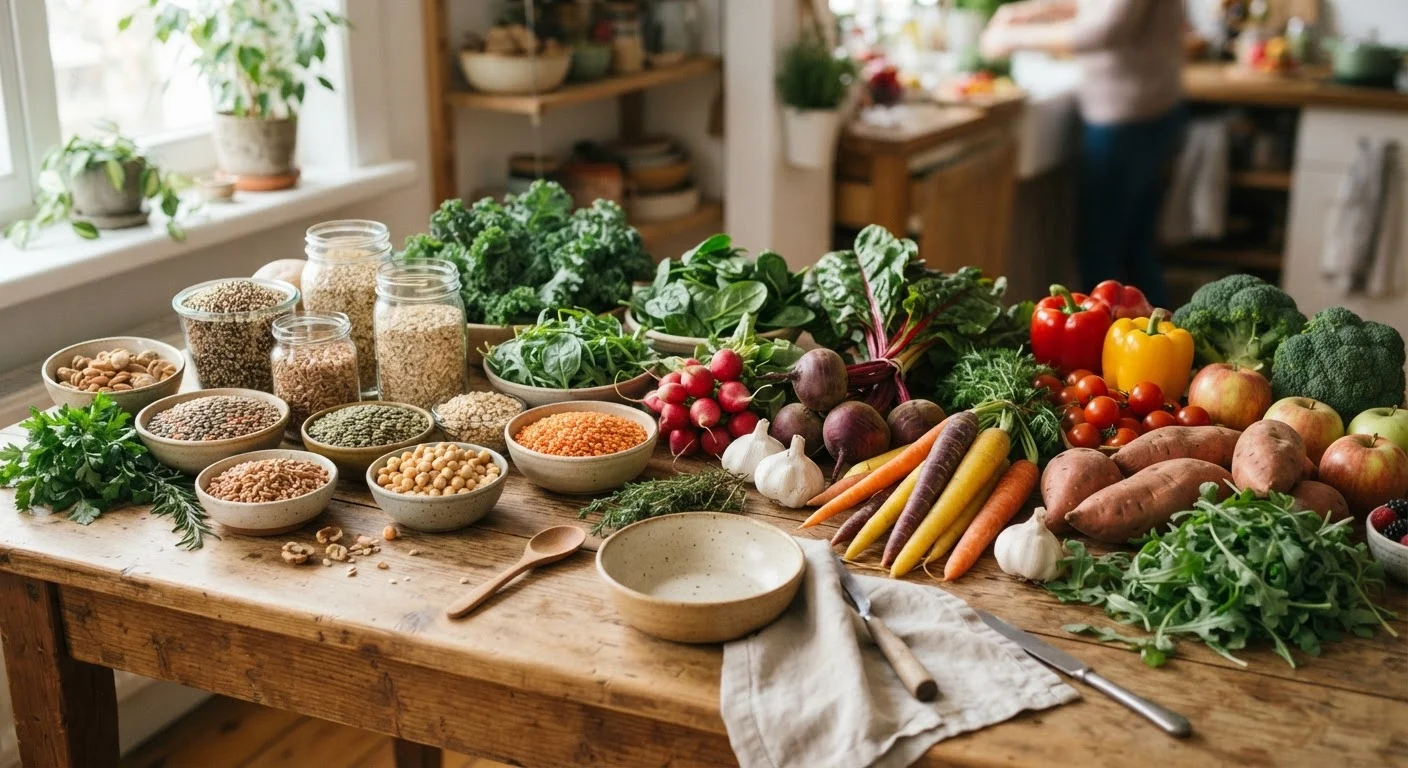
Eat a variety of vegetables across multiple color groups each week.
Different plant pigments (carotenoids, flavonoids, anthocyanins) are associated with different micronutrients and antioxidant compounds. Dietary variety naturally reduces nutritional gaps without requiring supplementation.
Minimize ultra-processed foods rather than following a named diet.
Research consistently links high consumption of ultra-processed foods - those with long ingredient lists of additives, emulsifiers, and artificial flavors - with less favorable health markers, independent of calorie intake. Reducing them is a clear, evidence-supported goal that doesn't require buying into any specific diet philosophy.
Start Here: Quick Actions That Pay Off Fast
If you're building better eating habits from scratch, a few targeted changes tend to produce the most noticeable results with the least effort. For a broader look at foundational wellness habits beyond nutrition - including sleep and hydration - see our guide to the wellness basics nobody sells you.
~$1.50
Average cost per serving of cooked dried beans
USDA Economic Research Service data indicates dried legumes consistently rank among the most affordable per-gram protein sources available in U.S. grocery stores.
30-40%
Estimated U.S. household food waste
According to USDA estimates, a significant share of food purchased by consumers is discarded - making meal planning one of the highest-impact habits for both health and household budgets.
Making It Stick Without a Program
Structured meal plans and wellness programs can be useful, but they're not required to eat well consistently. The habits that tend to last are the ones that fit into your existing routine rather than demanding a complete overhaul.
Batch cooking one or two staples per week - a pot of grains, a batch of cooked legumes - reduces the daily friction that leads to expensive convenience purchases. Keeping a short, rotating grocery list built around versatile ingredients (onions, canned tomatoes, dried lentils, oats, eggs) makes shopping faster and less costly.
“The best diet is the one that includes a wide variety of minimally processed foods and that a person can sustain over the long term. Complexity and cost are not markers of quality.”
— Walter Willett, Professor of Epidemiology and Nutrition, Harvard T.H. Chan School of Public Health
For readers who are newer to building healthy habits on a budget, our beginner's roadmap to affordable wellness covers the foundational pillars in practical detail.