

Key Takeaways
Know Your Plan's Cost Structure
Reducing out-of-pocket costs starts with a clear-eyed read of your current health plan. The four terms that determine what you actually pay are your deductible (what you pay before insurance begins sharing costs), copay (a flat fee per visit or service), coinsurance (your percentage share after meeting the deductible), and your out-of-pocket maximum (the annual ceiling on your cost-sharing). For a plain-language breakdown of how these interact, see our guide to deductibles, copays, and out-of-pocket maximums.
During open enrollment, compare plans on total projected cost - not just monthly premium. A plan with a lower premium but a high deductible may cost more if you use care regularly. Factor in your typical utilization: prescription frequency, specialist visits, and any planned procedures.
1 in 3
Adults skipping care due to cost
According to Gallup polling, roughly one in three U.S. adults reported delaying or forgoing medical care due to cost in a given year.
$1,200+
Average individual deductible for employer plans
KFF (Kaiser Family Foundation) employer health benefits surveys have consistently found average individual deductibles exceeding $1,200 for single coverage.
80-90%
Of itemized bills may contain errors
Healthcare billing advocacy groups estimate a high proportion of hospital bills contain at least one billing error, based on audits of submitted claims.
If you're unfamiliar with terms like actuarial value, formulary tier, or EOB (Explanation of Benefits), the healthcare cost terms glossary is a useful reference before enrollment decisions.
Choose In-Network Providers Strategically
Using in-network providers - those contracted with your insurer - is the most reliable way to limit per-service costs. Out-of-network care can trigger balance billing, where the provider bills you the difference between their charge and what your insurer pays, often leaving patients with unexpectedly large balances.
Before scheduling any appointment, verify network status directly with both your insurer and the provider's billing office. Provider directories can be outdated, so a phone call is worth the two minutes it takes. This applies not just to your primary care physician but to every specialist, lab, anesthesiologist, or imaging center involved in your care - a situation where a single out-of-network link in the chain can significantly increase your bill.
Always call your insurer's member services line - not just the provider - to verify in-network status before any procedure. Provider directories lag behind contract changes by months.
Insurer records are the authoritative source for network status; a mismatch between the directory and current contracts is a leading cause of unexpected out-of-network bills.
When scheduling non-urgent imaging or lab work, ask your insurer's cost-comparison tool for price differences between facilities - the spread can be hundreds of dollars for the identical test.
Facility fees and contracted rates vary significantly even within the same network; price transparency tools mandated by federal rules make this comparison straightforward.
For non-emergency care, consider requesting a referral to a lower-cost facility when appropriate. Hospital-based outpatient clinics often charge a facility fee on top of the physician fee; freestanding imaging centers or surgery centers typically do not, and your insurer's cost-comparison tool can surface these differences.
Use Tax-Advantaged Accounts
Two accounts allow you to pay for eligible medical expenses with pre-tax dollars, effectively reducing your cost by your marginal tax rate.
- Health Savings Account (HSA): Available only if you're enrolled in a qualifying high-deductible health plan (HDHP). Contributions, growth, and withdrawals for eligible expenses are all tax-free. Unused funds roll over indefinitely, making this a dual savings-and-investment vehicle.
- Flexible Spending Account (FSA): Available through many employer plans regardless of deductible level. Contributions are pre-tax, but most plans have a "use it or lose it" rule - unused balances may not carry forward. Check your plan's carryover or grace-period provisions.
Both accounts cover a broad range of eligible expenses including copays, deductibles, prescriptions, dental, and vision costs. Tracking your spending through one of these accounts is also a straightforward way to integrate healthcare into your broader monthly budget.
This information is general in nature. Consult a qualified tax or financial professional for guidance specific to your situation.
Reduce Prescription Drug Costs
Medications are among the most controllable line items in a healthcare budget. Several concrete steps can reduce what you pay at the pharmacy.
- Ask about generics: Generic drugs contain the same active ingredients as brand-name versions and are FDA-reviewed for equivalence. Switching from brand to generic - where clinically appropriate per your prescriber - is one of the most common sources of immediate savings.
- Check your plan's formulary tiers: Your insurer's drug list assigns medications to cost tiers. Asking your prescriber whether a therapeutic alternative on a lower tier is appropriate for your situation can reduce your cost without compromising your care.
- Use mail-order pharmacy programs: Most plans offer 90-day supply pricing through a mail-order pharmacy, which typically costs less per day than a 30-day retail fill.
- Verify eligibility for manufacturer or nonprofit assistance: Drug makers and independent nonprofits offer patient assistance programs for qualifying individuals. Your prescriber's office or a hospital social worker can often help identify these programs.
Prepare Before Every Appointment
Proactive preparation before each visit prevents the most common sources of surprise costs. Confirm that your provider is still in-network (contracts change), verify whether a referral or prior authorization is required for the service, and clarify which specific services will be rendered so you can confirm coverage in advance.
Our pre-appointment cost-awareness checklist walks through each of these steps in detail, including questions to ask the scheduler and the billing department before you arrive.
Don't Skip Prior Authorization
For specialist visits, imaging, and procedures, many plans require prior authorization - insurer approval before the service is delivered. Skipping this step can result in the entire claim being denied, leaving you responsible for the full cost. Always confirm authorization requirements with your insurer before the appointment, not after.
If you're managing care for dependents in special populations - children, elderly relatives, or those with chronic conditions - preparation becomes even more important, and consulting a healthcare navigator or social worker at your provider's office can surface assistance programs you may not know are available.
Review and Negotiate Your Medical Bills
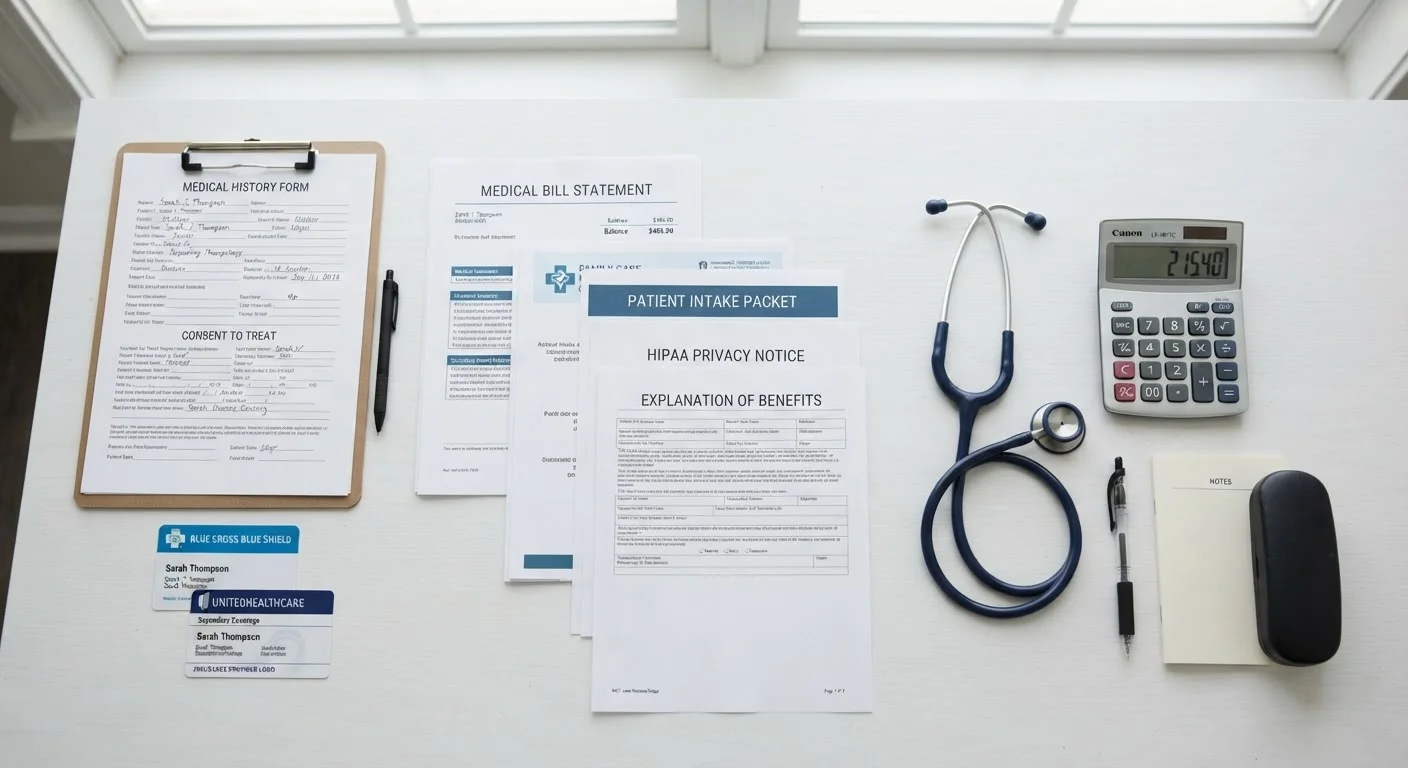
Medical billing errors are common. Studies by healthcare advocacy organizations have consistently found coding mistakes, duplicate charges, and services billed but not received on a meaningful share of itemized bills. Always request an itemized statement - not just a summary - and compare it line-by-line against your Explanation of Benefits (EOB) from your insurer.
If you find a discrepancy, file a formal dispute with both the provider's billing department and your insurer. Document every communication. Many hospitals also offer charity care or financial assistance programs for patients whose income falls below a threshold - these programs are legally required to exist at nonprofit hospitals and are often not proactively disclosed.
If a bill is legitimately beyond your means, most providers will negotiate a payment plan or reduced settlement for prompt payment. Engaging a patient advocate or medical billing advocate is an option for complex or large bills - these professionals typically work on a contingency basis, taking a percentage of what they save you.
This article is for general informational and educational purposes only and does not constitute medical or financial advice. Consult a qualified healthcare professional for personal medical decisions and a licensed financial professional for financial guidance specific to your circumstances.