

Key Takeaways
Why Medical Billing Errors Are Worth Taking Seriously
Studies and audits conducted by government agencies and patient advocacy organizations consistently find that a substantial portion of medical bills contain at least one error. Common culprits include duplicate line items, services billed but not rendered, incorrect procedure or diagnosis codes (known as CPT and ICD codes), and charges that should have been bundled together but were billed separately - a practice called "unbundling."
These aren't always small amounts. A single miscoded procedure can add hundreds of dollars to a bill, and errors can compound across a multi-day hospital stay. Because most patients pay without scrutinizing the details, billing mistakes frequently go unchallenged. This article walks through a systematic process to catch and formally dispute them.
If you're also dealing with the downstream effects of unpaid medical debt, reviewing your credit report can help you spot whether any disputed amounts have been incorrectly reported. And if you've already confirmed your bill is accurate but the total feels unmanageable, common healthcare cost myths may be affecting how you're approaching what you owe.
This article provides general financial and consumer information only and is not legal or medical advice. Consult a qualified professional for guidance specific to your situation.
What You Need Before You Begin
Gather these documents before starting the review process. Having everything in one place prevents delays once you begin making calls or writing letters.
What you will need
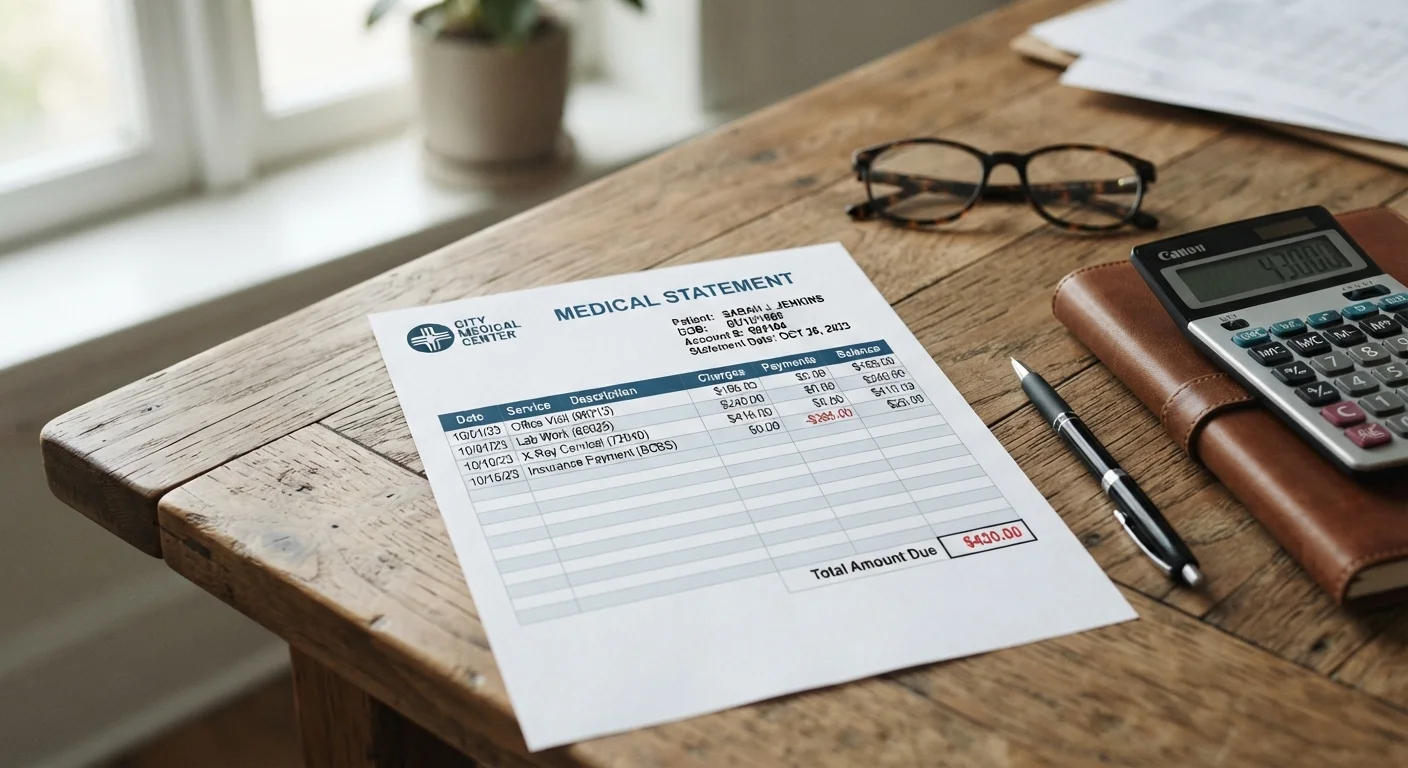
Itemized Bill
A line-by-line breakdown of every charge; this is the document you compare against your EOB to spot discrepancies.
Explanation of Benefits (EOB)
Your insurer's record of what was billed, what was allowed, and what you owe - essential for identifying coding mismatches.
Medical Records
Used to verify that billed services were actually provided and documented during your visit.
CPT and ICD Code Lookup (CMS website)
Free government resource to verify whether procedure and diagnosis codes on your bill match the services you received.
How to Review and Dispute a Medical Bill
Follow these steps methodically. Skipping ahead - for instance, calling to dispute before you have documentation - often leads to longer resolution times and unproductive conversations.
Request an itemized bill
Ask the provider's billing department for a fully itemized statement. A summary bill showing only totals is not sufficient for a detailed review. You are entitled to an itemized bill - providers are legally required to supply one upon request in all U.S. states. Allow up to two weeks for delivery.
Obtain and read your Explanation of Benefits
Log into your insurer's member portal and download the EOB for the relevant claim. The EOB shows what the provider billed, the insurer's negotiated rate, what the insurer paid, and what you are responsible for. Compare the billed amounts and procedure codes on the EOB against your itemized bill line by line. Any discrepancy is worth flagging.
Check each procedure and diagnosis code
Every service has a CPT (Current Procedural Terminology) code, and every diagnosis has an ICD (International Classification of Diseases) code. Look up each code using the free lookup tools published by the Centers for Medicare and Medicaid Services (CMS) at cms.gov. Verify that the codes match what actually happened during your visit. A wrong diagnosis code can change how a claim is processed and increase your share of the cost significantly.
Identify specific error types
Flag any of the following common error patterns:
- Duplicate billing: The same service billed more than once.
- Upcoding: A more expensive procedure code used in place of the correct one.
- Unbundling: Services billed separately that should be grouped under one code.
- Services not rendered: Charges for procedures, tests, or supplies you did not receive.
- Incorrect patient or insurance information: Wrong policy number, date of birth, or insurance ID that caused claims to be misprocessed.
Contact the provider's billing department in writing
Write a concise dispute letter or email to the provider's billing office. State clearly which line items you are disputing, the reason for each dispute, and what documentation you are referencing (e.g., EOB dated X, itemized bill received Y). Request a written response within 30 days. Keep a copy of everything you send.
File a dispute with your insurer if coding is the issue
If the error originates from an incorrect code that caused your insurer to deny or underpay a claim, file a formal appeal with your health insurer as well. Insurers are required by federal law to have an appeals process. Your EOB will typically include instructions for filing an appeal. Provide the same documentation: itemized bill, EOB, and any medical records that support your case.
Escalate if the dispute is not resolved
If the provider or insurer does not respond or denies your dispute without adequate explanation, you have further options. For insurer disputes, you may be able to request an external review through your state's insurance commissioner. For provider billing issues, contact your state's attorney general office or the relevant state health department. Document every communication with dates and contact names before escalating.
Keep Disputed Bills From Hurting Your Credit
Unpaid medical bills can be sent to collections, and collection accounts can appear on your credit report. If a bill is under active dispute, notify the provider in writing that you are disputing the charge and request that collections activity be paused pending resolution. While providers are not always obligated to wait, a written record of your dispute can support you if you need to challenge a credit reporting issue later.
Once a dispute is resolved in your favor, confirm the corrected balance in writing before making any payment. If you still owe a valid balance after errors are removed, negotiating what remains is a separate and often viable next step. Many patients also overlook the fact that bills they assumed were fixed have more flexibility than expected.