

Key Takeaways
Why Natural Pest Control Claims Deserve Scrutiny
Garden forums and social media are packed with natural pest control tips - from burying banana peels to spraying diluted dish soap on everything that moves. The appeal is obvious: low cost, no harsh chemicals, and the satisfaction of a self-sufficient approach. But enthusiasm for natural solutions doesn't automatically make them effective.
The same healthy skepticism that helps deal-seeking shoppers avoid overpaying for wellness products (see common wellness myths that don't hold up to scrutiny) applies equally to the garden. Spending time and money on remedies that don't work is still a waste - even if the ingredients are all-natural.
Below, we look at the most common claims and what the actual evidence suggests.
Myth
Planting marigolds anywhere in the garden keeps all pests away.
Fact
Marigolds repel or deter specific pests under specific conditions - they are not a universal barrier.
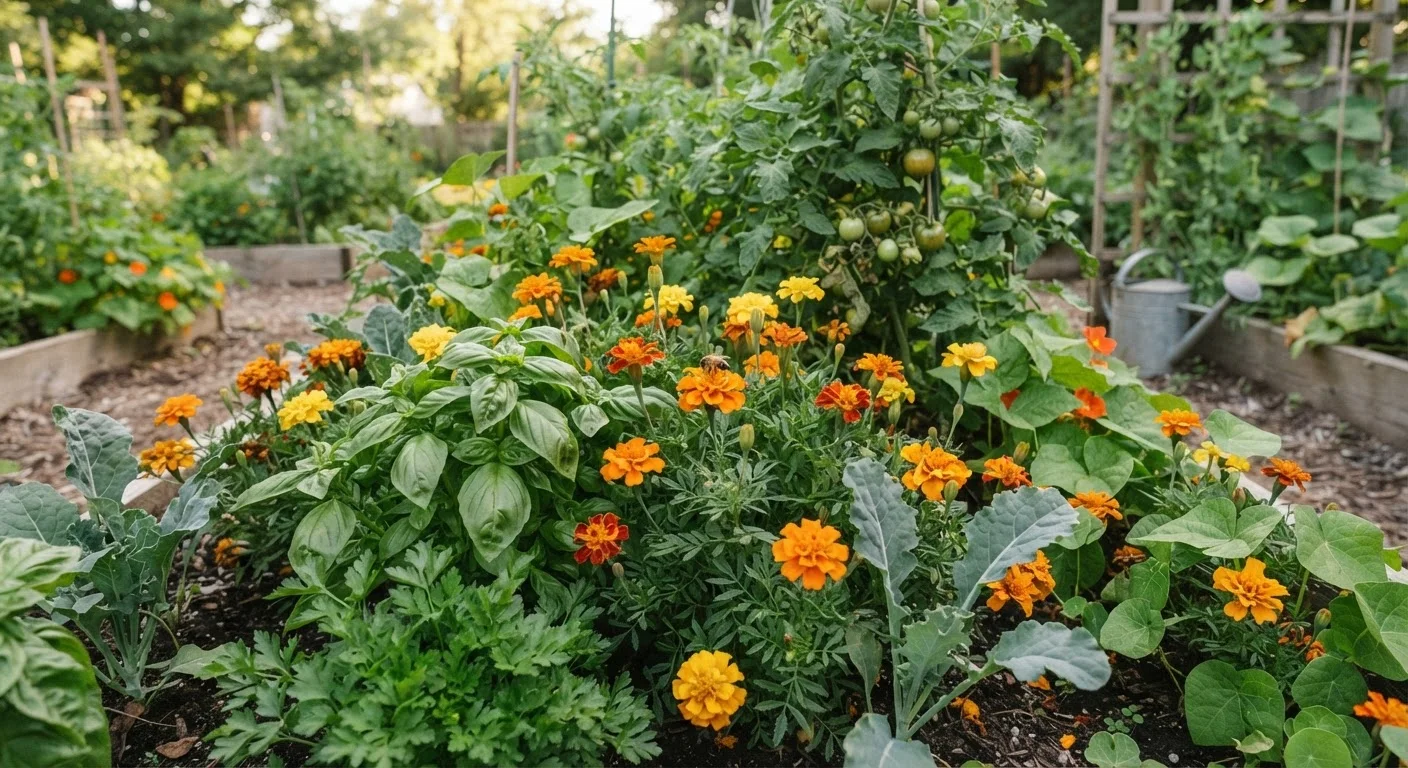
Marigolds do have genuine pest-suppression properties: certain varieties (Tagetes species) release compounds from their roots that suppress some nematode populations in the soil, and research supports this limited use. However, the idea that marigolds repel aphids, whiteflies, or other common garden pests simply by being present is not well supported. Placement, variety, and the specific pest species all matter. Think of marigolds as one targeted tool, not a garden-wide force field.
Myth
Copper tape reliably stops slugs and snails from reaching plants.
Fact
Evidence for copper tape as a slug deterrent is inconsistent, with controlled studies showing mixed results.
The theory is that copper reacts with slug mucus to produce a mild electric-like deterrent. Some gardeners report success; controlled trials have produced contradictory results. Factors like tape width, surface oxidation, and whether slugs simply climb over via nearby plant material all affect outcomes. Copper tape may offer some benefit as part of a broader strategy, but relying on it alone is likely to disappoint. Physical hand-picking and habitat reduction have stronger support for managing slugs cost-effectively.
Myth
Garlic spray is a proven, broad-spectrum pesticide for home gardens.
Fact
Garlic-based sprays show some repellent properties in lab settings, but field performance is variable and short-lived.
Laboratory studies confirm that sulfur compounds in garlic can repel some insects at close range. In outdoor field conditions, however, rainfall, sunlight, and wind degrade the active compounds quickly, and pest populations often return within days. Homemade concentrations are also highly variable, making replication difficult. Garlic spray isn't harmful to try on non-edible plants, but gardeners should not count on it as reliable pest management for a food garden without frequent reapplication and realistic expectations.
Myth
Neem oil is safe to apply to any plant at any time without precautions.
Fact
Neem oil has documented efficacy against certain insects and fungal issues, but improper use can damage plants and harm beneficial insects.
Neem oil - derived from Azadirachta indica - is one of the better-evidenced natural pest control options. The active compound azadirachtin disrupts insect hormonal systems and is effective against soft-bodied pests like aphids and whiteflies when applied correctly. That said, applying neem oil during direct sun or high heat can cause leaf burn. It also kills beneficial insects on contact, including pollinators, so applications should target problem areas and avoid open blooms. Dilution ratios and spray intervals matter; always follow label instructions.
Myth
Companion planting combinations are mostly folklore with no real scientific basis.
Fact
Some companion planting combinations have meaningful research support, though the evidence is stronger for some pairings than others.
The companion planting category is genuinely mixed. Certain pairings - like interplanting squash, beans, and corn (the traditional "Three Sisters" method) - have agronomic evidence supporting improved yields and pest suppression. Basil alongside tomatoes is commonly cited for repelling thrips; some small-scale studies suggest a modest effect, though large field trials are sparse. Rather than dismissing all companion planting or accepting every claimed pairing, gardeners benefit from focusing on combinations with published research, while treating anecdotal pairings as experiments rather than certainties.
Strategies with Genuine Evidence Behind Them
Once the myths are cleared away, a shorter but more reliable list remains. Physical exclusion - row covers, netting, and collars around transplant stems - consistently outperforms most sprays because it creates a mechanical barrier rather than relying on a pest's behavioral response. Research into pest management repeatedly supports exclusion as a first-line strategy.
Crop rotation disrupts life cycles of soil-dwelling pests and pathogens by denying them a host year after year. It's free, well-documented, and works at any garden scale. Similarly, removing pest habitat - clearing debris, fixing irrigation leaks that create damp zones, pruning dense foliage - reduces populations without any product at all.
DIY Sprays Can Harm Beneficial Insects
Insecticidal soap, neem oil, and even plain water sprays can kill or disrupt beneficial insects - including ladybugs, lacewings, and bees - when applied indiscriminately. Target sprays to the underside of affected leaves during early morning or evening hours when pollinators are less active. Broad, preventive spraying without an identified pest problem does more harm than good to the garden ecosystem.
For gardeners curious about what actually separates effective DIY approaches from wishful thinking in other home contexts, the same logic applies: common DIY repair myths that cost homeowners time and money offers a parallel breakdown worth reading.
This article provides general gardening information only. Results in individual gardens will vary based on local pest species, climate, and growing conditions. Always read product labels and follow safety instructions when applying any substance to edible plants.