

Key Takeaways
What Discount Stacking Actually Means
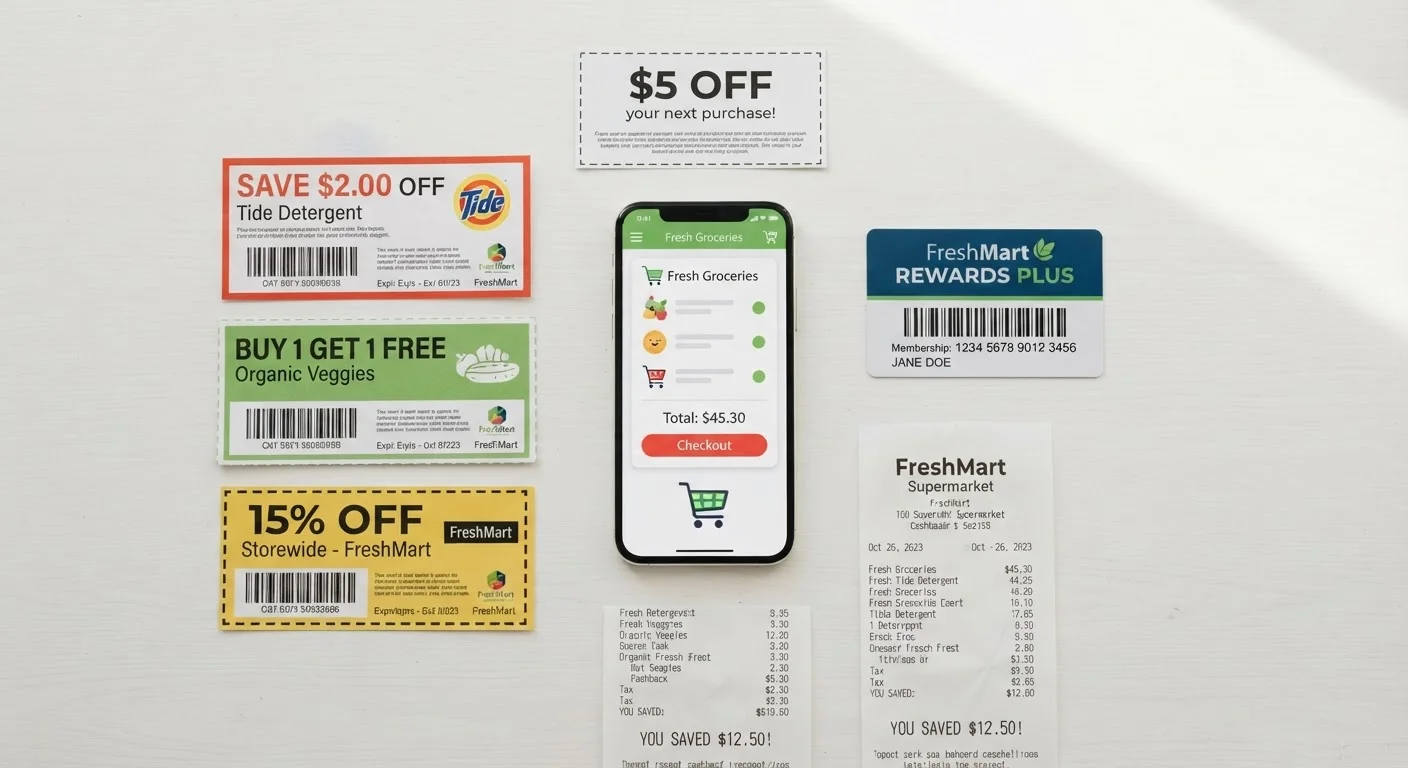
Discount stacking is the practice of applying more than one savings method to the same purchase so the total reduction is greater than any single method would deliver on its own. Common layers include: a promotional sale price set by the retailer, a coupon or promo code applied at checkout, cashback earned through a portal or card, and loyalty points either earned on the transaction or redeemed to offset the total.
Each layer is legal and widely available — the skill is knowing which combinations are permitted and executing them in the right sequence. For a deeper look at individual savings tools and how they compare, see how cashback sites and coupon aggregators differ.
Stacking Should Serve Planned Purchases Only
Discount stacking is most effective when applied to purchases you've already decided to make. Using a stacking opportunity as a reason to buy something unplanned reverses any savings. Treat each layer as a way to reduce the cost of a justified purchase, not as a trigger to spend.
One common misconception is that stacking always saves money net of behavior. If a stacking opportunity tempts you into buying something you didn't need, the math works against you. The goal is lower cost on planned purchases, not new ones. For a clear view of beliefs that quietly cost shoppers money, deal-hunting myths worth reading is a useful counterpoint.
What You Need Before You Start
Effective stacking requires a few things in place before you reach checkout. Having these ready eliminates last-minute scrambling that causes you to miss a layer or lose a cashback session.
What you will need
How to Stack Discounts Step by Step
Follow this sequence for any planned purchase. The order matters: activating cashback last — or after clicking the wrong link — is one of the most common ways a layer gets lost.
Confirm the item is on sale or identify a target price
Check the retailer's current listed price against historical pricing using a price-tracking tool or the retailer's own sale calendar. A sale that's actually the normal price in disguise doesn't serve as a genuine savings layer. Only proceed with the rest of the stack if the base price is legitimately reduced or you're satisfied it's fair market value.
Activate your cashback session before doing anything else
Log into your chosen cashback portal and click through to the retailer from within that portal. This sets the tracking cookie that credits your account. Do not open the retailer's site in a separate tab first — the portal's cookie needs to be the active one when you reach checkout.
Add items to your cart and check for auto-applied discounts
Some retailers automatically apply member pricing or cart-level discounts once you're logged in. Note what discount, if any, has been applied before you add anything else — this is your baseline for the session.
Apply a coupon or promo code
Search for a valid code from a reputable aggregator or directly from the retailer's email promotions. Paste the code into the promo field at checkout and confirm the discount registers before proceeding. If the code fails, try the next valid option — do not click away from the cashback session to search for codes, as this may break tracking.
Redeem loyalty points or apply reward card credits
If your loyalty balance allows a partial redemption, apply points now to further reduce the out-of-pocket total. Check the program's terms to confirm that points redemption doesn't disqualify the transaction from earning new points or cashback — some programs exclude fully redeemed orders from additional accrual.
Pay with a rewards-earning card and review the final total
Use a card that earns category rewards on retail or general purchases to add a final passive layer. Before confirming the order, review the final total to ensure all applied discounts are visible in the order summary. Screenshot or save the order confirmation, including any cashback session confirmation, as a reference if a portal claim needs to be filed later.
Build a Pre-Checkout Checklist
A simple checklist — cashback portal activated, coupon code tested, loyalty points reviewed, rewards card selected — takes under two minutes and prevents the most common stacking errors. After a few repetitions, the sequence becomes automatic. For broader habit-building approaches, the habit stacking for smarter everyday spending article covers how to embed these checks into your existing routines.
Where Stacking Has Limits
Retailer terms vary significantly. Some stores explicitly state that only one promo code applies per order, or that sale items are excluded from coupon codes. Cashback portals may void earnings if you navigate away from their tracked session, use a browser extension that overwrites their cookie, or apply a code the portal doesn't recognize. Loyalty programs sometimes exclude reward-point redemptions on items already marked down beyond a set threshold.
None of these restrictions are unusual or unfair — they're simply rules to read before assuming a stack will hold. When a layer drops unexpectedly, the loss is usually small; building the habit of checking terms protects you from the occasional larger miss.
Discount stacking fits naturally into a broader pattern of deliberate spending habits. The habit stacking framework for smarter everyday spending explains how attaching deal-checking routines to existing behaviors makes the whole process more consistent. If you're newer to structured deal-finding overall, the first-timer's roadmap to consistent online savings covers the foundational layer before stacking becomes relevant.
This article is for general informational purposes only. Retailer terms, cashback program rules, and loyalty program conditions change frequently. Always verify current terms directly with the relevant retailer or program before making a purchase decision.