

Key Takeaways
Start here
Why Systematic Comparison Beats Gut Instinct
Core skills
The Core Framework: Four Questions Before Every Purchase
Apply it
How Categories Change the Rules
Lock it in
Building Your Comparison Habit
Why Systematic Comparison Beats Gut Instinct
Most purchase regret doesn't come from buying bad products — it comes from buying the wrong product for a specific situation. Gut-feel decisions collapse under this pressure because they rely on whatever information is most available (usually the product page you're reading) rather than a consistent standard you apply across options.
A structured approach forces you to define what a good outcome looks like before you look at individual products. That shift — from reactive browsing to deliberate evaluation — is the single biggest leverage point for shoppers who want to spend less and get more from what they buy.
This guide covers the foundational habits that make every comparison sharper. For a deeper look at what separates rigorous evaluations from misleading ones, see The Anatomy of a Fair Product Comparison.
Total cost of ownership
The full expense of a product over its useful life, including purchase price, maintenance, consumables, energy use, and eventual replacement — not just the upfront price.
Non-negotiable criteria
Requirements a product must meet for you to consider it at all. These are filters applied before deeper comparison, not preferences to weigh against each other.
Feature inflation
A marketing pattern where products are described using impressive-sounding numbers or features that have little practical effect on the actual user experience.
Use case
The specific real-world scenario in which you'll use a product. Defining your use case precisely helps you evaluate whether a product's capabilities match your actual needs.
Comparison framework
A structured set of questions or criteria applied consistently to every product you evaluate, so decisions are based on the same standard rather than whatever each listing highlights.
The Core Framework: Four Questions Before Every Purchase
Regardless of category, four questions anchor any reliable product comparison:
- What problem am I solving? Define the use case precisely. "I need a vacuum" is vague. "I need a vacuum for hardwood floors in a 600-square-foot apartment with one cat" gives you criteria.
- What are my non-negotiables? List features or specifications that are required, not preferred. These become your filter — options that don't meet them are removed before deeper evaluation begins.
- What is the real total cost? Factor in consumables, maintenance, energy consumption, and expected lifespan. Sticker price is often the least useful single number in a comparison.
- What could go wrong? Identify the failure modes: compatibility issues, limited warranty coverage, poor return policies, discontinued support. These risks aren't always visible in product listings.
Running these four questions before opening comparison tabs keeps the evaluation anchored to your situation rather than drifting toward whatever a listing emphasizes. Our pre-comparison checklist expands on question four specifically.
Lock In Your Criteria First
Before opening a single product page, write down your three most important requirements and your realistic budget ceiling. Doing this takes under two minutes and makes it significantly harder for compelling marketing copy to shift your goalposts mid-comparison. Treat anything not on your list as a bonus, not a deciding factor.
How Categories Change the Rules
The framework above is universal. The criteria you populate it with are not. Each product category has its own dominant quality signals, failure modes, and value drivers.
- Electronics: Spec inflation is common — manufacturers highlight numbers that look impressive but have minimal real-world impact. Focus on the specs that directly affect your use case.
- Appliances: Reliability and repairability often matter more than feature count. Parts availability and service network coverage are worth researching.
- Consumables (cleaning supplies, food, personal care): Unit price and ingredient quality are usually the right axes. Brand premium rarely tracks with meaningful performance differences.
- High-involvement purchases (furniture, vehicles, mattresses): Return and trial policies carry outsized importance because these are hard to evaluate from a listing alone.
A common mistake is importing criteria from a familiar category into an unfamiliar one. For more on how to align your comparison to the right product tier and type, see Apples to Apples: How to Ensure You're Comparing the Right Things.
Building Your Comparison Habit
Frameworks only work if they become reflexive. Three practices make systematic comparison a default behavior rather than an occasional effort:
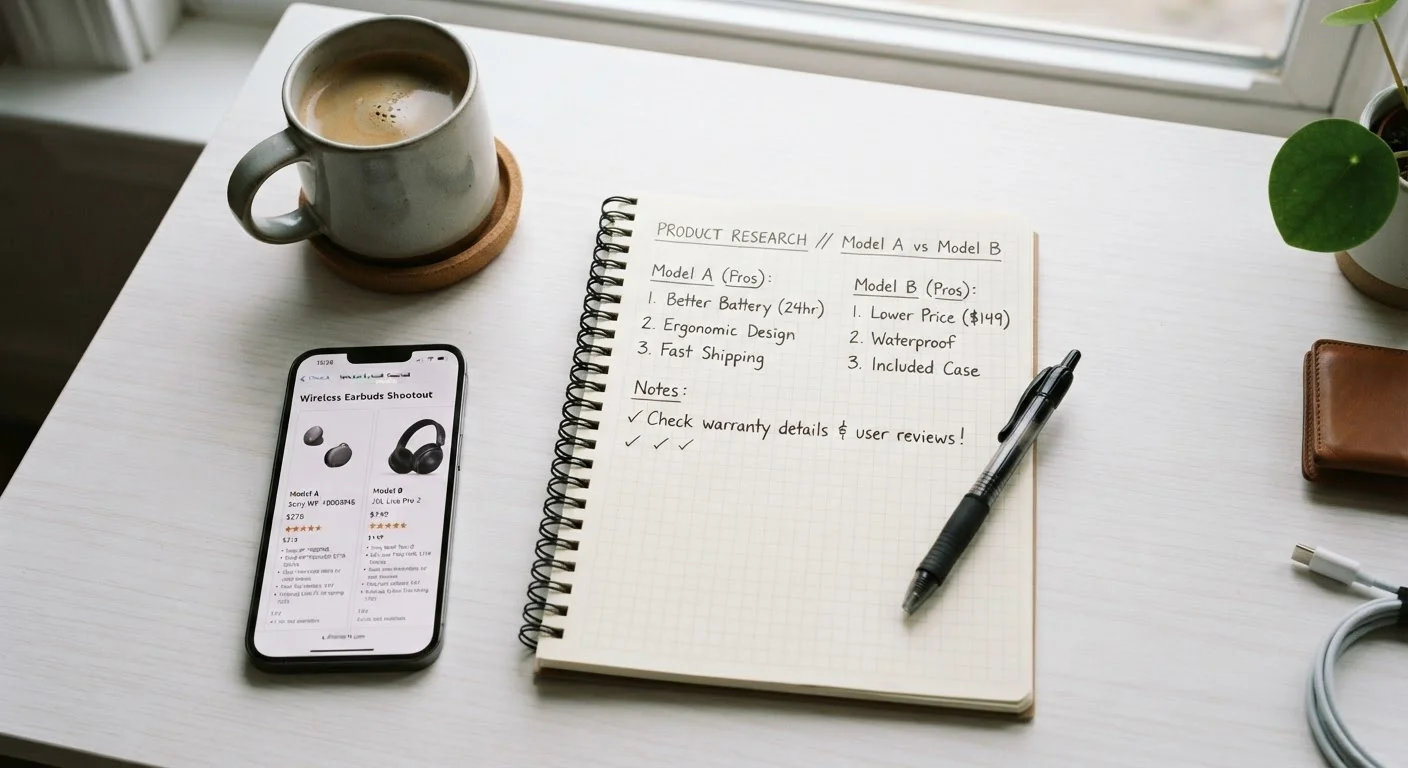
- Write before you browse. A two-minute requirements note — even in a phone's notes app — commits your criteria to paper before marketing language can reframe them.
- Set a comparison deadline. Open-ended research invites paralysis. Decide in advance how many sources or how much time you'll give the process, then make a call.
- Review the last few purchases you regretted. The pattern usually reveals a specific step you skipped — whether that was checking compatibility, reading the return policy, or comparing total cost. Knowing your own failure mode is the fastest way to patch it.
These habits compound. Each comparison you run deliberately makes the next one faster because you've already internalized the questions worth asking. For broader behavioral strategies around avoiding impulse purchases, the Smart Buying Habits hub is a practical next stop.
Watch for Comparison Fatigue
Researching too many options for too long often leads to worse decisions, not better ones. When you find yourself reading the same information across multiple sources without learning anything new, that's a signal to stop gathering data and make a call. Setting a firm research limit before you start is one of the most practical ways to avoid this trap.
This article provides general consumer education. It is not financial, legal, or professional advice. For significant purchases or financial decisions, consult a qualified professional and verify all product details directly with the manufacturer or retailer before buying.