

Key Takeaways
The Problem With 'Just Making a List'
Most people write shopping lists to avoid forgetting things. That's a reasonable goal — but it's a narrow one. A list that only prevents forgetting does nothing to prevent overspending, impulse additions, or duplicate purchases. Those failures are frustrating precisely because you did make a list. You followed the advice. It still didn't work.
The issue isn't list-making itself. It's list-making done without intention. A list is only as useful as the thinking behind it. The mistakes below are the most common ways that thinking breaks down — and how to close those gaps before you hit the store.
For a broader look at the planning habits that drive overspending, see our guide to why monthly budgets derail — many of the same patterns apply.
Writing vague or open-ended items like 'snacks,' 'drinks,' or 'cleaning stuff.'
Why it happens: When writing quickly, specifics feel unnecessary — you assume you'll know what you want when you see it. But that assumption hands the decision to the store environment.
Not checking existing inventory before writing the list.
Why it happens: It takes extra time and feels redundant — most people assume they remember what they have. Memory is unreliable, especially for items used infrequently.
Writing a list with no attached budget or spending ceiling.
Why it happens: A list feels like it provides control by itself. Without a dollar figure attached, though, there's no mechanism to make trade-offs when the cart total climbs.
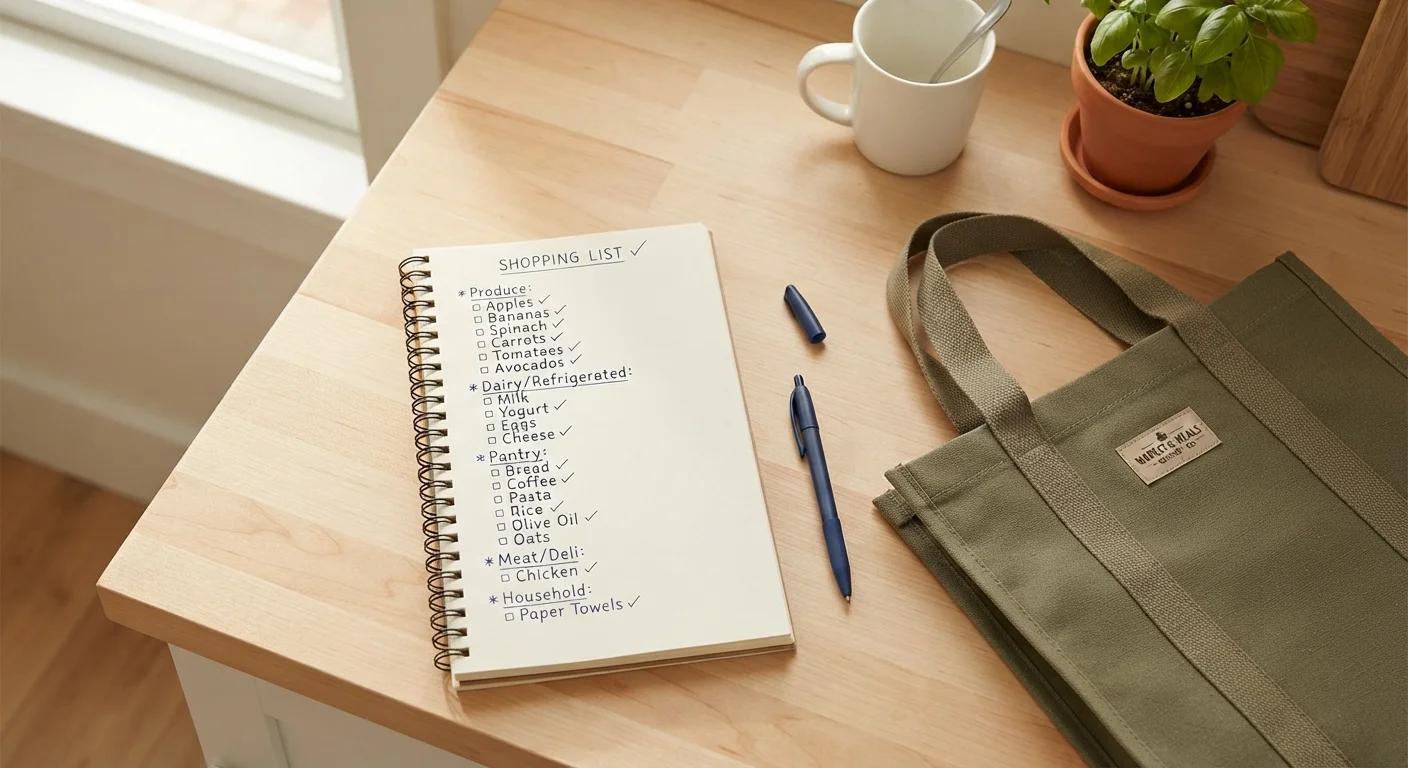
Leaving the list unorganized, with items in random order.
Why it happens: Items get added as they come to mind, which mirrors mental association rather than store layout. The result is a list that sends you back and forth across the store.
Writing the list too far in advance, then shopping from an outdated version.
Why it happens: Lists get made mid-week and then used days later without being updated. Needs change, items get used up, and plans shift — but the list doesn't.
Adding items to the list based on sale availability rather than genuine need.
Why it happens: Promotions create urgency and the feeling that not buying is leaving money on the table. A sale price on something you don't need is still a net spend.
Building a List That Actually Controls Spending
The gap between a forgetting-prevention list and a spending-control list comes down to three habits: specificity, inventory awareness, and a hard ceiling.
Specificity means writing the exact item, quantity, and size before you leave — not resolving those decisions in the aisle while facing a shelf designed to upsell you. Inventory awareness means checking your pantry, refrigerator, or medicine cabinet before writing a single item. A budget ceiling means attaching an approximate total to your list and treating it as a constraint, not a suggestion.
~$5,400
Estimated annual US household impulse spending
Research from the Slickdeals 2022 impulse spending report estimated US consumers spend roughly $314 per month on unplanned purchases — totaling over $5,000 annually on average.
Up to 60%
In-store purchases that are unplanned
Studies on consumer purchasing behavior have consistently found that a significant share of grocery and general retail purchases are made without prior intent, varying by category and store format.
Once those foundations are in place, the final step is structure. Organize your list by store section so you move through the store in a single loop rather than backtracking. Every unnecessary aisle you walk is an opportunity for unplanned spending. If you want to pressure-test your purchasing decisions further, our pre-purchase checklist offers a useful filter before any non-essential item makes it onto a list in the first place.
Shopping lists fail when they're treated as a passive record of wants. They work when they're built as an active decision-making tool — one that reflects what you own, what you need, what you'll spend, and how you'll navigate the store. That shift in purpose changes everything.
Digital Lists Have a Hidden Weakness
App-based shopping lists make it easy to add items impulsively throughout the week — turning the list itself into a wish-list rather than a needs-based plan. If you use a digital list, schedule a deliberate review session before shopping to remove items that don't meet your actual needs or budget. Convenience shouldn't come at the cost of intentionality.