

Key Takeaways
What Discount Stacking Actually Means
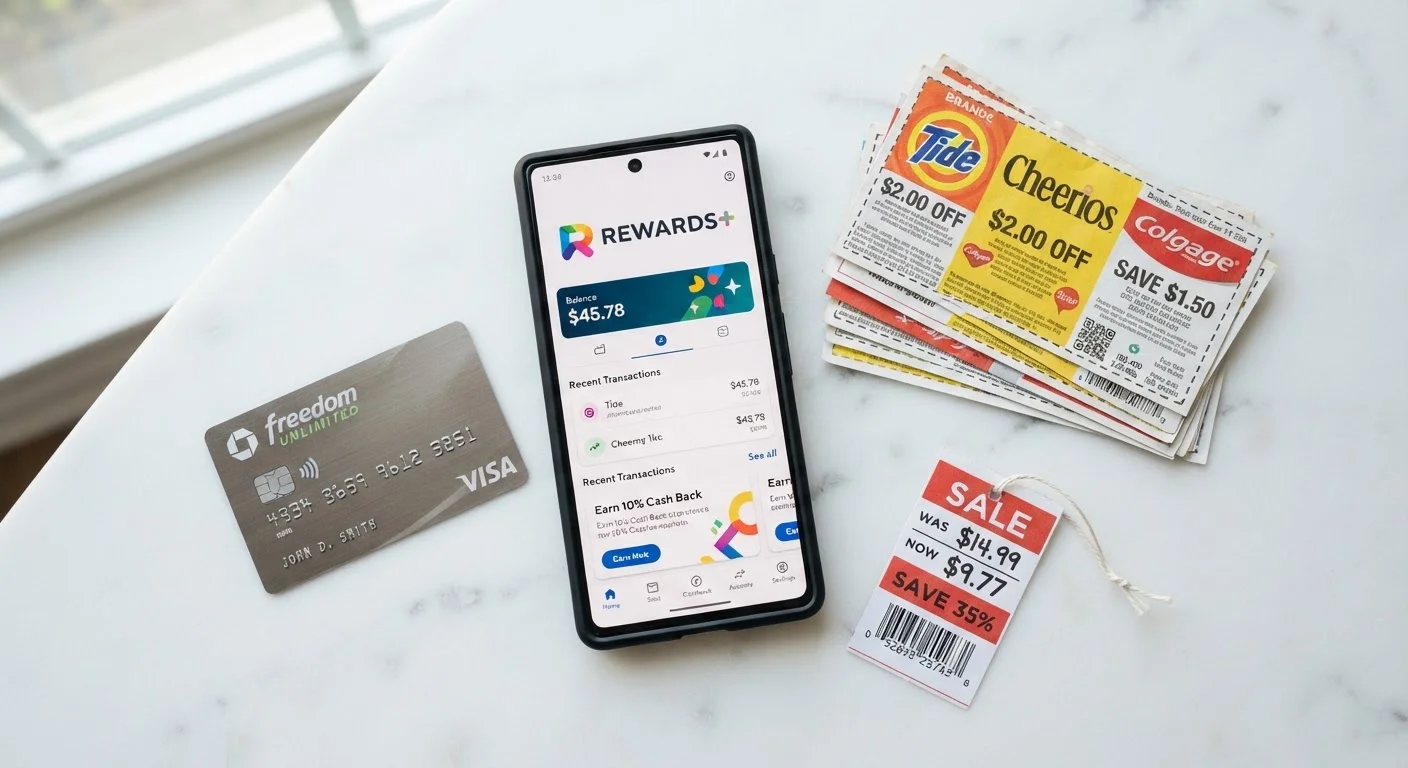
Discount stacking is the practice of applying more than one savings method to a single transaction. Instead of choosing between a coupon code, a cashback portal, or a sale price, you use all three simultaneously — each shaving money off what you ultimately pay.
The mechanics matter. Most retailers apply discounts in a fixed sequence: the sale price is set first, a coupon code reduces that marked-down price, and cashback is then calculated as a percentage of the amount you actually paid at checkout. That sequence means a higher-value coupon creates a lower cashback payout in absolute dollars, but your net cost is still lower than using either tool alone.
For a clearer picture of how cashback platforms and coupon aggregators differ on their own, see our comparison of the two approaches before combining them.
What you will need
The Tools You'll Use
Effective stacking draws on a short list of resources. Understanding what each one does prevents overlap and wasted effort.
Cashback portal
Earns a percentage of your purchase back as cash after you click through to the retailer from the portal.
Coupon aggregator or browser extension
Surfaces publicly available promo codes and applies them automatically or on request at checkout.
Retailer loyalty program
Accumulates points or store credit on eligible purchases that can be redeemed on future orders.
Rewards credit card
Earns points or cashback on the final amount charged, sitting on top of other discounts already applied.
Price-tracking tool
Monitors historical sale prices so you can time your purchase at or near a genuine low.
Loyalty or rewards points earned through a store program or credit card sit on top of this stack. They do not typically reduce the price a cashback portal sees, so they can often run simultaneously without conflict. Verify your card's terms — some issuers exclude purchases made through third-party portals from earning points.
Step-by-Step: Building a Stack Before You Check Out
The steps below apply to most online retailers. In-store stacking follows similar logic but requires printed or app-based coupons and a store loyalty card scanned at the register.
Confirm the item is on sale or identify a sale window
Use a price-tracking tool to verify the current price represents a real discount relative to the item's recent price history. Retailers sometimes inflate pre-sale prices, so historical data is more reliable than a percentage-off badge. If the item isn't on sale now, note whether it follows a seasonal markdown cycle and schedule your purchase accordingly.
Activate your cashback portal before browsing
Open your cashback portal and search for the retailer. Check the current cashback rate — rates fluctuate and are sometimes elevated during promotional periods. Click through to the retailer's site from the portal to start your tracked session. Do not navigate away to other tabs or use a different browser window during your session, as this can break the tracking cookie.
Find and validate a coupon code
Open a coupon aggregator or let a browser extension populate available codes. Test each code in the discount field at checkout before finalizing your cart. Verify that the coupon applies to the specific items in your order — many codes exclude sale items, certain categories, or have a minimum spend requirement.
Apply loyalty points or rewards credit (if available)
If you have store credit, loyalty points, or a rewards balance, determine whether applying them now or saving them for a higher-value future purchase is more advantageous. Points redeemed on an already-discounted item may yield less effective value than applying them to a full-price purchase, depending on the program structure.
Pay with your most rewarding payment method
Select a payment method that earns points or cashback on the net amount charged. Calculate whether your rewards card's category bonus on this retailer outperforms the card's standard rate. Complete the purchase without leaving the retailer's site mid-session to protect your cashback tracking.
Once you've completed a stack, record what you paid and what cashback or rewards you expect. This creates a personal benchmark and helps you recognize when a deal is genuinely better than usual — a habit explored further in our guide on habit stacking for smarter everyday spending.
Where Stacking Has Limits — and When to Walk Away
Not every purchase rewards aggressive stacking. Retailers can and do prohibit combining certain promotions; the terms are usually in the fine print of the sale or coupon page. Common restrictions include: one coupon per order, portal exclusions for specific product categories, and cashback caps per transaction period.
There's also a time cost. Researching every possible combination before a routine purchase can tip into what analysts call deal fatigue — where the effort and opportunity cost exceed the savings realized. Our article on deal fatigue and when chasing discounts costs more than it saves walks through how to recognize that tipping point.
A practical rule: reserve full stacking effort for planned, non-urgent purchases above a threshold that makes the research worthwhile for your situation. For smaller everyday items, a cashback portal alone is often sufficient.
This article is for general informational and educational purposes only. It does not constitute personalised financial advice. Individual savings will vary based on retailer terms, available promotions, and personal spending patterns. Consult the terms and conditions of any cashback platform, coupon, or rewards program before relying on them for a purchasing decision.