

Key Takeaways
Travel Budget Breakdown
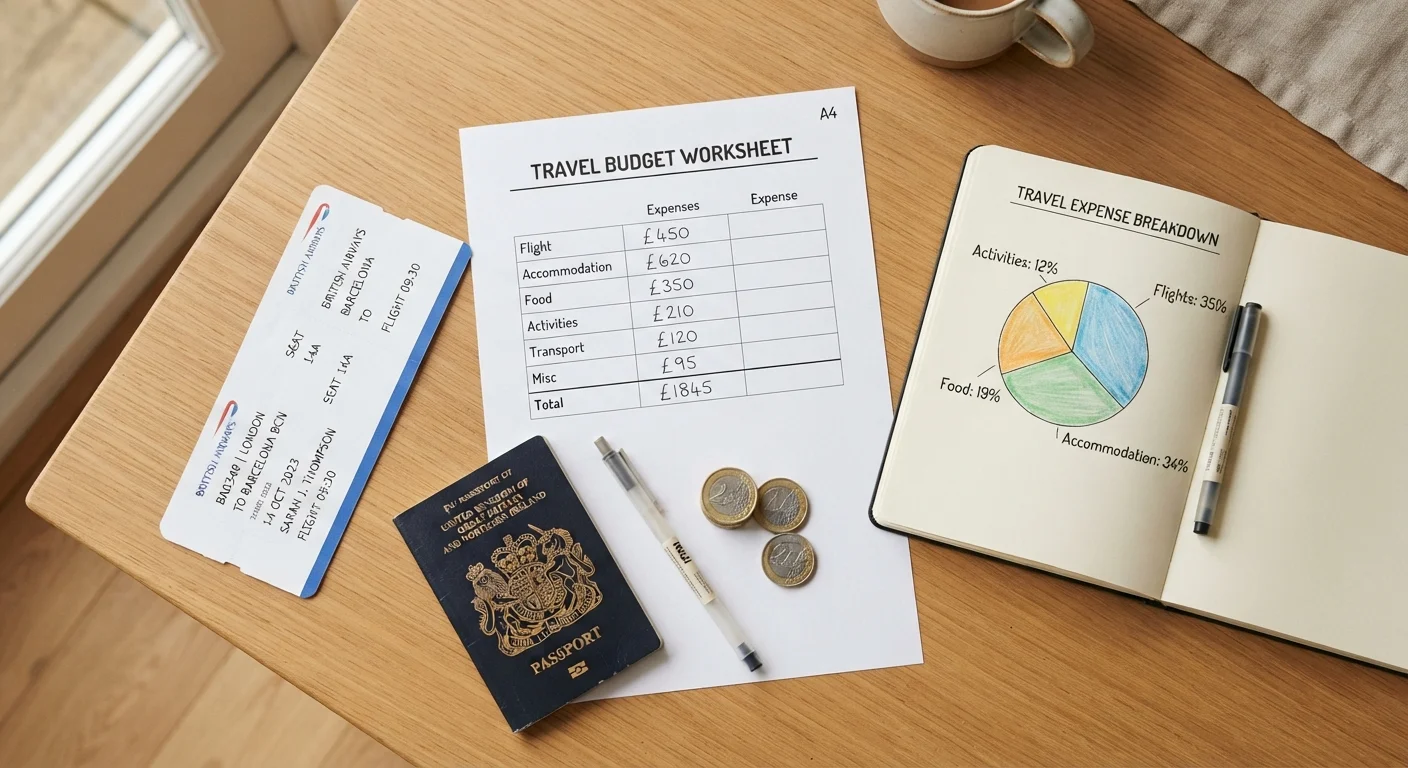
A travel budget breakdown is a category-by-category accounting of where trip spending actually lands — flights, accommodation, food, local transport, activities, and incidentals. Understanding how costs distribute across these buckets lets you make deliberate trade-offs instead of discovering overruns after you've returned home.
Budget allocation ratios vary significantly by destination, trip length, and travel style. Domestic road trips and international backpacker routes produce very different category weightings.
The Five Core Cost Categories Every Trip Shares
No matter where you're going or how long you're staying, travel budgets consistently break into the same five categories: transportation to the destination, accommodation, food and drink, local transportation, and activities. Understanding how each one behaves — which are fixed before you leave and which flex once you're on the ground — is the foundation of effective trip budgeting.
Transportation to your destination (usually flights or intercity transit) is typically the largest single line item and the least flexible once booked. It's also the category most sensitive to timing — booking windows, travel days, and seasonal demand all move prices significantly. This makes it the highest-leverage place to plan carefully upfront.
Accommodation is the other major fixed cost. It compounds nightly, meaning small per-night differences multiply across a week or two. The lodging options available to budget travelers span a wide price range — hostels, guesthouses, vacation rentals, and budget hotels — each with different trade-offs on privacy, location, and cost.
Food and drink is where most travelers either bleed money without noticing or find significant savings with minimal sacrifice. Eating where locals eat — markets, food courts, neighborhood restaurants off the tourist drag — routinely cuts daily food spend by 30–60% compared to dining at tourist-facing establishments.
Local transportation (metro, bus, rideshare, bike rental) is consistently underestimated. Daily transit costs in a sprawling city can easily run $15–25 per person. Understanding a destination's public transit network before you arrive lets you budget realistically and avoid expensive ride-share defaults.
Activities and entrance fees vary most by traveler preference. Museums, guided tours, national parks, and ticketed attractions add up quickly. Many cities offer free or low-cost alternatives — public markets, hiking trails, free museum days — that cost nothing but planning awareness.
30–50%
Flights' share of an international trip budget
Transportation to destination typically dominates international travel budgets, though the ratio shifts on longer trips where accommodation costs accumulate.
10–20%
Hidden costs added on top of visible budget
Visa fees, tourist taxes, baggage charges, and transfer costs collectively add a significant unplanned margin that most travelers don't account for upfront.
30–60%
Potential food savings eating local vs. tourist spots
Dining at markets, food courts, and neighborhood restaurants consistently costs a fraction of tourist-facing establishments in most global destinations.
The Hidden Layer: Costs That Don't Show Up in Search Results
Beyond the five visible categories lies a layer of costs that don't appear in any flight or hotel search: visa and entry fees, airport-to-city transfer charges, checked baggage fees, tourist and resort taxes, travel insurance, currency conversion margins, and destination-specific tipping norms. Individually these feel minor. Collectively, they routinely add 10–20% to a trip's total cost — and they hit hardest when you're not expecting them.
Visa fees alone can range from zero to over $160 depending on destination and citizenship. Some countries charge tourist taxes at the point of entry or automatically via accommodation — amounts that never appear in your booking confirmation until checkout. Airport transfer costs in cities with poor transit connections (a shuttle or taxi from a remote international airport) can run $30–60 each way, which doubles when you factor in return.
The most reliable way to surface these costs before committing is systematic destination research — not just reading highlights pages, but digging into recent traveler accounts and official government entry requirements. Destination research methods that surface hidden costs provides a structured approach for doing this before you book.
Build a Hidden Costs Line Item
When drafting your trip budget, add a dedicated line for hidden and miscellaneous costs — not a vague 'buffer,' but an estimated sum of visa fees, entry taxes, baggage charges, and transfer costs researched in advance. This forces you to find these numbers before you travel, and it makes your total budget honest rather than optimistic.
How to Use This Framework to Cut Spending Strategically
Once you can see where your money is actually going, you can make targeted decisions instead of blanket cuts that reduce enjoyment without meaningfully lowering total cost. The highest-leverage strategy is to identify your single largest cost category and focus optimization effort there first.
If flights dominate your budget, fare alert tools, flexible date searches, and honest consideration of alternative airports are worth the time investment. If accommodation is your biggest line item, exploring the full range of lodging options — including accommodation types you've never used before — can unlock significant per-night savings.
For variable on-the-ground costs (food, local transit, activities), the goal is setting a realistic daily spending target before you leave, not guessing when you arrive. Travelers who pre-research local meal prices and transit systems consistently spend less than those who improvise. Tools that help you build and stress-test a daily number are covered in our guide to free planning tools budget travelers actually use.
Finally, don't confuse cutting the budget with cutting the trip. The goal of this framework is to redirect spending toward what actually matters to you — and eliminate leakage from the categories that don't. See the Budget Traveler's End-to-End Planning Guide for how to apply this thinking across every phase of your trip.