

Key Takeaways
Option A
Scheduled Maintenance
The predictable, calendar-driven side of car ownership costs.
Best for: Drivers who want to plan ahead and avoid larger repair bills through preventive upkeep.
Option B
Unscheduled Maintenance
The unpredictable repair costs that catch most drivers off guard.
Best for: Understanding why a financial buffer - not just a service budget - is essential for every vehicle owner.
If you are budgeting for a new or used vehicle purchase
Scheduled Maintenance
Start by calculating the manufacturer's service schedule costs for the first three years - this is the floor of your maintenance budget, not the ceiling.
If you are building an emergency vehicle fund
Unscheduled Maintenance
Set aside a separate reserve specifically for unscheduled repairs; blending it with your routine service budget leaves you exposed when surprises hit.
If you drive a high-mileage or aging vehicle
Unscheduled Maintenance
Older vehicles see a higher frequency of unscheduled repairs; your buffer should grow proportionally as the vehicle ages beyond 100,000 miles.
If you want to reduce total long-term repair spending
Scheduled Maintenance
Consistently following service intervals is one of the most reliable ways to prevent unscheduled failures - especially for fluids, filters, and wear components.
Defining the Two Categories
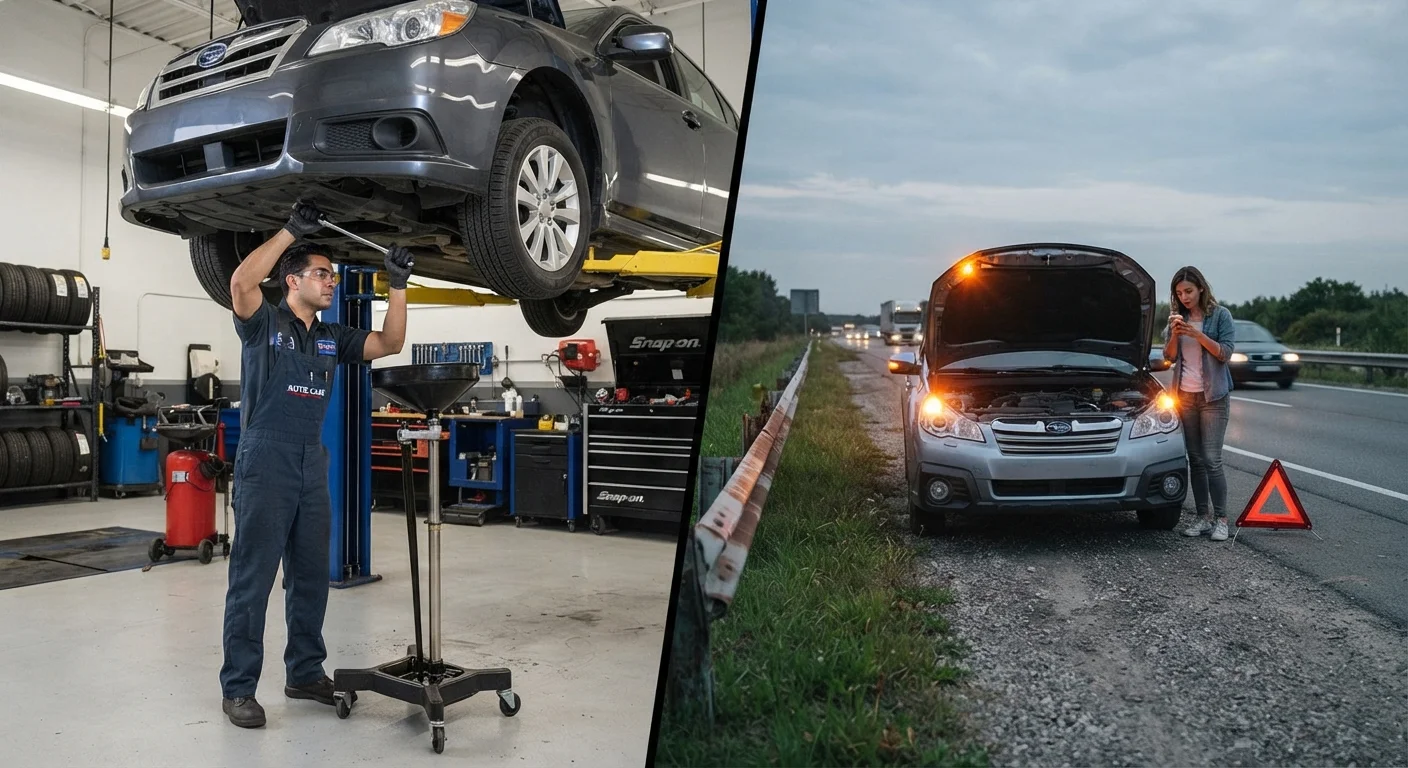
Every dollar you spend keeping a vehicle on the road falls into one of two buckets: scheduled maintenance or unscheduled maintenance. The difference is not just semantic - it determines whether a cost can be anticipated, planned for, and absorbed comfortably, or whether it arrives as a financial shock.
Scheduled maintenance refers to services specified by the vehicle manufacturer at defined mileage or time intervals. Oil changes, tire rotations, brake fluid flushes, spark plug replacements, and transmission service are common examples. These are documented in your owner's manual and are largely the same across similar vehicles. Because the timing and scope are known in advance, the cost is estimable - typically within a reasonable range depending on where you have the work done.
Unscheduled maintenance covers repairs triggered by component failure, wear beyond predicted timelines, or damage - things like a failed alternator, a cracked serpentine belt, or a malfunctioning oxygen sensor. Unlike scheduled services, these events give little or no advance warning, and their costs can range from a modest fix to several thousand dollars. For a deeper look at the patterns behind inflated bills, see why your car costs more to maintain than it should.
| Criterion | Scheduled Maintenance | Unscheduled Maintenance |
|---|---|---|
| Predictability | High - intervals are manufacturer-defined | Low - triggered by failure or wear |
| Budget planning | Can be estimated months in advance | Requires a separate contingency reserve |
| Typical cost range | Modest to moderate per service visit | Highly variable; can be several thousand dollars |
| Driver control | High - driver schedules and approves | Low - often urgent and time-sensitive |
| Impact of deferral | Increases unscheduled repair risk | Delays worsen damage and cost in most cases |
| Documentation source | Owner's manual, OEM service schedule | Mechanic diagnosis, inspection findings |
What the Numbers Actually Look Like
AAA's annual Your Driving Costs study consistently finds that maintenance and repair represent a substantial share of total vehicle ownership expense. While exact figures vary by vehicle type, age, and region, the broader point is consistent: drivers who plan only for scheduled services routinely underestimate their true annual spend.
The gap between what drivers budget and what they actually pay is largely explained by unscheduled repairs. A single major unscheduled event - a water pump failure, a timing chain replacement, or an unexpected brake caliper seizure - can equal or exceed an entire year of scheduled service costs.
$10,000+
Average annual vehicle ownership cost
AAA's Your Driving Costs study estimates total ownership expenses - including maintenance, fuel, insurance, and depreciation - regularly exceed this threshold for new vehicles.
1 in 3
Drivers without an emergency vehicle fund
Industry surveys suggest a significant share of drivers have no dedicated reserve for unscheduled repair costs, leaving them reliant on credit when failures occur.
$500-$3,000+
Typical unscheduled repair cost range
Common unscheduled repairs such as transmission service, alternator replacement, or suspension work frequently fall in this range, depending on vehicle make and labor market.
If you are new to tracking these costs, the budgeting basics hub offers practical frameworks for separating fixed and variable vehicle expenses in a monthly spending plan.
How Scheduled and Unscheduled Maintenance Are Connected
These two categories are not independent - they interact directly. Deferred scheduled maintenance is one of the most reliable predictors of unscheduled repair frequency. Skipping an oil change, for instance, allows engine sludge to accumulate, which can contribute to premature wear on components that are not cheap to replace. Similarly, ignoring a transmission fluid interval can accelerate internal wear that eventually produces an unscheduled - and costly - failure.
This relationship means that viewing scheduled maintenance purely as an expense to minimize can be counterproductive. It is more accurate to treat it as a cost-control mechanism: consistent adherence to service intervals reduces the probability and severity of unscheduled events over the vehicle's lifetime.
For guidance on how manufacturer intervals compare with mechanic recommendations - a common source of confusion - see car maintenance schedules decoded. And if you are building habits from the ground up, the first-year maintenance roadmap walks through what to expect in early ownership.
The 1% Rule for Repair Reserves
A commonly cited personal finance guideline suggests setting aside roughly 1-2% of a vehicle's current market value annually as a repair reserve - separate from your routine maintenance budget. For a vehicle valued at $20,000, that translates to $200-$400 per year minimum. This is a general heuristic, not a guarantee, and older or higher-mileage vehicles may warrant a larger buffer. Adjust based on your vehicle's age, reliability history, and your own financial cushion.
This article provides general financial and automotive information for educational purposes. Consult a qualified mechanic for vehicle-specific service guidance, and a licensed financial adviser for decisions tailored to your personal situation.