

Key Takeaways
Tyre Wear Rate
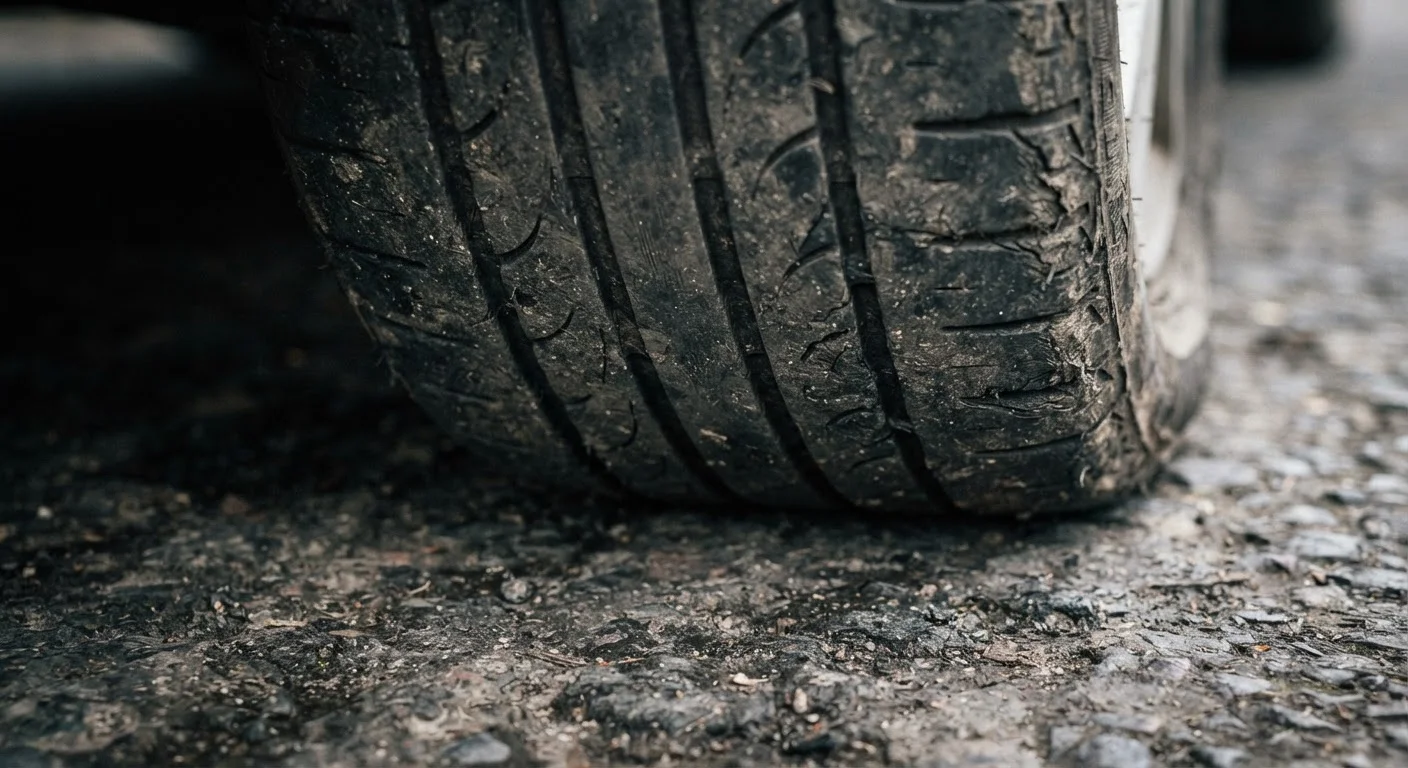
Tyre wear rate describes how quickly a tyre's rubber tread depth diminishes with use. It is influenced by driving behaviour, vehicle weight, wheel alignment, inflation pressure, and road surface. Faster wear means shorter tyre life - and more frequent, costly replacements. Most drivers underestimate how significantly their habits affect how long a set of tyres lasts.
Tread depth is measured in 32nds of an inch in the US. New tyres typically start at 10/32" to 11/32"; federal law requires replacement at or before 2/32". Many safety experts recommend replacement at 4/32" for wet-road performance.
Why Tyres Are a Hidden Budget Item
When drivers calculate what a car costs to own, they typically think of fuel, insurance, and loan payments. Tyres rarely appear in that mental ledger - until a worn set forces an unplanned expense. Yet AAA's cost-of-ownership research consistently shows tyres as a measurable recurring line item that most owners fail to plan for.
A set of four replacement tyres on a mid-size sedan might run $600-$900 installed. On an SUV or truck, that figure climbs higher. Spread across a 50,000-mile tyre life, the annual cost is manageable - but only if you anticipate it. Most drivers don't, which is why tyre replacement often feels like an emergency rather than a scheduled expense. See the full breakdown of car ownership costs to understand where tyres sit relative to other recurring expenses.
$0.014-$0.018
Estimated tyre cost per mile (passenger car)
Based on AAA's annual Your Driving Costs study, which models tyre replacement across typical ownership periods for common vehicle categories.
20-25%
Potential tyre life reduction from underinflation
The US Department of Transportation has documented that operating tyres 20% below recommended pressure can meaningfully shorten their service life.
4/32"
Tread depth at which safety performance degrades notably
Testing by organisations including Consumer Reports has shown wet-braking distances increase significantly below 4/32" of remaining tread, well before the legal 2/32" limit.
The Driving Habits That Burn Through Tyres Fastest
Tread wear isn't just a function of miles driven - it's a function of how those miles are driven. Several common habits significantly shorten tyre life:
- Hard acceleration and braking: Both generate heat and friction at the contact patch. Repeated aggressive stops - particularly at highway speeds - can reduce tyre life by thousands of miles compared to smooth, progressive braking.
- Fast cornering: Lateral forces during cornering stress the outer shoulder of the tyre. Performance-oriented driving on standard touring tyres accelerates shoulder wear noticeably.
- High sustained speeds: Heat buildup at highway cruise speeds above 75 mph accelerates rubber degradation even without aggressive inputs.
- Urban stop-and-go driving: Frequent low-speed stops are less damaging per stop than highway braking events, but high frequency adds up - especially on front tyres, which absorb most braking force.
These factors compound. A driver who accelerates hard from lights and brakes late in city traffic may see 20-30% shorter tyre life than a driver covering the same annual mileage more smoothly. Common ownership cost myths often include the assumption that driving style is irrelevant to maintenance costs - it isn't.
Check Tyre Pressure Monthly - Not Just by Eye
A tyre can be significantly underinflated without appearing visually flat to most drivers. Use a pressure gauge to check all four tyres (plus spare) when cold - meaning the vehicle hasn't been driven in the past three hours or less than one mile. The correct target pressure is on the driver's door jamb label, not the tyre sidewall, which shows maximum pressure.
Mechanical Factors That Compound Wear
Even calm drivers face accelerated wear when mechanical conditions are out of spec. Three issues stand out:
- Tyre inflation
- Underinflated tyres flex excessively, generating heat and wearing the outer edges faster. The US Department of Transportation estimates that tyres underinflated by 20% can lose around 20-25% of their expected service life. Overinflation causes the centre tread to wear prematurely. TPMS (Tyre Pressure Monitoring System) alerts trigger only at significant deviation - monthly manual checks catch smaller problems earlier.
- Wheel alignment
- Misalignment causes tyres to scrub sideways with every rotation. A vehicle with toe-out or camber misalignment can destroy a tyre's inner or outer edge in a fraction of normal mileage - sometimes making an otherwise usable tyre legally unsafe while the centre looks fine.
- Suspension wear
- Worn shocks or struts allow excessive tyre bounce, producing a cupping or scalloping pattern across the tread. This wear pattern is irreversible and typically requires early replacement.
These mechanical causes are largely preventable through routine inspection. For a broader framework on reducing avoidable maintenance costs, see common tyre maintenance myths debunked.
Building Tyre Costs Into Your Ownership Budget
The simplest way to avoid tyre sticker shock is to treat replacement as a scheduled expense rather than a surprise. A practical approach:
- Identify your tyre's rated mileage: Most tyre manufacturers publish a treadwear warranty or estimate. Divide the purchase price of a set by that mileage figure to get a cost-per-mile baseline.
- Track actual tread depth: Use an inexpensive tread depth gauge monthly. When depth reaches 4/32", begin budgeting for replacement even if the legal minimum (2/32") hasn't been hit yet.
- Set aside a monthly tyre reserve: If a set costs $800 and your tyres last 50,000 miles at 15,000 miles per year, you need roughly $240 per year - or $20 per month - to replace them without financial disruption.
This kind of proactive budgeting is part of what separates drivers who feel in control of vehicle costs from those who don't. The strategies for keeping ownership costs in check over a vehicle's full life apply directly here - small, consistent habits prevent large, reactive expenses.
This article provides general information about vehicle maintenance costs and is not a substitute for advice from a qualified mechanic. Actual costs will vary based on vehicle type, driving conditions, and your location.