

Key Takeaways
The Costs Most Drivers Undercount
When drivers calculate what a vehicle will cost them, most focus on the monthly payment. What tends to fall off the radar are the recurring, compounding expenses that accumulate quietly: depreciation, insurance, registration, fuel, tyres, and unscheduled repairs. According to AAA's annual Your Driving Costs study, the true annual cost of owning and operating a new vehicle commonly exceeds $10,000 - a figure that surprises most car buyers who have budgeted for a fraction of that.
Depreciation is the stealthiest of these costs. A vehicle typically loses the most value in its first three years, yet that loss rarely features in a buyer's monthly budget. Similarly, tyre wear and scheduled fluid services represent predictable costs that can be planned for - but only if drivers treat ownership as a multi-year financial exercise rather than a monthly payment problem. See our guide to building a realistic monthly car budget for a framework that captures every expense category.
Best Practices for Controlling Costs Across the Ownership Period
The following practices reflect how informed owners approach the full cost equation - from the day they take delivery to the day they sell or trade in.
When Behaviour Behind the Wheel Becomes a Budget Line
Driving style has a direct and measurable effect on ownership costs that most drivers never consciously connect. Hard acceleration degrades fuel economy and accelerates drivetrain wear. Frequent hard braking shortens brake pad and rotor life. Consistently underinflated tyres can reduce fuel economy and accelerate tread wear simultaneously.
Tyre wear and replacement costs are rarely factored into ownership budgets at purchase, yet a full set of replacement tyres is a near-certain future expense for any driver who keeps a vehicle beyond 40,000-50,000 miles. Smooth, anticipatory driving - maintaining safe following distances and decelerating gradually - reduces wear across multiple systems simultaneously.
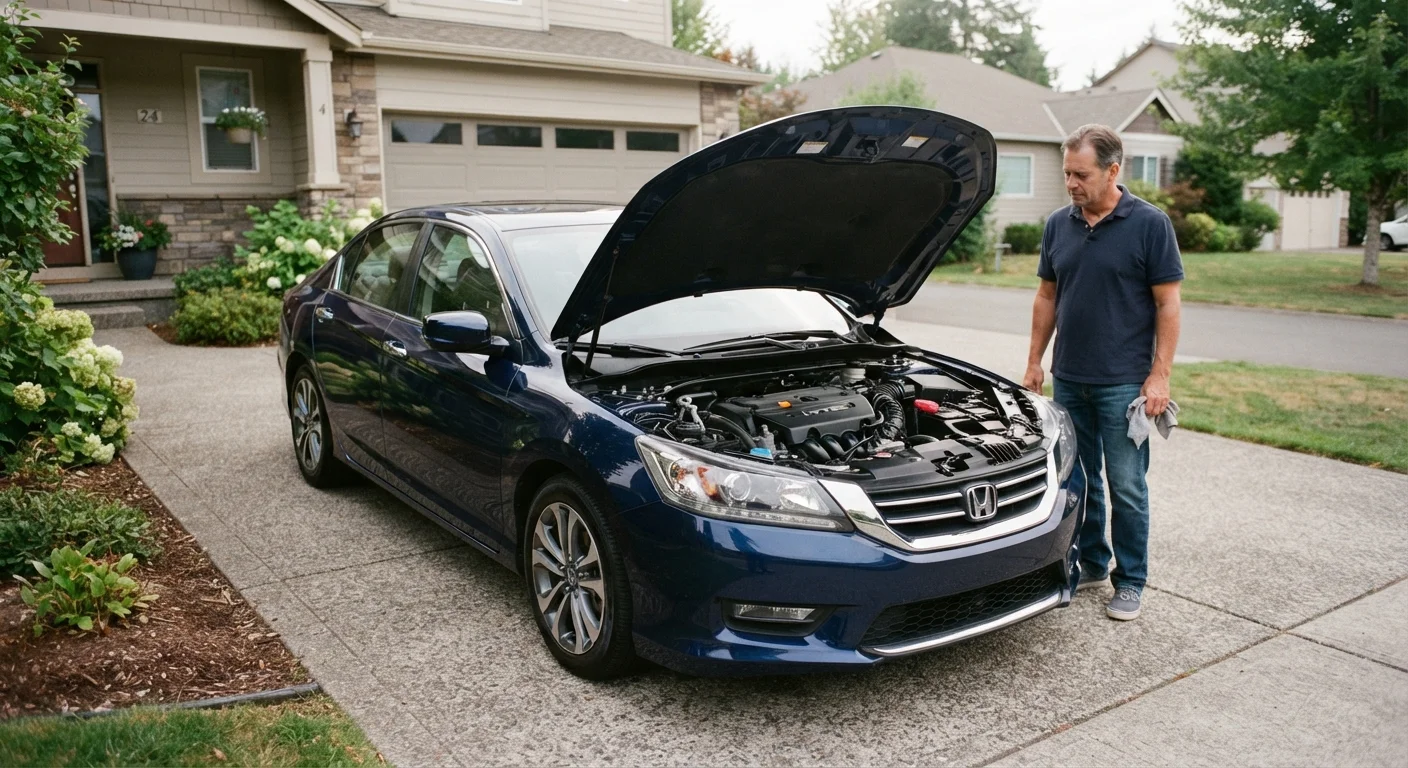
Routine fluid checks are another low-effort lever. Catching a low coolant level or degraded brake fluid during a self-inspection costs nothing and can prevent failures that cost hundreds. Our fluid check walkthrough covers what any driver can verify at home in under ten minutes.
Knowing When to Sell: The Exit Timing Problem
One of the least discussed ownership decisions is when to exit. Keeping a vehicle until it has no resale value may feel financially sound - and sometimes it is - but the calculus shifts as repair frequency climbs. A useful signal: when unscheduled repair costs in a single year approach 50% of the vehicle's current market value, a structured cost comparison between continued ownership and replacement becomes warranted.
For drivers weighing whether to keep an older vehicle or move to something newer, the ownership cost comparison between older high-mileage and newer vehicles provides a grounded framework. And for anyone considering whether a lease might be a more cost-predictable alternative at that transition point, the buying vs leasing trade-offs hub covers the full financial picture.
Ultimately, the drivers who control costs most effectively over a vehicle's full life share one trait: they treat ownership as an ongoing financial commitment that requires periodic review, not a one-time purchase decision.
This article provides general financial information for educational purposes only and does not constitute personalised financial advice. Consult a qualified financial professional for guidance specific to your situation.