

Key Takeaways
Why the Purchase Price Is Only Part of the Story
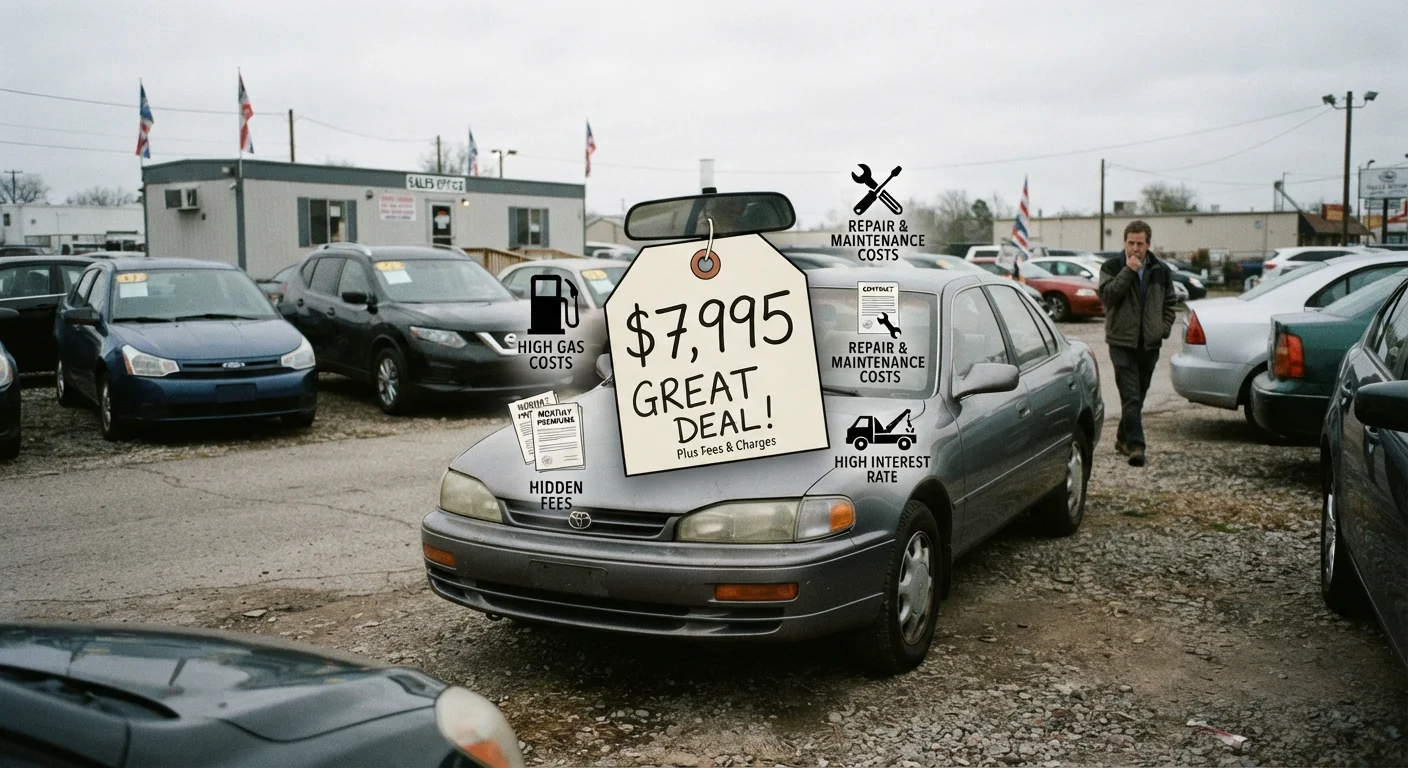
A vehicle priced thousands below market average can look like a straightforward win. But the purchase price is a one-time event; ownership costs accumulate every month for years. According to AAA's vehicle cost research, depreciation alone typically accounts for the largest single share of annual ownership expense - often exceeding fuel and insurance combined. For drivers who focus on acquisition cost without modeling ongoing expenses, the financial reality tends to arrive as an unpleasant surprise.
The categories that matter most - depreciation, insurance premiums, fuel, maintenance, and financing costs - vary significantly by vehicle type, age, make, and even trim level. A comprehensive breakdown of these categories illustrates just how wide the gap can be between two vehicles at similar price points. Understanding where your money actually goes is the prerequisite for choosing a vehicle that's genuinely affordable to own.
The Sticker Price Is Not the Ownership Cost
AAA's annual 'Your Driving Costs' study consistently finds that the average US driver spends well over $10,000 per year when all vehicle costs are tallied - including depreciation, fuel, insurance, maintenance, and financing. A vehicle priced $5,000 below a competitor can easily cost more over five years if its ongoing expenses are higher. Always calculate total cost of ownership, not just acquisition cost, before committing to a purchase.
Common Mistakes That Inflate Your Real Ownership Cost
The errors below aren't unusual or careless - they're the predictable result of how vehicle information is presented and how buyers naturally process it. Recognizing the pattern is the first step toward avoiding it.
Focusing exclusively on the purchase price while ignoring ongoing operating costs such as fuel, insurance, and routine maintenance.
Why it happens: The sticker price is the most visible number in any vehicle transaction, so it naturally anchors the buyer's perception of affordability. Ongoing costs feel abstract until the bills arrive.
Underestimating depreciation by treating a low purchase price as protection against value loss.
Why it happens: Buyers assume a cheap vehicle can't lose much more value because it's already inexpensive. In reality, vehicles with poor reliability reputations or high ownership costs often depreciate faster than average.
Skipping insurance cost research before purchase, then being surprised by disproportionately high premiums.
Why it happens: Buyers typically shop insurance after selecting a vehicle, by which point switching feels costly. Some vehicle segments - certain sports cars, high-theft models, and vehicles with expensive repair profiles - carry significantly elevated premiums.
Ignoring parts availability and labor complexity, which can make routine repairs unexpectedly expensive.
Why it happens: Drivers assume all vehicles cost roughly the same to fix. In practice, imported vehicles with limited domestic parts distribution or models requiring specialized tooling can carry repair costs two to three times higher than mainstream equivalents.
Overlooking fuel economy differences between similar-priced vehicles, treating fuel as a fixed background cost.
Why it happens: A difference of 8-10 MPG between two comparable vehicles can seem trivial, but over 15,000 miles per year at average US fuel prices, it translates to hundreds of dollars annually - and thousands over a typical ownership period.
Treating a low-mileage older vehicle as automatically cheaper to own than a newer model with higher sticker price.
Why it happens: Low mileage implies less wear, which buyers equate with reliability. However, age-related deterioration - rubber seals, timing components, and corrosion - progresses independently of mileage and can generate significant repair costs.
For a broader look at the assumptions that distort how drivers estimate their expenses, ownership cost myths that lead drivers to underestimate their spending covers the most widespread beliefs that cause people to consistently get this calculation wrong.
Building a More Accurate Ownership Budget
Once you've identified the cost categories you're most likely to underweight, the practical step is building a structured estimate before committing. A simple spreadsheet covering annual fuel, insurance, scheduled maintenance (from the owner's manual), estimated depreciation, and any anticipated repairs provides a more honest picture than the sticker price alone.
$12,182
Average annual cost to own a new vehicle
According to AAA's 'Your Driving Costs' study, this figure includes depreciation, insurance, fuel, maintenance, and financing for the average new car driven 15,000 miles per year.
~47%
Share of ownership cost from depreciation alone
For many mainstream vehicles, depreciation accounts for nearly half of the total five-year ownership cost, dwarfing fuel and insurance as individual expense categories.
$1,000+
Annual fuel cost difference between 20 MPG and 30 MPG vehicles
At 15,000 miles per year and a US average fuel price near $3.50 per gallon, a 10-MPG gap between two vehicles translates to roughly $875-$1,100 in additional annual fuel spending.
Drivers who track their actual costs year over year are better positioned to make the next purchase decision wisely. Strategies for managing ownership costs across a vehicle's full life offer concrete approaches - from servicing habits to timing the sale - that reduce unnecessary spending over the full ownership period.
This article provides general financial information for educational purposes only and does not constitute personalized financial or purchasing advice. Consult qualified professionals for decisions specific to your circumstances.