

Key Takeaways
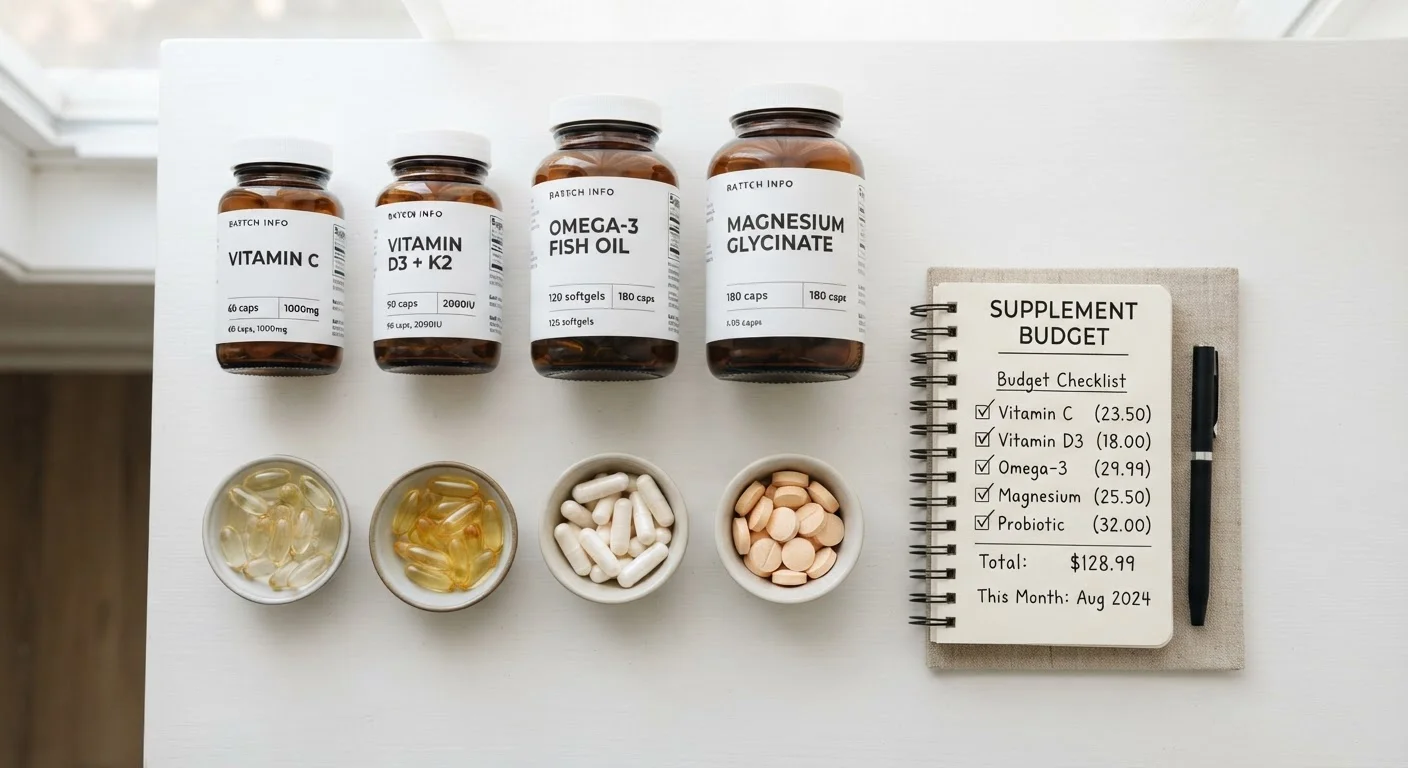
Start With a Supplement Audit
Before comparing prices or chasing savings, take stock of what you currently buy and actually use. Many households accumulate bottles that go half-finished or expire untouched - a silent budget drain that no discount can fix.
List every supplement you purchase over a typical month, then note how consistently you take each one. If you're not using something regularly, eliminating it entirely is the most immediate way to cut spending. For what remains, you have a focused list to shop smarter on. This kind of audit pairs well with broader budgeting basics - knowing where every dollar goes is the foundation of any savings plan.
Compare Cost-Per-Serving, Not Package Price
A 90-count bottle priced at $18 is not automatically a better deal than a 60-count at $14. Dividing total price by number of servings gives you a cost-per-serving figure that makes comparisons honest and straightforward. This single habit consistently surfaces better value without requiring you to memorize prices across stores.
Also watch serving-size definitions - a product listing a "daily serving" of one capsule may deliver less active ingredient than a competitor's two-capsule serving at a similar per-serving price. Check the Supplement Facts panel, not just the label claims, before drawing conclusions. For more on how marketing language inflates perceived value, see our piece on supplement myths that cost you money at checkout.
~$167
Average annual US adult supplement spend
The Council for Responsible Nutrition's consumer survey data has consistently shown average annual supplement expenditure per US adult in the $150-$180 range, varying by product category.
57%
US adults who take a dietary supplement daily
According to the Council for Responsible Nutrition's 2023 Consumer Survey on Dietary Supplements, more than half of U.S. adults report taking supplements regularly.
Evaluate Bulk and Subscription Options Carefully
Larger package sizes frequently reduce cost-per-serving, but they introduce trade-offs worth examining before committing. If a supplement's potency degrades before you finish the bottle, the savings evaporate. Our detailed look at buying supplements in bulk walks through when larger quantities genuinely pay and when they don't.
Auto-ship subscriptions often advertise 10-15% discounts, but the real cost depends on cancellation terms, delivery frequency, and whether you'll actually use the product at that rate. Review the full subscription terms before enrolling, and track whether the discount holds on renewal. Our guide to health product subscriptions covers the key questions to ask. Also consider expiry windows: supplement expiry dates matter more than most people realize, especially for probiotics, fish oil, and fat-soluble vitamins.
Prioritize Third-Party Testing Over Premium Branding
Supplement manufacturing in the U.S. is regulated by the FDA under dietary supplement rules, but products are not pre-approved for efficacy or accuracy before reaching store shelves. Third-party testing organizations - such as USP, NSF International, and ConsumerLab - independently verify that products contain what the label states, in the amounts stated, without harmful contaminants. Choosing products with these seals offers a meaningful quality signal without requiring you to pay a brand premium.
Store-brand and generic supplements frequently carry these same certifications at a lower shelf price. The active ingredient - whether vitamin D3, magnesium glycinate, or zinc - is identical regardless of packaging. Paying more for a recognizable label does not guarantee a better product. For a broader framework on finding genuine value over marketing claims, proven saving strategies can help you apply the same critical lens across all household spending.
Store-Brand Supplements: What the Label Doesn't Tell You
Store-brand and private-label supplements are often manufactured in the same facilities as name-brand products - a practice common across many consumer goods categories. The key differentiator is not the label but whether the product has been independently tested. Look for third-party verification seals rather than defaulting to a premium brand as a proxy for quality.
This article provides general information about supplement purchasing decisions and is not a substitute for personalized medical advice. Consult a qualified healthcare professional before starting, stopping, or changing any supplement regimen, particularly if you have an existing health condition or take prescription medications.