

Key Takeaways
Our Verdict
Growing your own vegetables can genuinely reduce grocery spending, but the payoff depends heavily on which crops you choose and how carefully you manage startup costs. Gardeners who prioritize high-yield, fast-growing crops and invest in durable infrastructure tend to see the strongest return over multiple seasons. Going in with a realistic budget - and a plan to reduce recurring costs each year - makes the difference between a money-saving garden and an expensive hobby.
| Best for | Recommended |
|---|---|
| First-time gardeners watching their budget closely | Small-scale container or raised-bed gardens with seeds |
| Those wanting the fastest return on investment | High-value crops: tomatoes, herbs, and salad greens |
| Gardeners with space and a multi-year outlook | In-ground gardens with composted soil and seed-saving |
What It Actually Costs to Start a Vegetable Garden
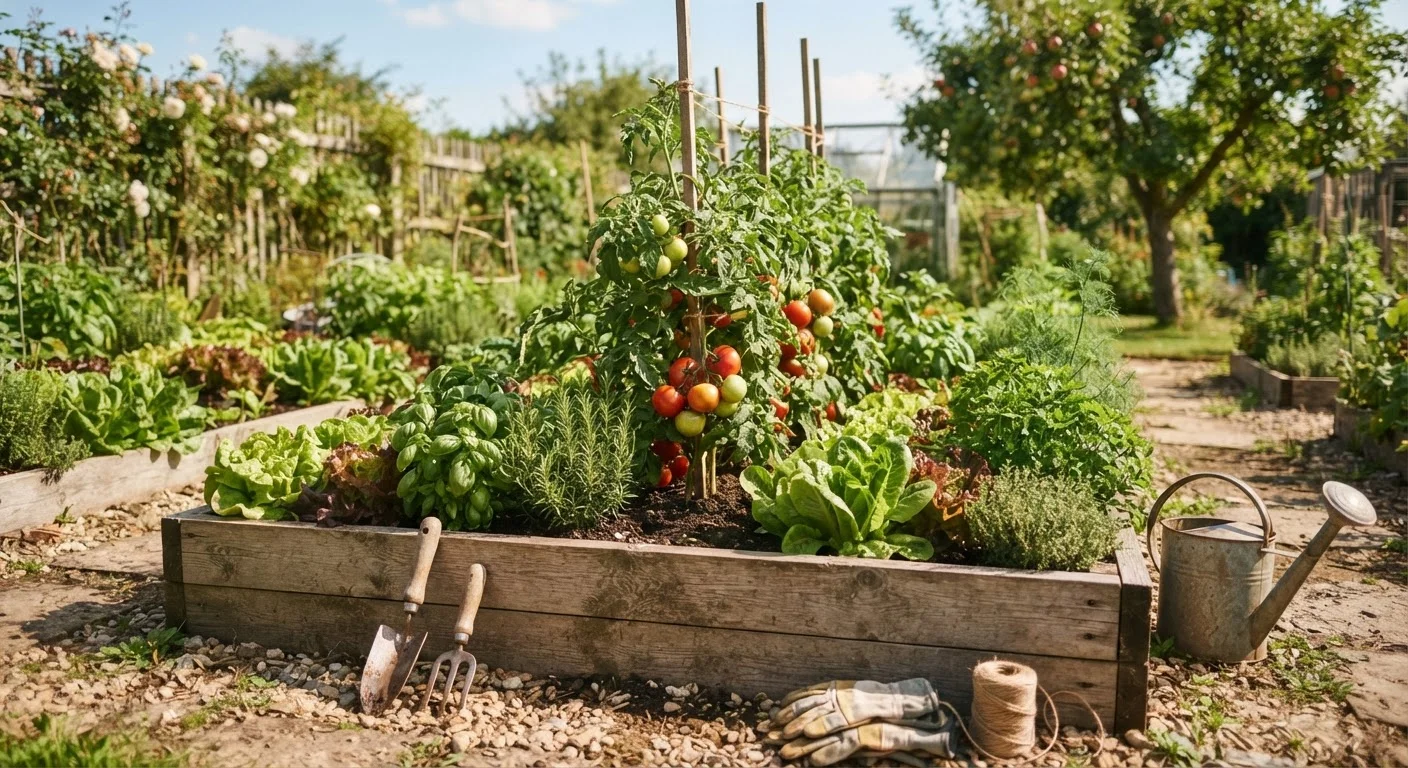
New gardeners are often surprised by how fast startup costs add up. A small raised bed might look simple, but between lumber, soil, amendments, seeds, and basic tools, a first-year budget of $150 to $300 is realistic for a modest 4×8 foot setup. Larger plots or multiple beds will push that higher.
Here's a rough breakdown of common first-year expenses:
- Raised bed or container setup: $40-$120 (lumber, screws, or pre-made kit)
- Soil and amendments: $40-$100 (this is often the most underestimated line item - see our article on why garden soil costs more than expected)
- Seeds or transplants: $15-$50
- Basic tools: $20-$60 (trowel, gloves, watering can)
- Fertilizer or compost: $10-$30
The good news: most of these are one-time or multi-year expenses. Tools last for years, and a well-maintained raised bed can run indefinitely. By year two or three, your ongoing annual cost may be as low as $30-$60 in seeds and soil top-offs.
$600+
Potential annual grocery offset from a 100 sq ft garden
University extension garden economy estimates suggest a well-managed 100 sq ft plot can displace several hundred dollars in produce costs annually, though results vary by crop selection and climate.
~70%
Cost reduction from year one to year two
Once tools and raised bed infrastructure are paid off, most gardeners find their annual recurring costs drop by roughly two-thirds in subsequent seasons.
Which Crops Give You the Most Return
Not all vegetables are equal from a cost-efficiency standpoint. Some crops produce abundantly over a long season; others take up space and deliver little. Focusing on high-value, high-yield crops early on is the most direct way to see a real return.
| Crop | Avg. Yield per Plant/Row | Grocery Value Equivalent | Space Required | Difficulty | |
|---|---|---|---|---|---|
| Tomatoes (indeterminate) | 10-20 lbs per plant | $15-$35 per plant | Moderate (1-2 sq ft) | Low-Medium | |
| Basil | Continuous harvest | $3-$5 per week in season | Very small (6 in) | Low | |
| Lettuce / Salad Greens | Multiple cuts per planting | $2-$4 per harvest | Small (1 sq ft) | Low | |
| Bush Beans | 3-5 lbs per 10-ft row | $4-$8 per row | Moderate (10 sq ft) | Low | |
| Zucchini | 8-10+ fruits per plant | $6-$12 per plant | Large (4-6 sq ft) | Low | |
| Sweet Corn | 1-2 ears per stalk | $0.25-$0.50 per ear | Very large (9 sq ft+) | Medium |
Herbs like basil, parsley, and cilantro are among the highest-value crops per square foot - a single basil plant can easily replace $3-$5 worth of store-bought herbs each week through summer. Tomatoes, especially indeterminate varieties that keep producing until frost, typically yield 10-20 pounds per plant in a healthy season. Salad greens like lettuce and spinach can be cut-and-come-again, meaning one planting provides multiple harvests.
By contrast, crops like corn, melons, and winter squash demand significant space and time for comparatively modest grocery savings. They're not bad choices, but they're better suited for gardeners who have space to spare and are growing for enjoyment as much as economy.
Seeds vs. Transplants: The Cost Trade-Off
One of the most impactful decisions a budget gardener makes is whether to start from seed or buy nursery transplants. Seeds are dramatically cheaper - a packet containing 20-50 seeds often costs less than a single transplant - but they require more time, attention, and sometimes additional equipment like grow lights or a heat mat.
Transplants reduce risk and give you a head start, especially for crops like tomatoes and peppers that have a long growing season. But that convenience comes at a cost: a six-pack of tomato seedlings can run $5-$10, and buying transplants for an entire garden adds up fast.
For a detailed comparison of the real costs of each approach, see our guide on seed packets vs. nursery transplants. A practical middle-ground strategy: start fast-growing crops (lettuce, radishes, beans) from seed directly in the ground, and buy transplants only for slow-starting crops like tomatoes and peppers.
Start Small to Save More
Resist the urge to build out a large garden in year one. A single 4×8 raised bed or a few containers gives you room to learn without overcommitting financially. You can always expand once you know which crops perform well in your specific conditions - and you'll avoid wasting money on plants or soil that don't suit your space.
Keeping Costs Low in Year Two and Beyond
The strongest argument for vegetable gardening as a money-saving strategy is the year-over-year cost reduction. Once your infrastructure is in place, recurring costs shrink substantially. A few habits help accelerate that:
- Save seeds: Tomatoes, beans, peppers, and squash all produce seeds you can dry and store for next season at no cost.
- Compost kitchen scraps: Home compost replaces bagged fertilizer and soil amendments, often completely.
- Expand gradually: Adding one bed at a time keeps cash flow manageable and lets you learn what grows well in your conditions before scaling up.
It's also worth being honest about expensive gardening habits that quietly drain your budget - things like overbuying amendments or impulsively adding plants outside your plan. If space is a constraint, our overview of container gardening on a tight budget covers how to stretch a small footprint further.
Vegetable gardening rarely pays off in a single season for a brand-new setup. Treat year one as the investment period, and years two through five as when the real savings materialize.