

Key Takeaways
Lower cost per pound or per serving
Larger pack sizes almost always carry a reduced unit price, which translates to genuine per-meal savings when the food is actually consumed before spoiling.
Fewer reorder trips and reduced shipping frequency
Buying in volume means less time spent on restocking runs or waiting for deliveries, which has practical value for busy households.
Consistent supply reduces risk of running out
Maintaining a stock of food avoids last-minute substitutions that can upset a pet's digestive routine or force a rushed, potentially costlier purchase.
Predictable budgeting over time
Infrequent, larger purchases can make it easier to plan food costs month-to-month compared to smaller, irregular buys.
Freshness degrades faster than small pets can consume
Once opened, dry kibble is generally recommended to be used within 4-6 weeks; a small pet may take months to finish a bulk bag, leading to nutritional and palatability decline.
High upfront cost strains cash flow
A 40-lb bag or case of wet food requires a larger single payment, which can be difficult to absorb even when the long-term math favors it.
Diet changes leave you with unusable stock
If a vet recommends a new formula, your pet develops an intolerance, or becomes a picky eater, a large existing supply may go to waste entirely.
Storage space and conditions limit practical feasibility
Bulk food requires adequate, climate-controlled space and proper airtight containers - not every household can accommodate this without the food degrading.
Can inadvertently encourage overfeeding
An abundant supply of easily accessible food can lead to looser portioning habits over time, increasing both food costs and health risks for the pet.
Our Verdict
Bulk buying pet food is a genuine cost-saving strategy when your pet's diet is stable, your storage setup is adequate, and you can realistically consume the quantity before freshness degrades. When those conditions aren't met - due to small pets, dietary instability, or poor storage - the apparent savings often evaporate into spoilage and waste.
Pet owners with large or multiple animals on consistent, vet-approved diets and proper airtight storage capacity.
The Real Appeal of Buying Pet Food in Bulk
Buying pet food in larger quantities - whether a 40-lb bag of kibble or a case of wet food - typically reduces the cost per serving. For pet owners managing recurring food expenses, that per-unit reduction is meaningful. A household feeding a large dog or multiple cats can spend hundreds of dollars annually on food alone, so even a modest percentage drop in unit cost adds up over time.
Beyond price, bulk purchasing reduces how often you need to reorder, which lowers shipping frequency if you buy online and cuts down on last-minute store runs. For anyone trying to build consistent household savings, consolidating routine purchases into fewer, larger transactions can also simplify budgeting.
Lower cost per pound or per serving
Larger pack sizes almost always carry a reduced unit price, which translates to genuine per-meal savings when the food is actually consumed before spoiling.
Fewer reorder trips and reduced shipping frequency
Buying in volume means less time spent on restocking runs or waiting for deliveries, which has practical value for busy households.
Consistent supply reduces risk of running out
Maintaining a stock of food avoids last-minute substitutions that can upset a pet's digestive routine or force a rushed, potentially costlier purchase.
Predictable budgeting over time
Infrequent, larger purchases can make it easier to plan food costs month-to-month compared to smaller, irregular buys.
The math works best for pets that eat predictably and in volume - a 70-lb dog consuming two cups of kibble per day will work through a large bag in a few weeks, staying well within safe freshness windows.
When Bulk Buying Backfires
The savings equation breaks down the moment food degrades faster than your pet consumes it. Dry pet food typically carries a "best by" date of 12-18 months from manufacture, but once a bag is opened, most manufacturers recommend using it within 4-6 weeks. Fat oxidation, moisture intrusion, and nutrient degradation all accelerate after the seal is broken.
Freshness degrades faster than small pets can consume
Once opened, dry kibble is generally recommended to be used within 4-6 weeks; a small pet may take months to finish a bulk bag, leading to nutritional and palatability decline.
High upfront cost strains cash flow
A 40-lb bag or case of wet food requires a larger single payment, which can be difficult to absorb even when the long-term math favors it.
Diet changes leave you with unusable stock
If a vet recommends a new formula, your pet develops an intolerance, or becomes a picky eater, a large existing supply may go to waste entirely.
Storage space and conditions limit practical feasibility
Bulk food requires adequate, climate-controlled space and proper airtight containers - not every household can accommodate this without the food degrading.
Can inadvertently encourage overfeeding
An abundant supply of easily accessible food can lead to looser portioning habits over time, increasing both food costs and health risks for the pet.
Small pets - a single cat, a toy-breed dog, or a rabbit - may eat so little that even a "medium" bulk bag becomes a freshness problem. Similarly, pets on prescription or specialized diets may have their nutritional needs shift following a vet visit, leaving owners with a large stock of food that's no longer appropriate. For context on how diet transitions work and what to watch for, see this food transition checklist.
Overbuying can also quietly encourage overfeeding - when you have an abundance of food on hand, portion discipline can slip. Overfeeding is one of the most common and costly pet owner habits, and a bulk supply sitting in an open bag makes it worse.
Storage: The Factor That Determines Whether Savings Are Real
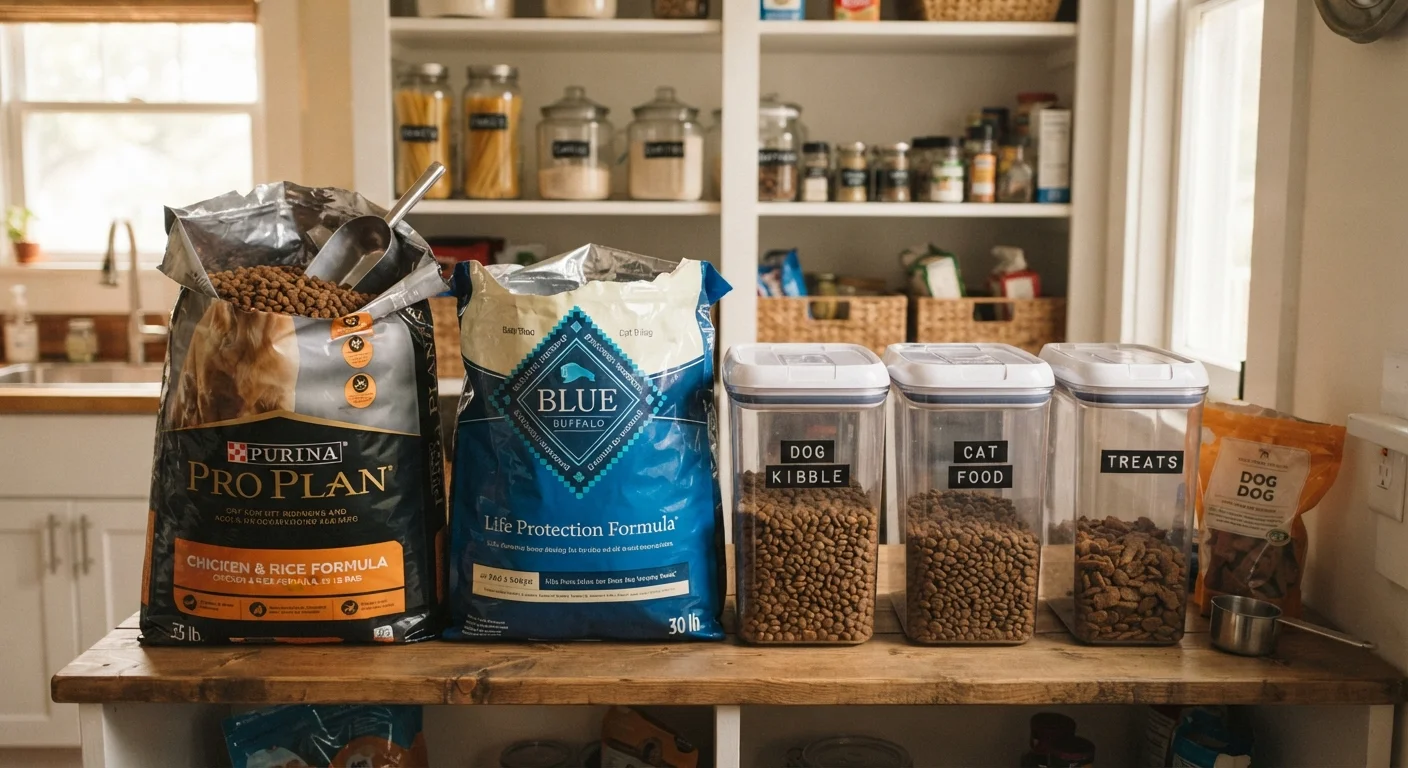
Proper storage is what separates a successful bulk purchase from an expensive mistake. Pet food should be kept in a cool, dry location away from direct sunlight. The original bag provides an important barrier - many bags are designed with oxygen or moisture resistance - but once opened, transferring food into an airtight container significantly slows degradation.
Original Packaging Still Matters
Many dry pet food bags are manufactured with multi-layer films designed to limit oxygen and moisture exposure. Decanting food into a secondary container without keeping the original bag's lot number and expiration date means losing important tracking information. Consider storing the food inside its original bag, placed within an airtight bin, rather than pouring it loose into a container.
Temperature swings are particularly damaging to fat-rich kibble. Garages and outdoor storage areas that get hot in summer or damp in winter are poor storage locations, even if the space seems convenient.
The same logic applies to bulk supplements - potency and safety depend heavily on conditions after purchase. If you're considering bulk buying across other pet care categories, the trade-offs around freshness and storage are consistent. For a broader look at how this plays out, the general bulk-buying breakdown covers the core principles across product types.
Who Gets the Most Out of Bulk Pet Food Purchases
The households that benefit most from bulk buying share a few characteristics: multiple pets, consistent and stable diets, adequate storage infrastructure, and sufficient cash flow to cover the upfront cost without strain. Multi-pet households in particular can see real savings, provided all animals eat the same food or separate bulk purchases each align with realistic consumption rates.
4-6 weeks
Recommended use window after opening dry kibble
Most pet food manufacturers advise consuming opened dry kibble within this window to preserve nutrient integrity and palatability.
~50%
Estimated share of US households with more than one pet
According to American Pet Products Association survey data, multi-pet households represent a large portion of the US pet-owning population, making bulk consumption rates more feasible for many buyers.
Single-pet owners with small animals, pets undergoing dietary transitions, or those without proper storage are likely to find that bulk purchases create more problems than they solve. If cost is the primary concern, there are other levers to consider - comparing store-brand and name-brand formulations can sometimes yield comparable savings without the volume commitment. For dogs specifically, feeding well on a tighter budget involves more than just buying in bulk - portion accuracy and ingredient awareness matter too.
Before committing to any large purchase, run the numbers honestly: divide the total bag cost by the number of daily servings your pet eats, then check whether your pet will finish it within the recommended freshness window. If the answer is yes and your storage conditions are adequate, the savings are likely real. If not, a smaller quantity at a slightly higher per-pound price is the smarter call.