

Key Takeaways
Lower per-unit cost on frequently used items
Buying in larger quantities typically reduces what you pay per ounce, per sheet, or per unit. For staples you consume steadily, this compounds into meaningful savings over a year.
Fewer shopping trips and less time spent
Stocking up less frequently reduces the time, fuel, and incidental spending that comes with repeated store visits — costs that rarely appear in a per-unit comparison.
Protection against price increases
Purchasing a larger supply at today's price insulates you from near-term price increases on essentials, effectively locking in a lower cost for a set period.
Reduced packaging waste per unit
Larger containers generally use less packaging per unit of product, which can reduce household waste and align with environmental goals alongside the financial benefit.
Significant upfront cash required
Bulk purchases demand more money at the point of sale, which can strain monthly cash flow — even if the long-run math is favorable. Households without budget flexibility may find this trade-off impractical.
Spoilage can erase all savings
Perishable goods — and many cleaning or health products — expire. Buying more than you can use within the shelf life turns a discount into a loss.
Storage space is a real cost
Bulk quantities require adequate, appropriate storage. Improper conditions can accelerate degradation, and dedicating home space to surplus stock has an implicit cost.
Membership fees offset savings
Annual warehouse club memberships need to be factored into savings calculations. Shoppers who don't buy frequently enough in volume may not recoup the fee.
Risk of buying wrong quantities or items
Tastes change, product formulations change, and household needs evolve. Committing to a large quantity of something you later stop using or dislike locks in a loss.
Our Verdict
Bulk buying delivers real savings on non-perishable staples with predictable consumption — but only when storage, cash flow, and household size align. For perishables, low-frequency items, or shoppers with limited storage, the apparent per-unit discount often evaporates once waste, spoilage, and opportunity cost are factored in.
Households with stable storage space, consistent usage patterns, and the cash flow to absorb upfront costs will extract the most reliable value from bulk purchasing.
What Bulk Buying Actually Promises
The core pitch of bulk buying is straightforward: buy more units at once and pay less per unit. Warehouse clubs and multi-pack deals are built on this logic, and it holds up arithmetically — retailers do typically charge a lower price per ounce or per item when you purchase in larger quantities.
But the per-unit price is only one variable in a larger equation. Whether that lower unit cost translates into actual household savings depends on factors that vary significantly from one shopper and product to the next. Understanding both sides of that equation is what separates a genuinely smart purchase from a bulk-sized mistake.
For a deeper look at how to evaluate whether a discount is real, see how to identify genuine savings.
Lower per-unit cost on frequently used items
Buying in larger quantities typically reduces what you pay per ounce, per sheet, or per unit. For staples you consume steadily, this compounds into meaningful savings over a year.
Fewer shopping trips and less time spent
Stocking up less frequently reduces the time, fuel, and incidental spending that comes with repeated store visits — costs that rarely appear in a per-unit comparison.
Protection against price increases
Purchasing a larger supply at today's price insulates you from near-term price increases on essentials, effectively locking in a lower cost for a set period.
Reduced packaging waste per unit
Larger containers generally use less packaging per unit of product, which can reduce household waste and align with environmental goals alongside the financial benefit.
The Hidden Costs That Complicate the Math
Per-unit price comparisons rarely capture the full cost of buying in bulk. Several factors can quietly erode — or completely eliminate — the savings.
Storage overhead: Bulk quantities require physical space. If you're renting a storage unit or dedicating premium home space to surplus inventory, that space has a real cost. Even in owned homes, bulk goods stored in climate-sensitive conditions (garages, damp basements) can degrade faster than expected.
Spoilage and waste: For food, cleaning products with active ingredients, or health supplements, shelf life matters. Buying a two-year supply of something with an 18-month shelf life doesn't save money — it wastes it. The same logic applies to vitamins and wellness products, where large quantities can expire before you use them.
Membership fees: Warehouse clubs charge annual membership fees. Those fees need to be offset by actual savings over the year before the club membership breaks even — a calculation many shoppers skip.
Opportunity cost: Tying up $150 in a bulk paper towel purchase means that cash isn't available for other needs. For households managing tight monthly cash flow, the upfront outlay can create real budget strain even if the long-run math looks favorable.
Significant upfront cash required
Bulk purchases demand more money at the point of sale, which can strain monthly cash flow — even if the long-run math is favorable. Households without budget flexibility may find this trade-off impractical.
Spoilage can erase all savings
Perishable goods — and many cleaning or health products — expire. Buying more than you can use within the shelf life turns a discount into a loss.
Storage space is a real cost
Bulk quantities require adequate, appropriate storage. Improper conditions can accelerate degradation, and dedicating home space to surplus stock has an implicit cost.
Membership fees offset savings
Annual warehouse club memberships need to be factored into savings calculations. Shoppers who don't buy frequently enough in volume may not recoup the fee.
Risk of buying wrong quantities or items
Tastes change, product formulations change, and household needs evolve. Committing to a large quantity of something you later stop using or dislike locks in a loss.
For a systematic checklist of costs shoppers routinely overlook, the guide on hidden comparison costs covers this in detail.
Which Products Actually Reward Bulk Buying
Not all bulk purchases carry equal risk. The strongest candidates share a few characteristics: they're non-perishable (or have a long, stable shelf life), you use them at a consistent and predictable rate, and they're not subject to rapid changes in formulation, preference, or need.
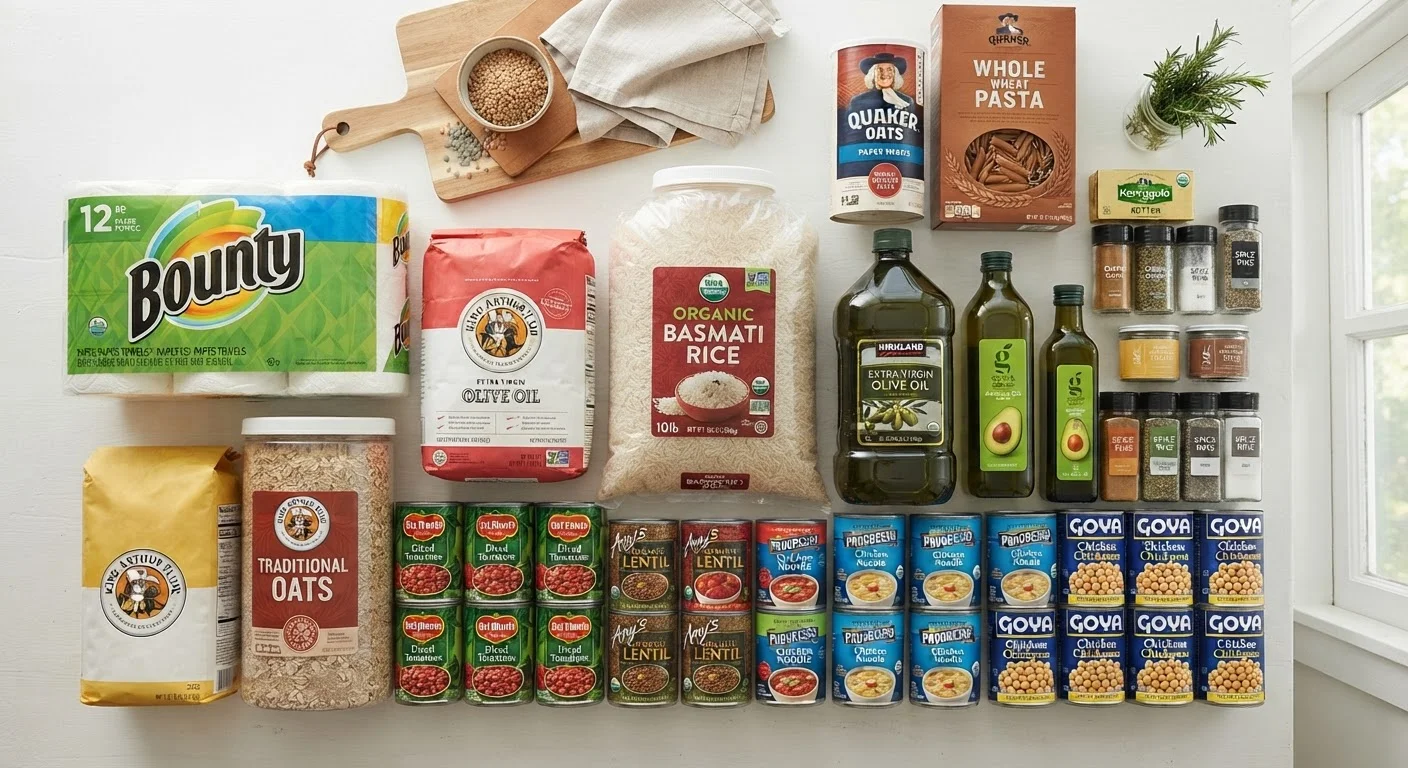
Generally good candidates: Toilet paper, paper towels, laundry detergent, dish soap, canned goods, dried pasta, rice, coffee (whole bean stored properly), and basic cleaning supplies all tend to hold up well in bulk.
Generally poor candidates: Fresh produce, bread, dairy, specialty foods you eat infrequently, trendy supplements before you've tested them, and pet food for animals with changing dietary needs. For that last category, bulk pet food purchases carry specific risks worth understanding before committing to a large bag.
~30%
Typical per-unit savings in bulk versus standard pack
Consumer research consistently suggests bulk packs offer per-unit savings in the range of 20–35% on comparable non-perishable products, though this varies widely by category and retailer.
40%
US households that report food waste regularly
According to USDA estimates, American households waste a substantial portion of food purchased — a risk that increases when buying in quantities that exceed realistic consumption rates.
Household size also matters. A single-person household buying a 48-pack of yogurt is almost certainly setting money on fire. A family of five buying the same pack may use it well within the use-by window. Match quantity to realistic consumption — not optimistic consumption.
A Practical Framework for Deciding
Before committing to any bulk purchase, a simple three-question check can prevent most bulk-buying mistakes:
- Will we use all of it before it expires or degrades? Be honest. Check the shelf life on the label, not the optimistic version in your head.
- Do we have appropriate storage? Cool, dry, and accessible. Bulk goods shoved in a damp garage or an overstuffed pantry often deteriorate faster than labeled.
- Does the math actually work after all costs? Include the proportional membership fee, any storage cost, and realistic spoilage estimates. If the per-unit savings disappear after those deductions, the deal isn't a deal.
Applying this framework consistently — rather than buying bulk impulsively because something feels like a bargain — is a core habit of the smart buying habits that separate disciplined savers from reactive spenders.
Bulk Buying Is a Habit, Not a One-Time Decision
The households that benefit most from bulk purchasing treat it as a system — tracking what they actually use, checking expiry dates before rebuying, and auditing whether the membership fee is paying off annually. Occasional or impulsive bulk buying rarely delivers consistent savings. Building the habit of reviewing your usage rate before committing to a large quantity is what makes the strategy work reliably over time.
This article provides general financial and consumer information for educational purposes only. It is not personalized financial advice. Consult a qualified financial professional for guidance tailored to your individual circumstances.