

Key Takeaways
Our Verdict
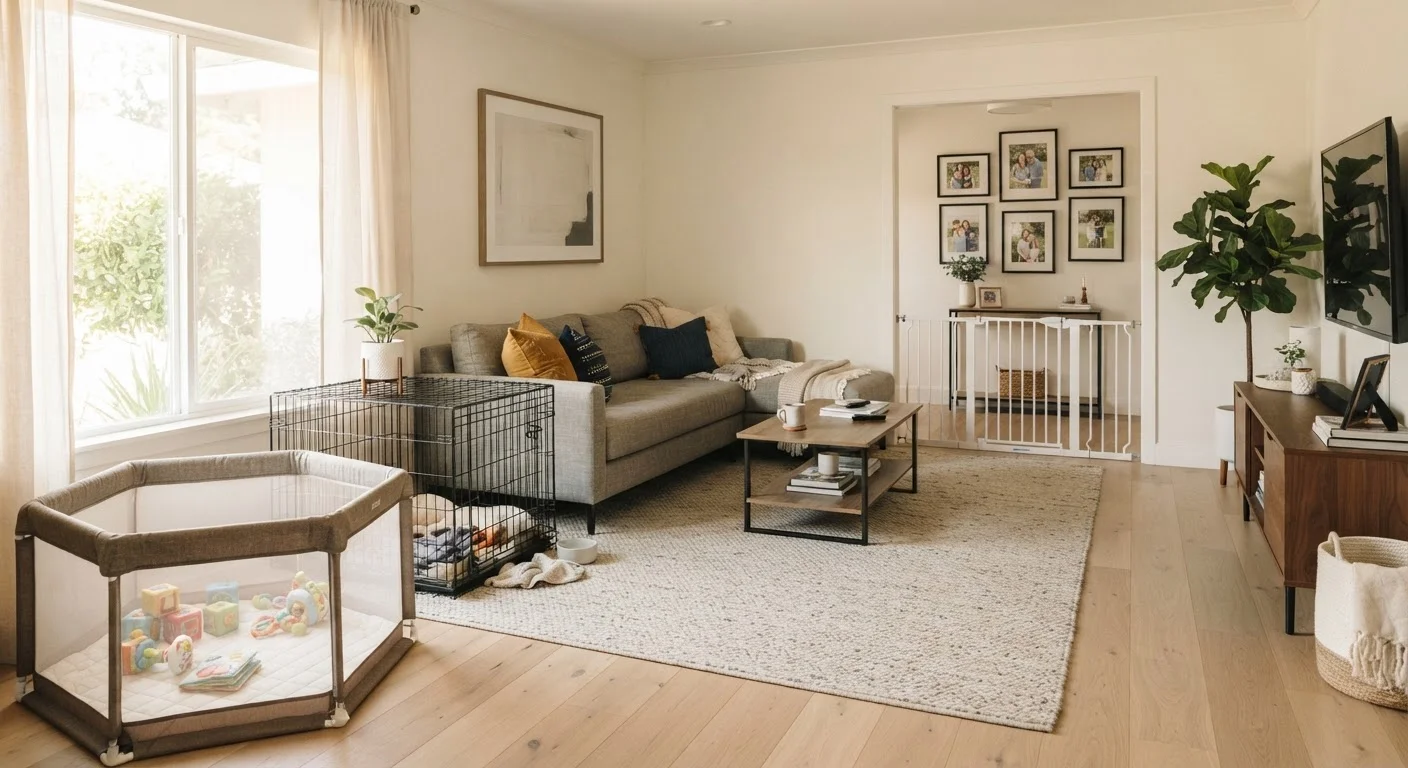
No single containment option works for every dog or every home. Crates excel for house-training and overnight safety; playpens give younger or recovering dogs safe roaming room; gates manage household boundaries for already-trained dogs. Combining a crate with a gate or playpen is the approach most dog owners find most practical over time.
| Best for | Recommended |
|---|---|
| Puppies being house-trained or dogs new to a home | Crate |
| Dogs needing recovery space or owners wanting room-scale freedom | Playpen |
| Adult dogs with reliable household manners | Baby gate |
| Most multi-dog or multi-pet households | Combination approach |
Why Containment Matters - and Why It's Worth Comparing Options
Containment equipment isn't about restricting dogs for convenience - it's a practical tool for safety, training consistency, and home management. A dog that can't access electrical cords, toxic pantry items, or an unsecured staircase is a safer dog. But the wrong containment choice wastes money, frustrates the dog, and often ends up unused within weeks.
For deal-savvy shoppers, the key question is whether the option you're considering actually matches your dog's age, size, and behavior - not just what's on sale. This comparison covers the three most common containment tools: wire or plastic crates, freestanding playpens, and pressure-mounted or hardware-mounted baby gates. See our pre-purchase checklist for a broader framework before committing to any pet equipment purchase.
Crates: Strongest Containment, Steepest Learning Curve
A crate - whether wire, plastic, or soft-sided - provides fully enclosed, portable containment. It's the standard tool for house-training puppies because dogs instinctively avoid soiling their sleeping space, making the crate a consistent training signal. Crates also travel well and double as a secure sleep area once a dog is conditioned to use one comfortably.
The tradeoff is that crate training takes time and patience. A dog forced into a crate without proper introduction can develop anxiety, and leaving any dog crated for excessive hours daily is harmful. Sizing also matters: the crate should be large enough for the dog to stand, turn, and lie down, but not so large that a puppy treats one end as a bathroom.
Match Crate Type to Your Dog's Temperament
Wire crates generally offer better ventilation and allow the dog to see its surroundings, which many dogs find less stressful. Plastic crates provide more den-like enclosure, which some dogs prefer. Soft-sided crates are lightweight but not appropriate for dogs that chew or scratch aggressively. When possible, let the dog's reaction during introduction guide whether you keep the option or try another style.
Wire crates generally offer better ventilation and allow the dog to see its surroundings, which many dogs find less stressful. Plastic crates provide more den-like enclosure, which some dogs prefer. Soft-sided crates are lightweight but not appropriate for dogs that chew or scratch.
In terms of cost, wire crates for medium to large dogs run roughly $40-$120 depending on gauge and features. Divider panels, available in many wire models, let one crate grow with a puppy - a useful way to avoid buying twice.
Playpens: More Freedom, More Flexibility
Freestanding playpens - often called exercise pens or x-pens - create a larger enclosed area without confining a dog to a crate-sized space. They're particularly useful for puppies who need supervised roaming during the day, for post-surgical dogs on restricted activity, and for households where a dog spends several hours alone and needs room to move.
Playpens are modular: most come in panels you can configure to fit the space available. They can be set up indoors or outdoors, and many connect to a crate, giving the dog both a rest area and an activity zone. This combination approach is what many trainers recommend for dogs left home alone for moderate durations.
The limitation is that playpens don't contain a determined escape artist - a dog with sufficient motivation will knock over or jump a playpen that isn't anchored. They're also not compact once assembled, which is a real consideration in small apartments. Prices generally range from $30-$90 for basic metal or coated wire models, though heavy-duty versions for large breeds cost more.
| Crate | Playpen | Baby Gate | |
|---|---|---|---|
| Containment level | High - fully enclosed | Medium - open top unless covered | Low - restricts area only |
| Best life stage | Puppy to adult | Puppy, senior, recovering dog | House-trained adult dog |
| Space required | Compact footprint | Larger floor area needed | Minimal - fits doorway |
| Typical cost range | $40-$120+ | $30-$90+ | $25-$70 |
| Portability | Moderate - folds flat | Moderate - panels stack | High - easy to move |
| Supports house-training | Yes - primary tool | Partial - too large alone | No |
| Escape risk | Low with proper sizing | Medium - can be knocked over | Medium-high for determined dogs |
Baby Gates: Boundary Control, Not Full Containment
Baby gates work differently from crates and playpens - they restrict access to specific areas (stairs, kitchens, bedrooms) rather than containing a dog within a defined space. For dogs that are already house-trained and trustworthy in open areas, a gate can be all the management needed.
Pressure-mounted gates are simpler to install and move between doorways but aren't suitable for blocking stair tops, where a hardware-mounted gate is the safer choice. Tall gates (36 inches or higher) are necessary for dogs that jump. Extra-wide gates handle larger doorways or open-plan spaces that standard gates don't span.
Gates are generally the most affordable option: $25-$70 covers most standard sizes. However, they offer the least containment - a determined or anxious dog may push through a pressure-mounted gate. They also provide no help with house-training and aren't useful for overnight or extended-absence management. For a new dog or puppy, a gate alone is rarely sufficient as the only tool. If you're outfitting your home from scratch, the new pet owner supply guide breaks down which purchases are genuinely essential at each stage.
How to Choose - and Avoid Buying More Than You Need
The most common mistake is buying all three options upfront without assessing actual need. Start by identifying the specific problem you're solving: house-training, overnight safety, daytime roaming, or room restriction. Each maps to a different tool.
- Puppy under 6 months: A crate for overnight and short-duration containment, combined with a playpen for supervised daytime space, covers most scenarios.
- Adult dog, house-trained: A gate to limit access to certain rooms is often sufficient without any crate or pen.
- Dog recovering from surgery or illness: A playpen allows restricted movement without full crating - useful when a dog needs to be calm but not fully confined.
- Multi-dog household: Separate crates for sleeping plus a shared gate or pen boundary can reduce resource guarding and inter-dog tension.
Also consider your living space. A studio apartment may not accommodate both a crate and a playpen. A house with open-plan rooms may make a single gate ineffective. Matching the solution to the layout avoids wasted spend. For households managing multiple animals and different needs simultaneously, the multi-pet household budgeting guide offers a useful parallel framework for thinking about cost and logistics across animals.