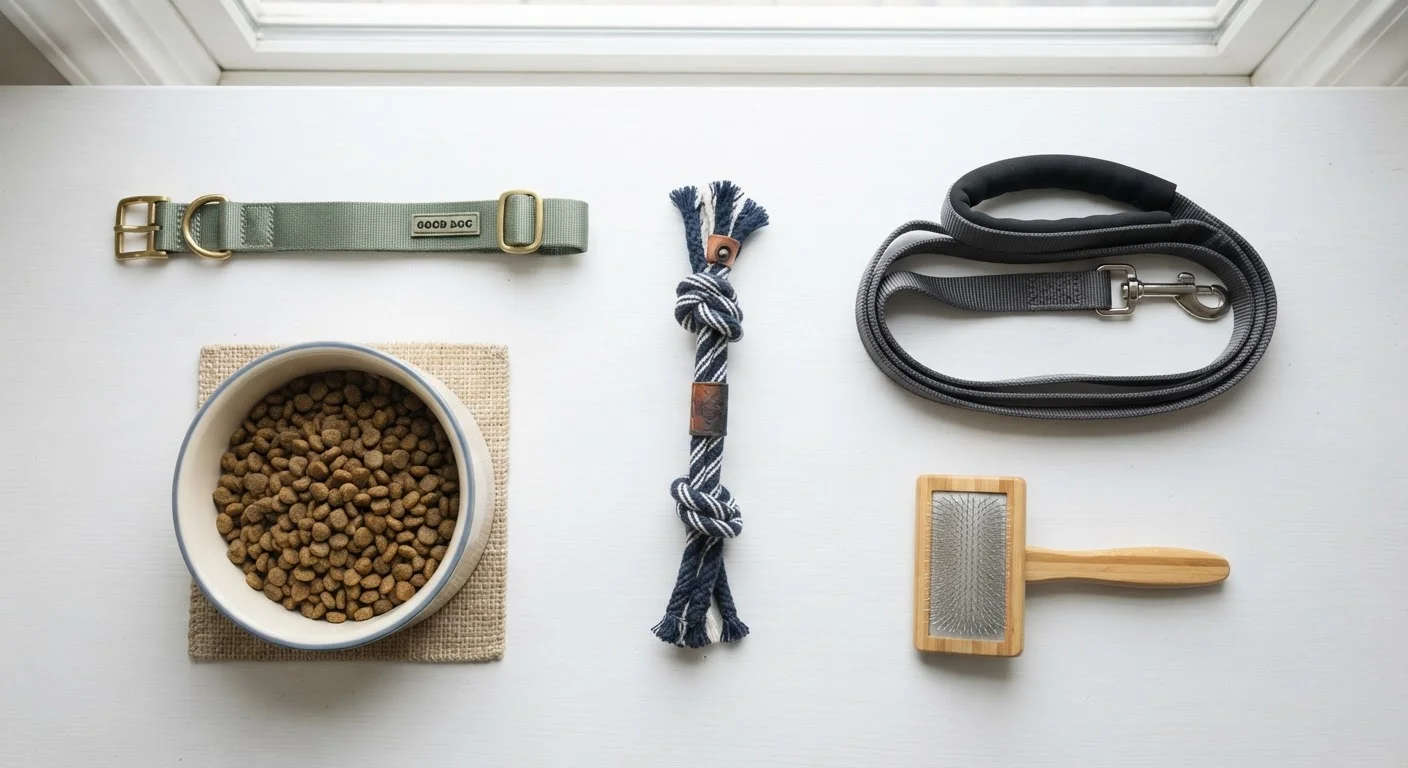
Verifying safety certifications and material composition before buying can prevent costly mistakes.
Life stage compatibility matters - a product suited for a puppy may be wrong for a senior dog.
Durability and ease of cleaning directly affect a product's real long-term cost.
Checking return and warranty policies before purchase protects you if an item doesn't work out.
Buying in bulk only saves money when storage conditions and use-by dates allow it.
15–30 min
Summary
22 items · 15-30 minutes per item evaluated
Why Run a Checklist Before Buying Pet Supplies?
Pet supply aisles - physical and digital - are packed with items that look useful but may not suit your specific animal. A collar sized for a medium dog is wrong for a large one. A toy marketed as durable may use materials that aren't safe for aggressive chewers. An automatic feeder might be a smart investment or an expensive item that sits unused if your pet refuses to adapt to it.
Running a structured check before you commit to any purchase helps you match each item to your pet's actual needs, avoid safety issues, and sidestep the kind of impulse spending that quietly inflates annual pet care budgets. This checklist applies whether you're buying a single item or stocking up across categories. For broader financial framing around pet ownership, see our starter guide on pet health savings.
Safety & Materials
Check whether the product lists its materials or ingredients explicitly - avoid items with vague labeling like "proprietary blend" or "industrial-grade plastics" with no further detail.Must
Confirm that any food-contact items (bowls, feeders, treat dispensers) are made from food-safe materials such as stainless steel, food-grade ceramic, or BPA-free plastics.Must
Look for voluntary safety certifications or testing disclosures on the packaging; note that no single mandatory federal certification exists for most pet product categories in the US.Should
Verify that small detachable parts (squeakers, buckle pins, zipper pulls) are secure enough to resist your pet's typical level of chewing or play intensity.Must
Size & Life Stage Fit
Cross-reference the manufacturer's size guide against your pet's current weight and measurements - do not rely solely on breed generalizations.Must
Confirm the product matches your pet's current life stage (puppy/kitten, adult, senior), since formulations, sizing standards, and durability requirements differ meaningfully across stages.Must
For growing animals, consider whether an adjustable or larger-size option would extend the product's useful life before the next size is needed.Should
Durability & Maintenance
Assess whether the construction method (stitching, welding, molding) is appropriate for your pet's activity level - a light-chewer rating is insufficient for a dog that destroys toys routinely.Must
Check whether the item is machine washable, dishwasher-safe, or easy to wipe down, since hard-to-clean products are frequently abandoned and can become hygiene risks.Should
Look up or estimate the typical lifespan for this product category before deciding whether the price point is reasonable for expected use.Should
Check if replacement parts (filters, cartridges, inserts) are available and price-compare them now - some products have low upfront costs but expensive ongoing consumables.Should
Compatibility With Your Home & Routine
Measure the physical space where the item will be used or stored before ordering - this applies especially to crates, playpens, litter boxes, and furniture-mounted items. Our guide on containment options for dogs at home covers sizing in detail.Must
Confirm that the product is compatible with other items you already own (e.g., a new feeder that uses proprietary food pods if you already buy a specific food format).Should
Consider whether the product adds meaningfully to your current routine or duplicates something you already have.Nice to have
Purchase Quantity & Storage
Before buying in bulk, verify that you have adequate storage space and that the product has a shelf life or use-by date that won't be exceeded before you finish it.Must
For food or consumables, confirm your pet already tolerates that product before committing to a large quantity - introduction is discussed in our food transition checklist.Must
Calculate the per-unit cost of bulk versus single-unit purchases and factor in any storage conditions (sealed containers, climate control) needed to maintain product quality.Should
Returns, Warranty & Value
Read the return window and conditions before purchasing - some pet supply categories (especially consumables or hygiene items) are final sale once opened.Must
Check whether a warranty is offered and what it covers; a longer warranty on a durable item may justify a higher upfront cost over a cheaper, unwarranted alternative.Should
Confirm the seller's process for defective items, particularly for items purchased online where physical inspection wasn't possible.Should
Run a general pre-purchase savings check - including price history and alternative sources - before finalizing. Our pre-purchase savings checklist covers that process step by step.Nice to have
What Tools Help You Evaluate Before You Buy
You don't need specialized software to run this checklist - but a few resources make the process faster and more reliable.
Required
Product specification sheet or packaging label
Provides the material composition, size ranges, weight limits, and care instructions needed to complete most checklist items.
Required
Measuring tape
Required for verifying that crates, beds, playpens, and wearable items will physically fit your pet and your space.
Required
Your pet's current weight and measurements
Used to cross-reference manufacturer size guides accurately rather than relying on breed or age generalizations.
Required
Retailer return and warranty policy page
Confirms the conditions and window under which you can return or exchange an item that doesn't work out.
Optional
Price history tool (browser-based)
Helps you verify whether a listed price represents genuine value or a temporarily inflated baseline.
Once you have the product's specification sheet or packaging details, work through each group in the checklist systematically. Pay particular attention to material safety and size fit, which are the two areas most likely to result in a return or a wasted purchase. For category-specific guidance, our articles on pet toy safety materials and design and choosing the right walking gear go deeper on those product types.
Don't Skip Safety Checks on "Natural" Products
Labels like "natural," "organic," or "eco-friendly" are not standardized in the US pet product industry and carry no automatic safety guarantee. A product using these terms still requires the same material and ingredient review as any other item. When in doubt about a specific ingredient or material for a health-sensitive pet, consult your veterinarian before purchasing.
After purchase, keep records of what you bought, when, and from whom. Understanding how long common pet supplies typically last helps you plan replacements before items degrade into safety hazards.
Pets & Savings Editorial Team is the collective byline for our editorial team and contributor network. Articles published under this byline or an editorial pen name are researched, written, and reviewed according to our editorial standards for clarity, consistency, and independence before publication.
Disclaimer: The content provided on our blog site traverses numerous categories, offering readers valuable and practical information. Readers can use the editorial team’s research and data to gain more insights into their topics of interest. However, they are requested not to treat the articles as conclusive. The website team cannot be held responsible for differences in data or inaccuracies found across other platforms. Please also note that the site might also miss out on various schemes and offers available that the readers may find more beneficial than the ones we cover.