

Key Takeaways
Why Toy Materials Are the Starting Point
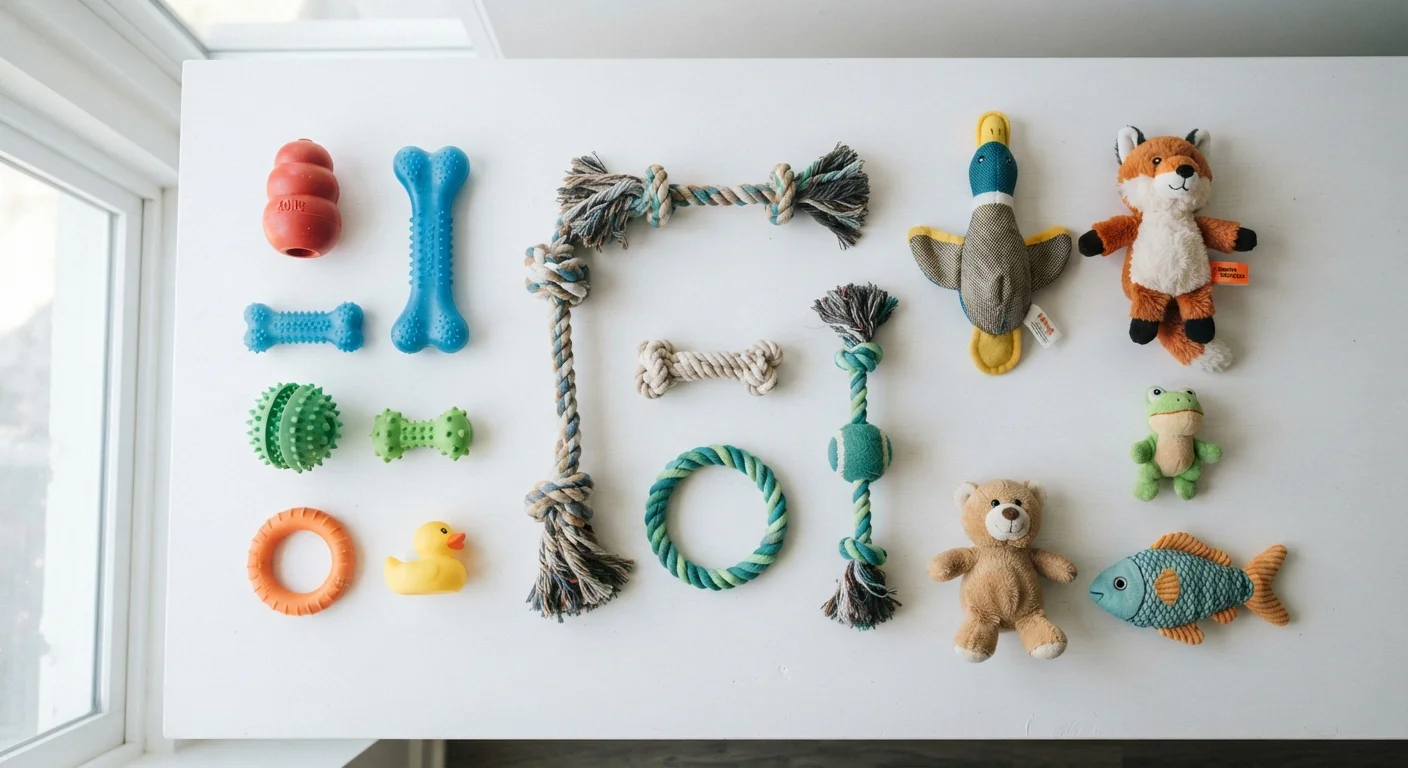
When comparing pet toys, material composition is the most fundamental factor to evaluate. Toys made from natural rubber, for instance, are generally more durable and less likely to fragment into sharp shards than many hard plastics. Softer thermoplastic rubber (TPR) variants are often used for gentler chewers and tend to flex rather than crack under pressure.
Plush toys introduce a different set of considerations. The outer fabric should be tightly woven with minimal loose threads, and fillings - whether polyester fiberfill or recycled materials - should be non-toxic in case a pet ingests a small amount during play. Avoid toys with stuffed pellets (small polystyrene beads), which pose an ingestion risk if the seam opens.
For rope toys, look for natural cotton or hemp fibers rather than synthetic blends. Natural fibers are more digestible if small amounts are ingested, though rope toys should always be used under supervision. The weave density also affects how quickly the toy unravels - tighter braids last longer and shed fewer strands.
Material safety certificates or labels indicating compliance with standards like ASTM F963 (the U.S. toy safety standard, which some manufacturers voluntarily apply to pet toys) can offer additional reassurance, though these are not universally required for pet products. See our guide to what actually determines pet supply value for more on reading product specifications critically.
Design Features That Signal a Safer Toy
Beyond raw material, the way a toy is constructed determines how it holds up under real use.
Check for non-toxic material labeling before purchasing any chew toy.
Pets inevitably mouth and chew their toys, meaning any dyes, coatings, or base materials can be ingested in trace amounts. Toys with explicit non-toxic labeling reduce that risk, while unlabeled imported toys with unknown supply chains offer no such assurance.
Prioritize toys without small detachable parts, especially for strong or aggressive chewers.
Buttons, plastic eyes, glued-on decorations, and small squeaker mechanisms can be chewed free and swallowed, posing choking or intestinal obstruction risks. Removing these failure points by choosing simpler designs reduces the hazard significantly.
Match toy firmness to your pet's chewing intensity.
Toys that are too hard - such as real bones, antlers, or very dense nylon - can fracture teeth, particularly in dogs. Veterinary dental guidelines generally suggest that if you wouldn't tap yourself firmly on the knee with the toy, it's likely too hard for your pet's teeth.
Inspect seams, joints, and surface integrity before every play session.
Toys degrade gradually, and a seam that was tight at purchase can split after several weeks of use. Catching early wear before it becomes a missing chunk or a sharp edge prevents ingestion incidents and keeps play sessions safe.
Avoid toys with strong artificial fragrances or chemical odors.
A strong chemical smell from a new toy may indicate residual solvents, adhesives, or plastic additives that have not fully off-gassed. While not all scented toys are harmful, an unexplained odor is a signal to investigate the product source before use.
When evaluating plush or fabric toys, pull at the seams firmly before giving the toy to your pet. Reinforced double-stitching is a meaningful sign of durability. Eyes, buttons, and decorative attachments on plush toys are frequent hazard points - embroidered features are safer than glued or sewn-on plastic pieces that can be chewed free.
For interactive or puzzle toys, check that all compartments and moving parts open wide enough to clean thoroughly. Bacteria and mold can accumulate in crevices that water can't reach, creating hygiene risks over time - a concern explored further in our overview of pet supply lifespans and replacement signs.
Size, Supervision, and Knowing When to Retire a Toy
Even a well-made toy becomes a hazard if it's the wrong size. Toys marketed for small breeds may become choking risks when given to large dogs who can compress them to a swallowable size quickly. As a practical rule, a toy should be large enough that your pet cannot fit the entire object in their mouth at once.
Supervision level should match the toy type. Rope toys, plush toys with stuffing, and toys with removable parts generally require monitored play sessions. Solid rubber toys or hard nylon chews are typically more appropriate for unsupervised use, though even these should be inspected regularly.
Retire a toy when it shows: chunks missing that your pet may have swallowed, sharp edges from cracking, exposed squeaker components, or heavily frayed rope strands. A damaged toy that once cost a few dollars is never worth a veterinary visit. For a practical framework on evaluating any pet purchase before committing, the pre-purchase checklist for pet supplies covers safety, durability, and life-stage compatibility in one place.
This article provides general educational information about pet toy safety and is not a substitute for guidance from a licensed veterinarian. If your pet ingests toy material or shows signs of distress, contact your veterinarian promptly.