

Key Takeaways
Our Verdict
For most dogs, a well-fitted harness paired with a fixed-length lead offers the safest and most comfortable walking setup, particularly if there is any pulling, neck sensitivity, or ongoing leash training. Flat collars remain practical for ID tags and for dogs that walk calmly without pulling. The right choice depends on your dog's specific build, behavior, and health - not on one-size-fits-all rules.
| Best for | Recommended |
|---|---|
| Calm, well-trained dogs without pulling habits | Flat collar with fixed-length lead |
| Dogs that pull, are brachycephalic, or have neck/trachea sensitivities | Back-clip or front-clip harness |
| Dogs in active leash training who need redirection | Front-clip harness with fixed-length lead |
| Small or toy breeds prone to tracheal collapse | Step-in or vest-style harness |
Collars: The Standard Starting Point
A flat collar is the most common piece of dog walking gear, and for many dogs it works perfectly well. It holds ID tags, attaches to a lead, and causes no problems when a dog walks without pulling. Standard flat collars are typically made from nylon or leather and fasten with a buckle or quick-release clip.
The main limitation is pressure concentration. When a dog lunges or pulls, all that force transfers directly to the neck and trachea. This is particularly concerning for small breeds prone to tracheal collapse, brachycephalic (flat-faced) breeds like pugs or bulldogs, and any dog with a history of neck or spine issues.
Martingale collars - a variant with a limited-slip design - are sometimes used for sight hounds or dogs with narrow heads that can back out of standard collars. They tighten slightly under tension but have a stop point to prevent full choking. They are not a substitute for training but can reduce escape risk in specific cases.
For new pet owners building out their gear, see our guide to buying pet supplies for a broader look at what to prioritize from day one.
Harnesses: Better Pressure Distribution, More Fitting Variables
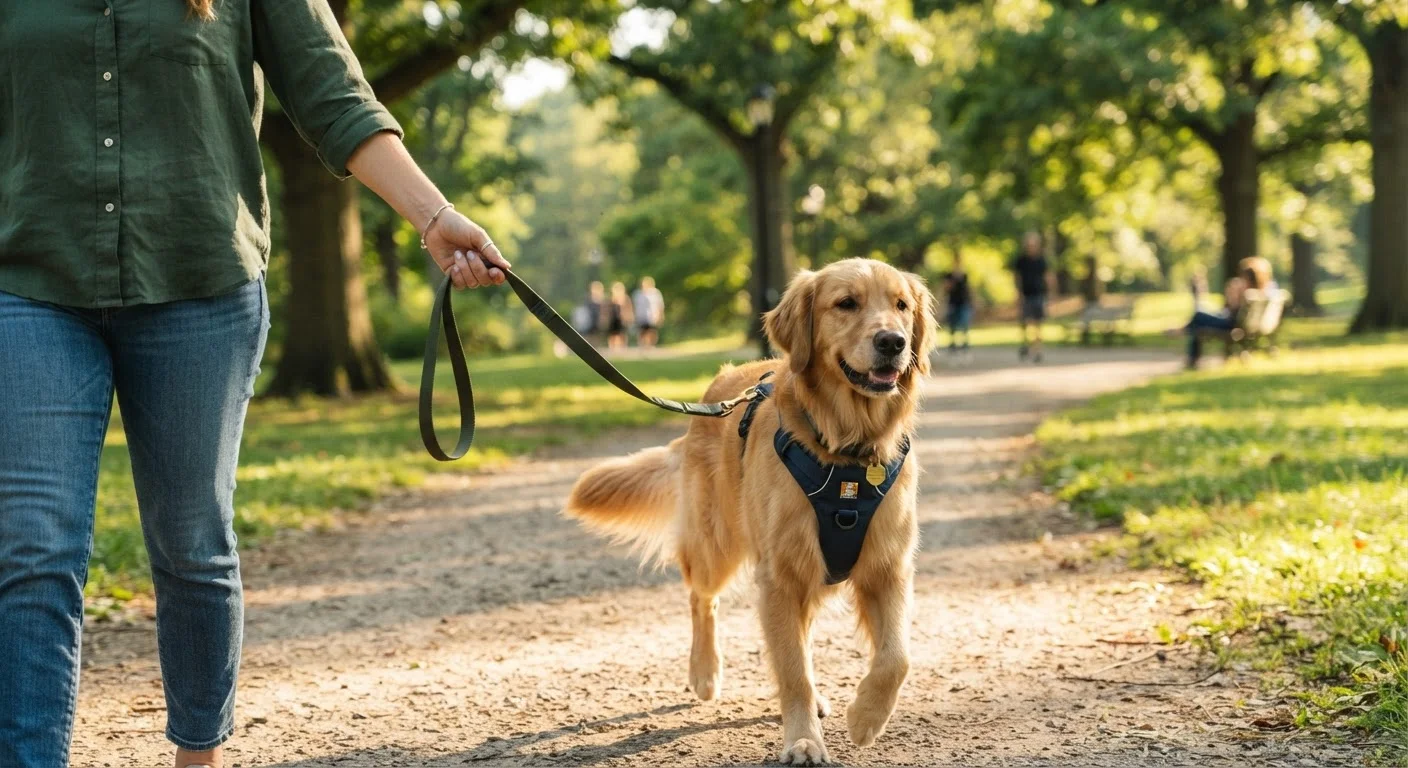
Harnesses spread force across the chest, shoulders, and back rather than the throat. This makes them the preferred option for dogs that pull, have respiratory sensitivities, or are still learning loose-leash walking.
The two most common attachment points are back-clip and front-clip. Back-clip harnesses attach the lead at the dog's shoulders. They are comfortable and easy to put on, but offer less steering control - a strong puller can lean into them effectively. Front-clip harnesses attach at the chest. When a dog pulls forward, the lead redirects them sideways, naturally discouraging pulling. Trainers often recommend front-clip designs for dogs still developing leash manners.
Fit is critical with harnesses. A harness that sits too tight restricts movement; too loose, and a dog can slip out. Look for designs with multiple adjustment points at the chest, girth, and neck straps. You should be able to slide two fingers comfortably under any strap.
| Flat Collar | Martingale Collar | Back-Clip Harness | Front-Clip Harness | |
|---|---|---|---|---|
| Pressure distribution | Neck only | Neck, limited slip | Chest, shoulders, back | Chest, with redirect on pull |
| Pulling control | Low | Low to moderate | Low to moderate | Moderate to high |
| Ease of fitting | Simple, one adjustment | Simple, one adjustment | Multiple straps required | Multiple straps required |
| Escape risk | Moderate for narrow heads | Low | Low to moderate | Low to moderate |
| Suited for pullers | No | No | Partial | Yes |
| Neck/trachea safety | Lower | Lower | Higher | Higher |
Some harnesses use a dual-clip design with both front and back attachment rings, giving handlers flexibility depending on the situation.
Leads: The Overlooked Half of the Equation
The lead connects gear to handler, and its type has a significant effect on control and safety. Two main categories dominate everyday use: fixed-length and retractable leads.
Fixed-length leads - typically 4 to 6 feet - keep the dog within a predictable distance. They are easier to manage in busy areas, allow clearer communication of boundaries, and are generally considered the safer option for training and urban walking. Our comparison of retractable vs fixed-length leashes covers the tradeoffs in depth.
Retractable leads extend up to 16-26 feet, which can work in open, low-traffic environments. However, they provide less immediate control, the thin cord can cause rope burns, and the braking mechanism can fail under sudden heavy force. Most professional trainers recommend against them for dogs still learning leash etiquette.
Lead material also matters for everyday use. Nylon is lightweight and affordable. Leather softens over time and is easier on hands during long walks. Rope-style leads are durable and often favored for larger dogs. Width and hardware strength should scale with your dog's size - a small clip rated for a 15-pound dog will not hold a 90-pound one reliably.
Always Check Fit Before Every Walk
Harnesses and collars can shift over time as your dog grows or changes weight. Make a habit of checking that you can slide two fingers under any strap before heading out. A too-loose harness can allow a dog to slip free; a too-tight one restricts breathing and gait. Puppies and young dogs may need sizing adjustments every few weeks.
Matching Gear to Your Dog's Specific Needs
No single combination is universally correct. Several factors should guide your decision:
- Breed and build: Brachycephalic breeds and dogs with narrow necks do better in harnesses. Sight hounds benefit from martingale collars or well-fitted harnesses to prevent backing out.
- Size and strength: Larger, stronger dogs need hardware rated for their weight and leads with sufficient grip width.
- Health considerations: Dogs with intervertebral disc disease, previous neck injuries, or tracheal sensitivity should avoid collar-only setups. Consult your veterinarian if you are unsure what is appropriate for a dog with a known condition.
- Training stage: Dogs actively learning loose-leash walking often benefit from front-clip harnesses that provide passive feedback without punishment.
- Walking environment: High-traffic urban settings call for shorter, fixed-length leads and predictable attachment points.
Before committing to any piece of gear, our pre-purchase checklist for pet supplies offers a practical framework for evaluating safety, fit, and durability across life stages.
This article provides general information for educational purposes and is not a substitute for advice from a qualified veterinarian or certified dog trainer regarding your individual dog's needs.