

Key Takeaways
Our Verdict
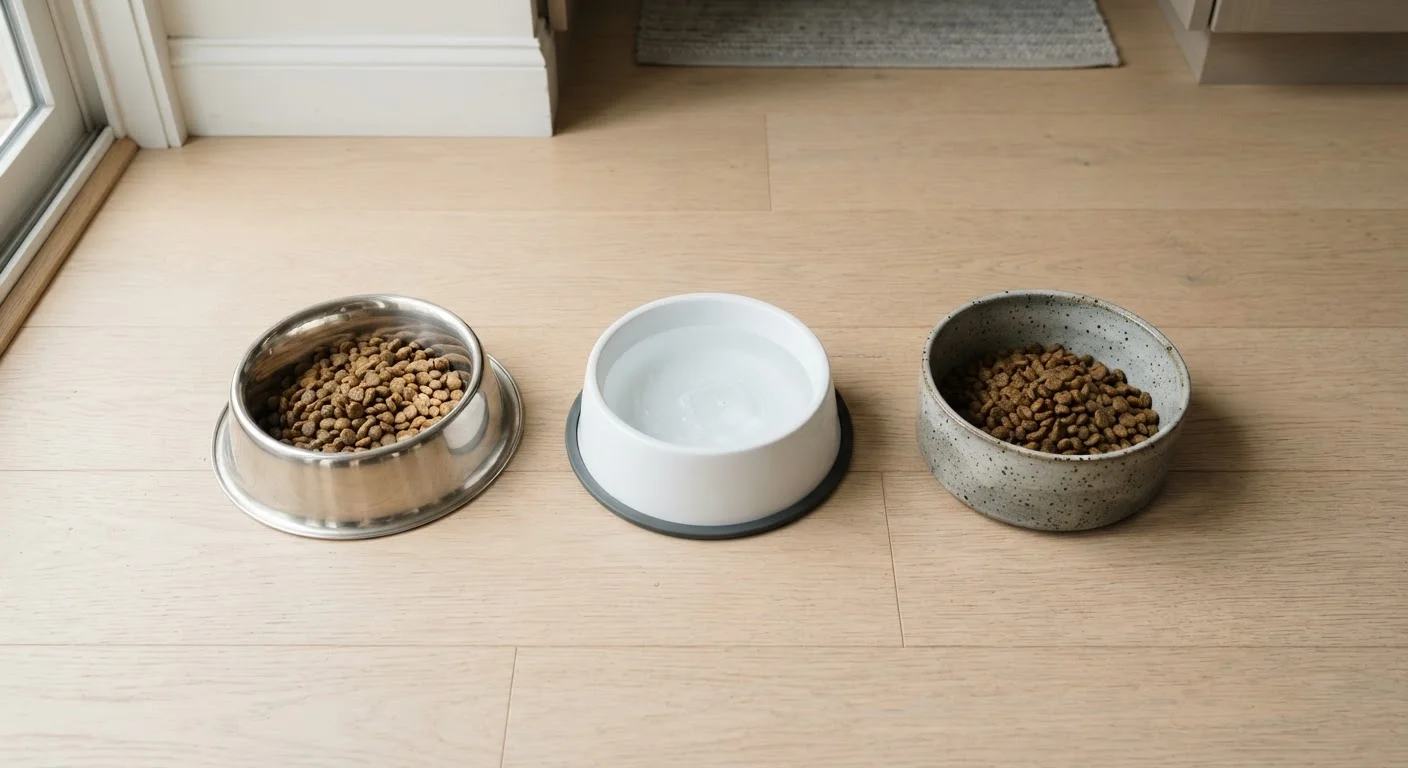
Stainless steel delivers the strongest combination of hygiene, longevity, and everyday practicality for most households. Ceramic is a reasonable choice for pet owners who prioritize aesthetics and are diligent about inspecting for damage. Plastic scores lowest on hygiene and durability despite its low entry price, making it the least cost-effective option over time for most situations.
| Best for | Recommended |
|---|---|
| Most households prioritizing hygiene and long-term value | Stainless Steel |
| Pet owners who want a stable, heavier bowl and don't mind regular inspection | Ceramic |
| Short-term, travel, or backup use where cost is the only constraint | Plastic |
Why Bowl Material Actually Matters
Most pet owners choose a bowl based on price or appearance and rarely revisit the decision. But the material your pet eats and drinks from every day has a measurable impact on hygiene, how often you'll replace it, and what you spend over the long run.
Bacteria accumulate in surface scratches and pores - a problem that varies significantly by material. Pets with skin sensitivities can react to certain plastics. And a bowl that chips, cracks, or warps becomes both a hygiene risk and a replacement cost. These factors make bowl material a legitimate area for informed comparison, not just aesthetic preference.
For context on how bowl lifespan fits into the broader picture of pet gear, see how long common pet supplies typically last.
How the Three Materials Compare
Each material has a distinct profile across the criteria that matter most to everyday pet owners: hygiene, durability, ease of cleaning, weight and stability, and upfront versus long-term cost.
| Stainless Steel | Plastic | Ceramic | |
|---|---|---|---|
| Surface porosity | Non-porous | Porous when scratched | Non-porous if glaze intact |
| Bacterial resistance | High | Low | Moderate to high |
| Dishwasher safe | Yes, fully | Often, but degrades faster | Usually, check manufacturer |
| Durability | Very high | Low to moderate | Moderate (chip-prone) |
| Typical lifespan | 10+ years | 1-3 years | 3-7 years |
| Upfront cost | Low to moderate | Very low | Moderate |
| Long-term cost | Low | Higher (frequent replacement) | Moderate |
| Weight / stability | Light (needs rubber base) | Very light | Heavy, naturally stable |
A few details worth unpacking from those comparisons:
- Stainless steel resists bacterial biofilm better than the other two materials because its non-porous surface doesn't scratch easily. It's typically dishwasher-safe and doesn't absorb odors.
- Plastic scratches easily - even with normal use - creating microscopic grooves where bacteria and mold can persist even after washing. Some plastics also contain chemical additives that may leach over time, particularly as the material degrades.
- Ceramic is non-porous when the glaze is intact, which puts it close to stainless steel on hygiene. The critical caveat: any chip or crack in the glaze immediately creates a bacterial harbor and can produce sharp edges that may injure a pet's mouth.
Hygiene and Health Considerations
Veterinary and food-safety guidance consistently points to non-porous, scratch-resistant surfaces as the easiest to keep clean. Stainless steel meets both criteria. Ceramic does too - until it doesn't, because glaze damage is common and not always visually obvious in early stages.
One frequently overlooked issue with plastic is contact dermatitis in dogs. Some animals develop redness and depigmentation around the muzzle - a condition sometimes linked to certain plastic bowl materials, though individual sensitivities vary and other causes exist. If a pet shows persistent facial irritation, the bowl material is worth investigating alongside other factors. Any concerning symptoms should be discussed with a veterinarian.
Inspect Ceramic Bowls Regularly
Run a finger around the interior of ceramic bowls weekly to feel for chips or rough spots that aren't always visible. Any bowl with a cracked or chipped glaze should be retired immediately - the exposed clay beneath is highly porous and can harbor bacteria, and sharp edges pose a risk to your pet's mouth.
Daily rinsing and weekly deep cleaning apply to all three materials. The difference is that stainless steel tolerates aggressive dishwasher cycles without degrading, while some ceramics and most plastics have temperature or detergent limits that can accelerate wear.
Durability, Lifespan, and True Cost
A stainless steel bowl purchased once can realistically last a decade or more with normal use. A plastic bowl that scratches within months and needs replacement annually reframes its lower sticker price entirely. Ceramic sits in the middle: durable under normal conditions but vulnerable to drops and hard surfaces.
If you're evaluating what actually constitutes value in pet gear beyond the price tag, the less obvious factors that determine pet supply value offers a useful framework covering longevity, washability, and compatibility.
For multi-pet households managing several bowls simultaneously, material choice also scales with cost. Replacing six plastic bowls every 12-18 months quickly outpaces buying six stainless steel bowls once. See balancing different needs across pets on one budget for a broader look at managing costs in shared-pet homes.
Practical Factors by Pet Type
Material choice isn't purely abstract - specific pet behaviors and needs shift the calculus:
- Dogs who push their bowl: Stainless steel bowls with a rubber base, or heavy ceramic, reduce sliding better than lightweight plastic.
- Flat-faced breeds (brachycephalics): Shallow, wide bowls in any material may be more important than the material itself - but non-porous surfaces remain the hygiene priority.
- Cats: Many cats show a preference against deep bowls that touch their whiskers. Material choice matters, but shape and depth often have more impact on whether a cat accepts the bowl at all.
- Small animals (rabbits, guinea pigs): Heavy ceramic is often recommended to prevent tipping, though stainless steel options with weighted bases work similarly.
Material safety considerations in pet supplies extend beyond bowls. understanding material and design safety in pet toys covers similar principles for other everyday items.
This article provides general information only and is not a substitute for personalized veterinary advice. Consult a qualified veterinarian if your pet shows signs of illness, injury, or adverse reactions.