

What Makes a Signal Worth Trusting
Not every discount is a deal. Before acting on a marked-down price, you need a short checklist of signals that independently confirm value — not just marketing language. The strongest signals are verifiable, meaning you can check them against a data source outside the retailer's own presentation. See how to separate real savings from marketing noise for the foundational framework behind these signals.
Four signals consistently separate actionable deals from noise:
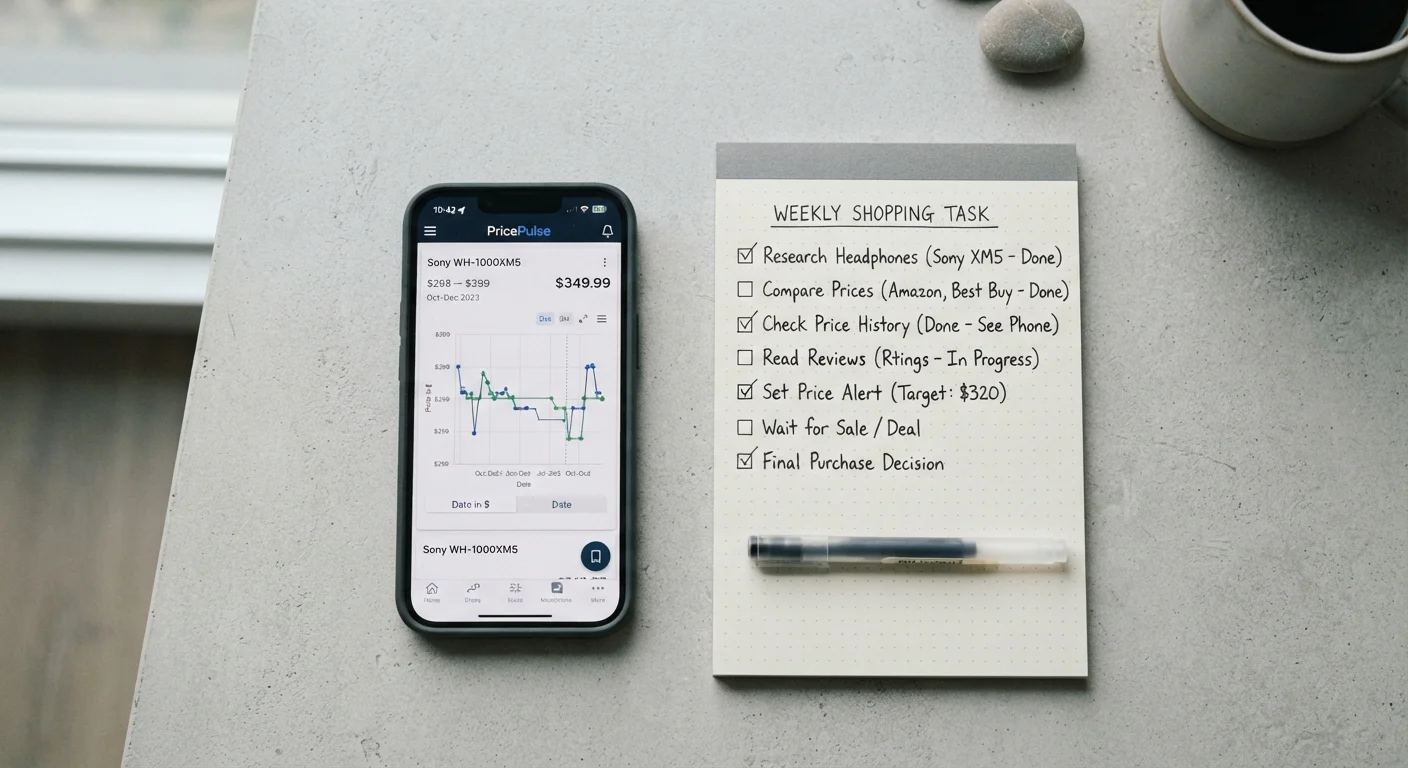
- Price history confirms the discount. A price that is at or near its historical floor is meaningful. One that is 20% off a reference price that was itself inflated two weeks ago is not. Price history tools make this check straightforward.
- Total cost stays within your planned budget. Shipping, tax, required accessories, and potential maintenance costs can close the gap between a deal price and full retail. Always calculate total cost of ownership before deciding.
- Return window is adequate for your verification needs. A return window long enough to test the product meaningfully reduces risk. A short or restocking-fee-laden policy shifts risk back to you.
- You have an active need for the item. A discount on something you weren't planning to buy is a spending trigger, not a saving — regardless of how large the percentage appears.
Reading Price History and Stock Signals Accurately
Price history is the single most reliable deal signal available to everyday shoppers. Use a browser extension or standalone price-tracking tool to pull up at least 90 days of data — 12 months for categories with seasonal patterns, such as outdoor equipment or holiday décor. Look for the price floor: if the current price is near or below that floor, the discount has real weight. If it sits in the middle of a typical price band, you may be better off waiting.
Stock signals are a secondary input, not a primary one. Genuine scarcity — an item discontinued or sold exclusively through one channel — can make a historically fair price worth acting on sooner. Cross-referencing stock levels on third-party platforms takes about 60 seconds and removes most of the guesswork. For tracking airfare and travel deals, the same logic applies; how fare alert systems work follows a nearly identical price-floor methodology.
Once you've confirmed the price signal, a quick return-window review is your last filter. A 30-day no-questions-asked policy on a $300 appliance is meaningfully different from a 15-day window with a 15% restocking fee. Factor that asymmetry into your risk assessment.
For building a systematic approach to catching these signals without constant monitoring, see how to build a personal deal-finding system. You can also explore passive discovery methods like email alerts and deal forums that surface opportunities without requiring active searching. Keeping smart buying habits front of mind ensures these signals inform decisions rather than justify impulse purchases.