

Key Takeaways
Credit Score
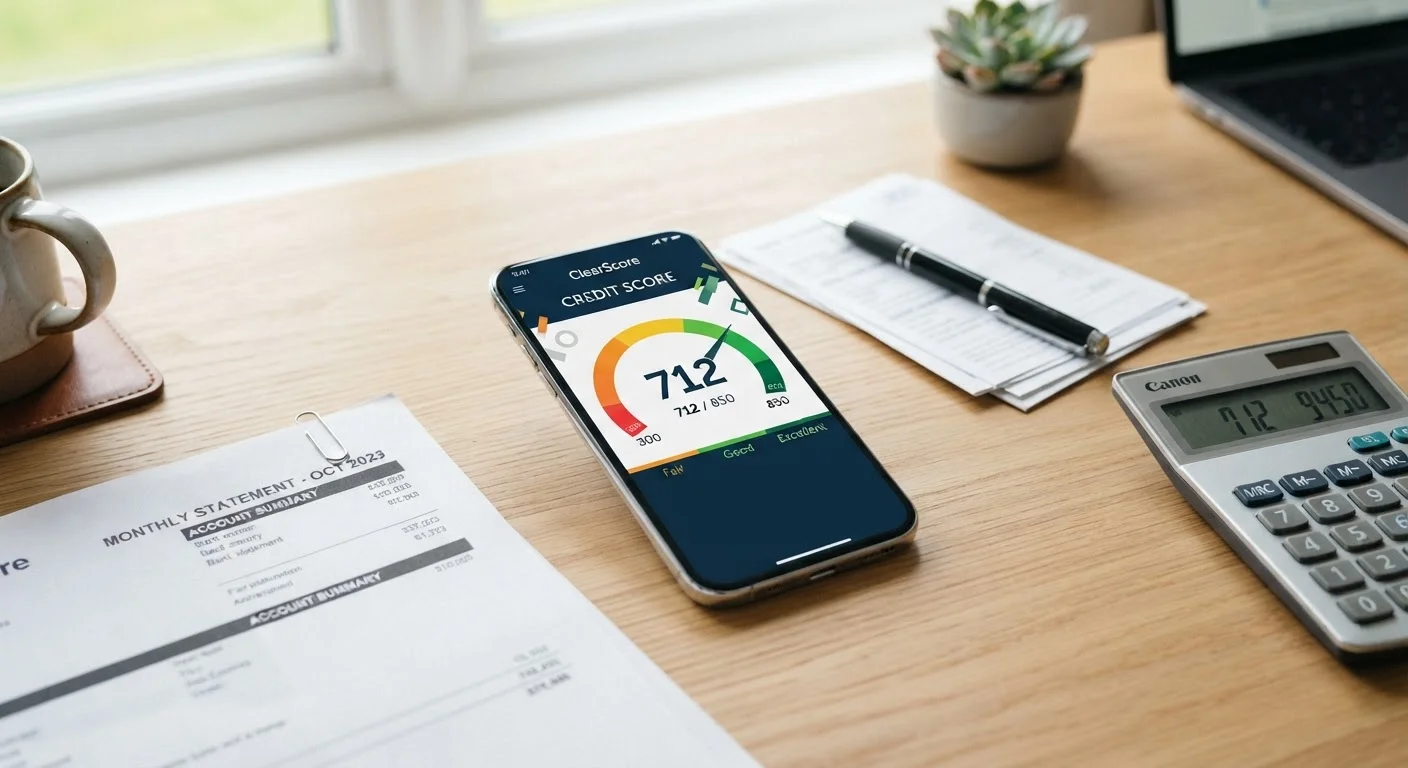
A credit score is a three-digit number, typically ranging from 300 to 850, that summarizes how reliably you've managed borrowed money. Lenders use it as a quick snapshot of the risk they take when lending to you. The higher the number, the lower the perceived risk — which generally translates to better loan terms and interest rates.
The FICO Score is the most widely used model in the U.S., though VantageScore is also common. Both use similar inputs but weight them differently, which can produce slightly different numbers from the same credit data.
Where the Number Comes From
A credit score doesn't come from a single place — it's computed by a scoring company using data pulled from your credit report, which is maintained by one of three major credit bureaus: Equifax, Experian, or TransUnion. The most widely used scoring model in the U.S. is the FICO Score, developed by Fair Isaac Corporation.
The model distills your entire credit history into a single number by weighing five categories of information:
- Payment history (≈35%): Whether you've paid past accounts on time.
- Amounts owed (≈30%): How much of your available credit you're currently using — your utilization ratio.
- Length of credit history (≈15%): How long your accounts have been open.
- Credit mix (≈10%): The variety of account types you hold (credit cards, installment loans, mortgage, etc.).
- New credit (≈10%): Recent applications for credit and hard inquiries on your file.
Because your score is derived from your credit report, any inaccuracies in that report flow directly into your number. Our guide on reading your credit report without getting overwhelmed walks through how to review and dispute errors.
35%
Weight of payment history in FICO Score
According to FICO's published scoring model breakdown, payment history is the single heaviest factor in determining a score.
~200M
Americans with a scoreable credit file
The Consumer Financial Protection Bureau (CFPB) has estimated that the vast majority of U.S. adults have enough credit history to generate a score.
670+
FICO threshold commonly classified as 'good'
FICO's own published score ranges classify 670–739 as 'good,' a benchmark many mainstream lenders use as a baseline for standard approval.
What the Score Actually Signals to a Lender
Lenders aren't using your credit score to judge your character — they're using it to estimate the statistical probability that you'll repay a debt as agreed. A lower score doesn't label you a bad person; it signals a pattern in your borrowing history that correlates with a higher default rate across large populations of borrowers.
This distinction matters practically. When you apply for a mortgage, auto loan, or credit card, the lender typically slots your score into a risk tier that determines your interest rate, credit limit, and sometimes whether you qualify at all. A higher score compresses the lender's perceived risk, which is why it often unlocks lower rates — not as a reward, but as a reflection of actuarial math.
“Credit scores are not a measure of financial virtue. They are a statistical tool lenders use to predict repayment behavior based on past patterns — nothing more, nothing less.”
— Consumer Financial Protection Bureau, U.S. federal agency overseeing consumer financial products and education
It's also worth knowing that lenders may use industry-specific FICO versions — an auto lender might pull a FICO Auto Score, while a mortgage lender uses a different variant. The score you see through a free app may differ from what a lender actually reviews.
Common Misconceptions That Cost People Money
Several widely held beliefs about credit scores lead people to make decisions that actively hurt their numbers. Two of the most damaging: assuming that carrying a small credit card balance month-to-month builds credit (it doesn't — it just generates interest charges), and believing that closing old accounts is tidier (it can shorten your credit history and raise your utilization ratio simultaneously).
If you want a full breakdown of these kinds of traps, our companion piece on credit score myths that keep people stuck in debt longer corrects the most persistent misconceptions with precise explanations.
The foundational habits that protect a score are straightforward: pay on time, keep balances low relative to limits, and apply for new credit only when you actually need it. For a deeper look at how utilization works mechanically, see the full picture on credit utilization.
Why Understanding This Number Is a Financial Foundation
Your credit score affects more than loan approvals. Landlords check it before renting an apartment. Some employers review it during hiring for financially sensitive roles. Insurance companies in many states use credit-based insurance scores as one pricing factor. The number quietly touches large areas of financial life.
For anyone trying to stop overspending or climb out of debt, understanding the score is step one — not because improving it is the goal itself, but because the behaviors that produce a strong score (paying obligations on time, keeping debt balances manageable) are exactly the behaviors that reduce long-term borrowing costs. If you're building this foundation from scratch, understanding debt and credit from the ground up provides the complete starting framework.
And once you understand what the score measures, it's equally important to recognize which everyday habits quietly erode it — often without an obvious warning sign. Our article on habits that quietly damage a credit score over time covers exactly that.
This article is for general informational and educational purposes only and does not constitute personalized financial or legal advice. Consult a qualified financial professional for guidance specific to your situation.