

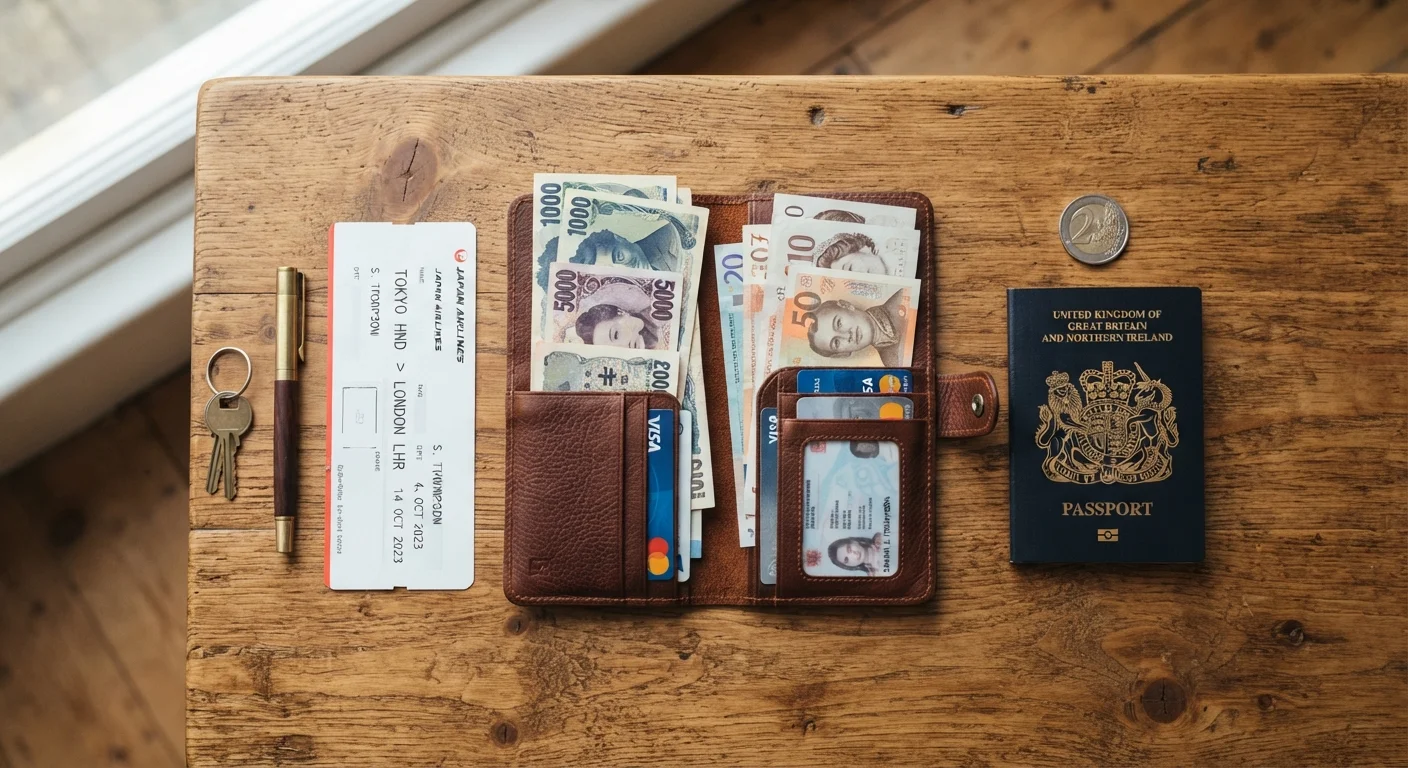
Why Travel Money Costs More Than You Think
For many travelers, currency costs are an afterthought — something to sort out at the airport kiosk or hotel front desk. That habit is expensive. Between foreign transaction fees, dynamic currency conversion markups, and ATM surcharges, it's possible to lose 5–10% of your spending money before you've bought a single meal. Understanding the mechanics is the first step to stopping the bleed.
Foreign transaction fees are charges your card issuer applies to purchases processed outside the U.S. — typically 1–3% per transaction. They appear on your statement days later, making them easy to miss. Exchange rate markups are a separate issue: every currency conversion involves a spread between the interbank rate (what banks use between themselves) and the rate you're offered. The wider that spread, the more you lose. Airport and hotel exchange counters routinely apply spreads of 5–15%. This is a core reason why travel budgets erode faster than expected once you're on the ground.
Cards, Cash, and the Right Mix for Each Trip
No single payment method is optimal for every situation abroad. The practical answer is a deliberate combination based on where you're going and how you'll spend.
Cards Without Foreign Transaction Fees
Many credit and debit cards charge zero foreign transaction fees — this is a feature worth confirming before you depart. When using a card abroad, always choose to pay in the local currency when prompted. Selecting your home currency activates dynamic currency conversion (DCC), a process where the merchant's bank — not yours — sets the exchange rate, almost always at a worse rate. Declining DCC consistently can meaningfully reduce your conversion losses. Keep in mind that card acceptance varies significantly by country and even by neighborhood, so cards alone aren't sufficient.
ATMs Over Exchange Counters
Withdrawing local currency from a bank-affiliated ATM at your destination generally produces a more competitive exchange rate than over-the-counter conversions. You'll typically pay a flat ATM fee plus any foreign ATM fee from your home bank. Withdrawing larger amounts less frequently reduces the fixed-fee impact per dollar. Some debit accounts reimburse ATM fees — worth investigating before you finalize which account to use while traveling.
How Much Cash to Carry
A useful rule of thumb: keep enough local cash for 1–2 days of expenses at any time. This covers markets, taxis, small restaurants, and tips in cash-preferred economies without leaving you overexposed to loss or theft. Research your destination's payment culture in advance — some countries remain heavily cash-dependent, others are nearly card-only. For deeper context on pre-departure financial prep, see the complete trip-planning checklist for cost-conscious travelers.
Foreign transaction fee
A charge applied by a card issuer to purchases processed outside the United States, typically ranging from 1–3% of the transaction amount. It is separate from any exchange rate markup.
Interbank rate
The exchange rate banks use when trading currency with each other. It is the most favorable rate available and is the benchmark against which consumer rates are compared — consumers always receive a less favorable rate.
Dynamic currency conversion (DCC)
A process where a foreign merchant or ATM converts the transaction into your home currency at a rate set by their bank rather than yours. It almost always results in a worse exchange rate and should be declined when prompted.
Exchange rate markup (spread)
The difference between the interbank exchange rate and the rate offered to a consumer. A higher spread means you receive fewer units of foreign currency per dollar spent.
ATM surcharge
A flat fee charged by the ATM operator (and sometimes your home bank) each time you withdraw cash from a foreign ATM. Withdrawing larger amounts less often reduces the per-dollar impact of this fixed charge.
Cash-preferred economy
A destination or local market where cash is the dominant or expected form of payment, card acceptance is limited or unreliable, and travelers who rely solely on cards risk being unable to complete transactions.
Before You Depart: A Practical Prep Framework
Currency planning done two to four weeks before departure is almost always cheaper and less stressful than scrambling on arrival. Here's a structured approach:
- Audit your cards. Confirm which cards carry no foreign transaction fee and which have the broadest ATM fee reimbursement. Designate one as primary and one as a backup kept in a separate location.
- Notify your bank. Unannounced international charges frequently trigger fraud holds. A quick notification prevents a frozen card at an inconvenient moment.
- Research ATM availability. In some destinations, bank-branded ATMs are common; in others, independent operators with higher fees dominate. Airport ATMs are convenient but often impose higher fees — if possible, use one only for an initial small withdrawal to cover immediate needs.
- Understand local payment norms. Card-heavy economies (much of Western Europe, Singapore, Australia) differ sharply from cash-preferred destinations (many parts of Southeast Asia, Central America, parts of Eastern Europe). Adjust your cash buffer accordingly.
- Factor currency costs into your trip budget. If you estimate $2,000 in on-the-ground spending and don't account for conversion costs, your real purchasing power may be closer to $1,850–$1,900. Build that margin in. The budget traveler's end-to-end planning guide covers this as part of total trip cost estimation.
Fee erosion on travel spending is structurally similar to the hidden costs that eat into flight savings — the same disciplined accounting applies. See how those fees stack up in our piece on hidden costs embedded in low airfares.
This article is for general informational purposes only and does not constitute personalized financial advice. Consult a qualified financial professional for guidance specific to your situation.