

Home on a Budget

End-of-Season Garden Checklist to Save Money Next Year

Share
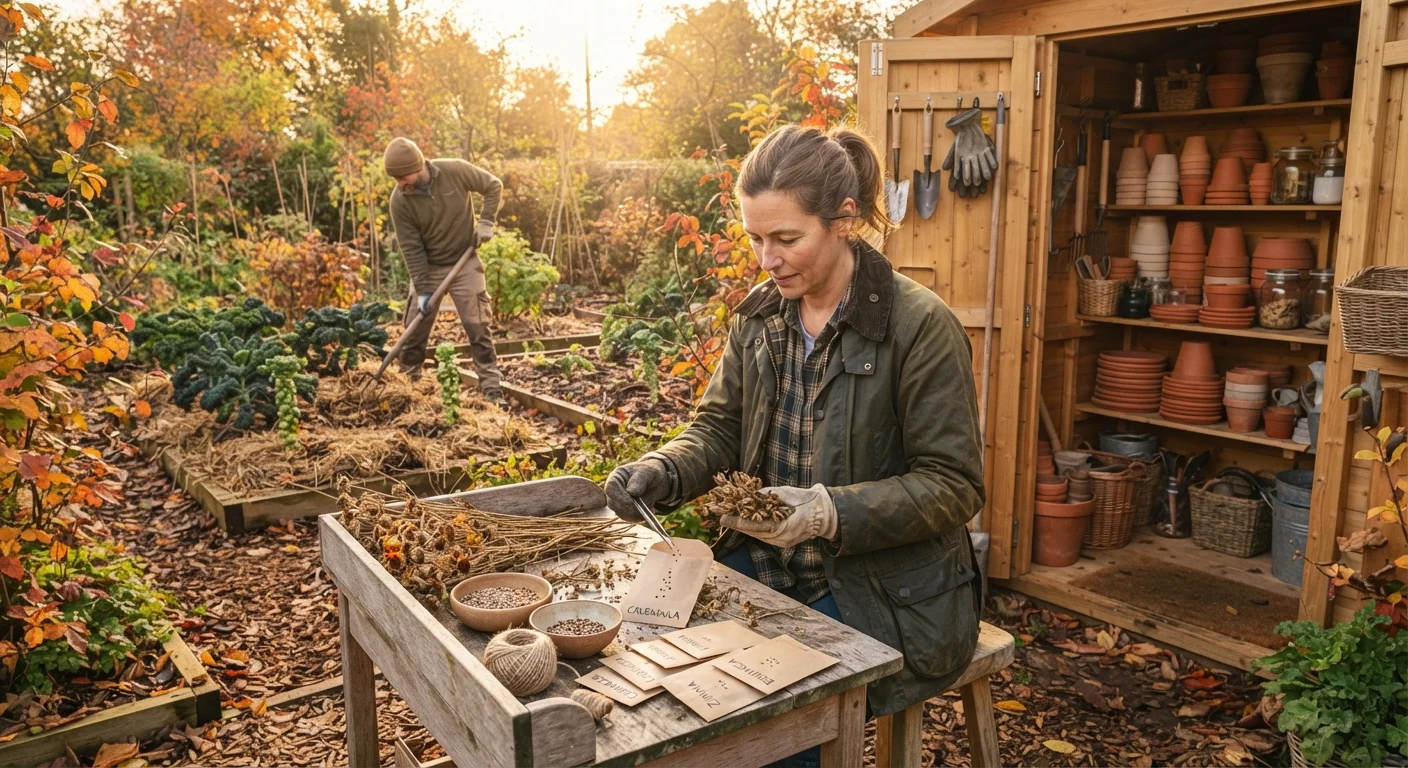
Gardener collecting seeds and mulching garden beds during autumn end-of-season cleanup

Key Takeaways

Saving seeds from this season's best performers eliminates buying packets next spring.
Amending soil in fall is cheaper and more effective than scrambling to fix it in spring.
Properly winterizing tools and equipment prevents costly replacements.
Dividing perennials now multiplies your plant stock for free next year.
A compost pile started today costs nothing and replaces expensive bagged fertilizer.
End-of-season cleanup directly reduces pest and disease pressure the following year.
60–180 min

Summary

22 items · 1–3 hours over one weekend

Why Fall Garden Work Pays Off in Dollars Next Spring

Most gardening money gets spent in spring — seeds, transplants, amendments, replacement tools. What most people don't realize is that a deliberate autumn routine can cut a significant share of those costs before they occur. This checklist walks you through every high-value task to complete before your garden goes dormant.

Whether you're managing raised beds, in-ground rows, or a mix of containers, the same principle applies: what you protect, preserve, and prepare in fall, you won't have to pay for in March. For a broader look at keeping costs low from the ground up, see our guide on growing a garden without spending a fortune.

Seed Saving

Identify open-pollinated and heirloom varieties in your garden and allow seed heads to fully mature before collecting. Must
Harvest seeds on a dry day, label them with variety and date, and store in paper envelopes in a cool, dark, dry location. Must
Test germination rates of older stored seeds by placing 10 seeds on a damp paper towel — aim for at least 70% sprouting before relying on them next year. Should

Soil Preparation

Top-dress beds with 2–3 inches of compost and work it lightly into the top few inches of soil to improve structure over winter. Must
Conduct a basic soil pH test to identify deficiencies early so amendments can work through winter rather than being rushed in spring. Should
Add lime or sulfur to correct pH if needed — fall application allows these slow-acting amendments to integrate thoroughly. Should
Plant a winter cover crop such as crimson clover or winter rye in empty beds to suppress weeds, prevent erosion, and add nitrogen for free. Nice to have

Plant Protection and Division

Dig up tender bulbs — such as dahlias, cannas, and gladioli — after the first frost blackens foliage, and store them dry in a cool, frost-free space. Must
Divide overcrowded perennials now to multiply plant stock for free rather than purchasing new plants next spring. Must
Mulch perennial beds with 3–4 inches of straw, shredded leaves, or wood chips to insulate root zones and reduce winter loss. Should
Pot up any tender perennials growing in-ground and overwinter them indoors if your climate warrants it. Nice to have

Composting and Waste Reduction

Start or turn a compost pile using fall leaves, spent plant material, and kitchen scraps to produce free fertilizer by spring. Must
Remove and compost disease-free plant debris; bag and discard any material showing signs of fungal disease or severe pest infestation to avoid re-inoculating soil. Must
Shred fallen leaves with a mower to accelerate decomposition and use as a free mulch layer. Should

Tool and Equipment Winterizing

Clean soil from all metal tools, lightly oil blades and tines with mineral or linseed oil, and store in a dry location to prevent rust. Must
Drain and store garden hoses indoors or in a heated space to prevent cracking from freeze-thaw cycles. Must
Sharpen pruners, loppers, and hoe blades before storage so they're ready to use — and less damaging to plants — come spring. Should
Drain fuel from gas-powered equipment or add a stabilizer if you plan to use it within 90 days. Should

Planning and Records

Sketch a simple map of this season's layout noting what grew where, to inform crop rotation decisions that reduce pest pressure next year. Must
Note which varieties performed well and which disappointed so you stop re-buying underperformers. Should
Research perennial versus annual costs for next season — see our breakdown of perennials vs. annuals over time to inform your planting decisions. Nice to have

Tools and Supplies You'll Need

End-of-season tasks don't require specialized equipment. Most of what's listed below you likely already own. Work through what you have before considering any purchases — improvisation is almost always good enough for fall prep.

Required

Garden fork or spade

Turning compost, working amendments into soil, and dividing perennial root clumps.

Required

Pruning shears

Cutting back spent perennials, harvesting seed heads, and trimming dead growth cleanly.

Required

Paper envelopes or small bags

Storing collected seeds in breathable packaging to prevent moisture buildup and mold.

Optional

Soil pH test kit

Identifying soil acidity or alkalinity so corrective amendments can be applied over winter.

Required

Compost bin or pile area

Collecting and breaking down organic material into free fertilizer for next season.

Required

Mineral or linseed oil

Protecting metal tool blades from rust during winter storage.

Required

Straw or shredded leaves

Mulching perennial beds and tender root zones to insulate against frost damage.

Optional

Garden journal or notebook

Recording crop placement, variety performance, and soil notes to guide next season's planning.

Common Mistakes That Cost You Money

Even experienced gardeners leave money on the table in fall. Skipping seed collection is one of the most common — open-pollinated varieties will reproduce true-to-type, so letting seed heads drop or decay in place is a direct loss. Similarly, leaving tender bulbs in the ground in frost-prone zones means replacing them entirely next year.

Don't Compost Diseased Plant Material

Home compost piles rarely reach temperatures high enough to kill fungal spores or bacteria from diseased plants. Adding infected material — such as tomato plants with blight or squash with powdery mildew — risks spreading disease to next year's beds. Bag this material and dispose of it separately from your compost pile.

Verify Local Rules Before Storing Rainwater

If you're considering setting up water collection to lower irrigation costs next season, local regulations on rainwater harvesting vary significantly by state. Always check your local ordinances before installing any collection system. Our guide on rainwater harvesting for gardeners covers the key legal considerations.

Another frequent oversight is neglecting soil amendment timing. Spring amendments have less time to integrate and often require higher quantities to achieve the same effect as fall applications that work slowly over winter. Composting food and garden scraps rather than bagging them is one of the habits covered in our article on expensive gardening habits most people overlook.

Finally, don't overlook your community. Surplus divisions, saved seeds, and end-of-season plant swaps can dramatically expand your garden stock at no cost. Plant swaps and seed libraries are worth exploring before you spend anything at a nursery next spring. If you grow in pots, container gardening on a tight budget covers how to make the most of what you already have.

Permits May Be Required for Some Structures

If your fall plans include building cold frames, raised bed enclosures, or permanent garden structures, check with your local building department first. Even low-cost DIY structures can require permits depending on size and placement. Skipping this step can create complications with property insurance or future home sales.

Home on a Budget Editorial Team is the collective byline for our editorial team and contributor network. Articles published under this byline or an editorial pen name are researched, written, and reviewed according to our editorial standards for clarity, consistency, and independence before publication.

View all articles by Home on a Budget Editorial Team →
Disclaimer: The content provided on our blog site traverses numerous categories, offering readers valuable and practical information. Readers can use the editorial team’s research and data to gain more insights into their topics of interest. However, they are requested not to treat the articles as conclusive. The website team cannot be held responsible for differences in data or inaccuracies found across other platforms. Please also note that the site might also miss out on various schemes and offers available that the readers may find more beneficial than the ones we cover.