

Key Takeaways
Why Community Resources Beat the Garden Center
Retail garden centers are convenient, but they're rarely the most economical way to fill a garden. A single flat of annuals can run $25-$40, and a modest packet of heirloom seeds from a catalog may cost $5-$8 for a small quantity. Multiply that across an entire growing season and the costs add up quickly - especially for new gardeners still figuring out what thrives in their yard.
The good news is that most US communities have a quiet ecosystem of free and low-cost gardening resources that many homeowners never tap. Seed libraries in public libraries, informal plant swaps, cooperative extension programs, and community gardens all provide real value without the retail markup. The challenge is simply knowing where to look and how to participate effectively.
If you're already working on keeping garden costs low, combining these community resources with strategies like propagating plants from cuttings can stretch your budget even further. Here are the most useful community resources to explore - and how to make the most of each one.
Seed Libraries at Public Libraries
Many public library systems across the US now operate seed libraries alongside their book collections. Members check out seed packets at no cost, grow the plants, save seeds at season's end, and return a portion to replenish the collection. The variety available often includes open-pollinated and heirloom vegetables, herbs, and flowers that would be expensive or hard to source commercially.
To find one near you, search your local library's website or call the branch directly. The American Seed Lending Library directory and the Seed Library of the Open Source Seed Initiative (OSSI) also maintain searchable listings. Some libraries accept seed donations, so any surplus from your own garden can benefit the wider community.
Seed libraries let you borrow, grow, and return - treating seeds more like books than purchases.
Community Plant Swaps
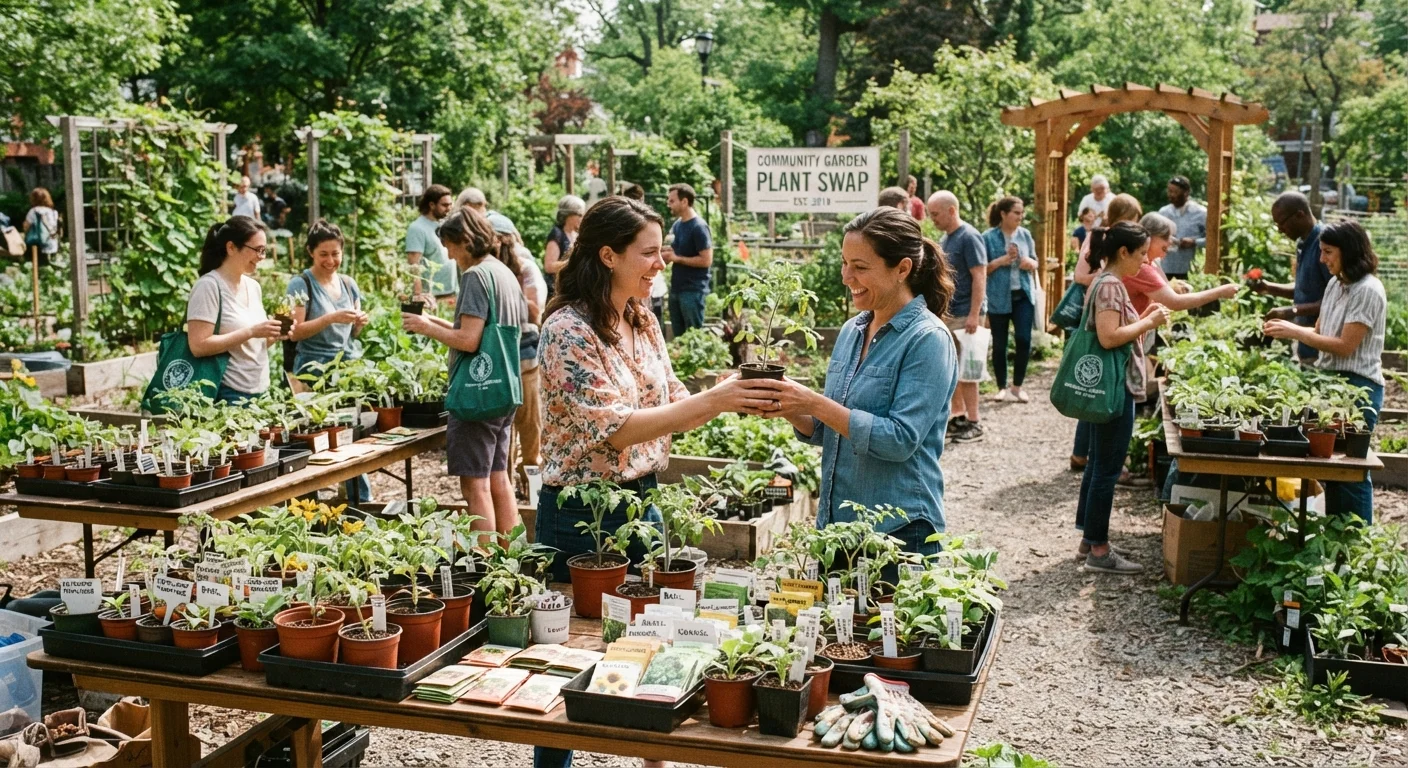
Plant swaps are informal or organized events where gardeners bring surplus seedlings, divisions, or rooted cuttings and exchange them with others at no cost. They're particularly common in spring and early fall. You might walk away with perennials, houseplant divisions, or vegetable starts that would cost several dollars each at retail.
Look for plant swaps organized through local Facebook groups, Nextdoor, community centers, botanical gardens, and garden clubs. Some municipalities host annual swap days in public parks. The barrier to entry is low: bring something to share and you can take something home. Even a few divisions of hostas, mint, or daylilies - plants many gardeners have in abundance - are welcome contributions.
Bring what you have too much of; leave with what you've been wanting to grow.
Cooperative Extension Programs
The USDA Cooperative Extension System operates through land-grant universities in every US state, providing free or very low-cost gardening resources tailored specifically to your region and climate zone. Local extension offices offer soil testing (often for a small fee well below private lab rates), planting guides, pest identification, and Master Gardener programs where trained volunteers answer questions at no charge.
Extension publications are freely available online and are based on university research rather than commercial interests - making them among the most reliable gardening resources available. Check your state's extension service website to find local contacts, free workshops, and downloadable guides. This is especially useful for understanding which plants perform well in your specific USDA hardiness zone before you invest in anything.
Extension Master Gardener hotlines offer research-backed advice at absolutely no cost.
Community Gardens and Shared Plots
Joining a community garden isn't just about growing space - many sites share tools, soil amendments, compost, and horticultural knowledge freely among members. Plot fees, where they exist, are typically modest compared to what you'd spend equipping a private garden from scratch. Some programs offer free or subsidized plots for low-income households.
Beyond direct resources, community gardens connect you to experienced local growers who understand what works in your soil and microclimate. Those informal conversations often yield plant divisions, seeds saved from reliable varieties, and practical tips that no online resource can replicate. Search for community gardens through your city's parks and recreation department or the American Community Gardening Association.
Community garden membership often includes access to shared tools, compost, and decades of local growing knowledge.
Neighborhood Buy Nothing and Freecycle Groups
Hyperlocal sharing platforms like Buy Nothing Project groups (typically organized by neighborhood on Facebook or through the Buy Nothing app) and Freecycle regularly feature free plants, seeds, gardening tools, pots, and soil amendments offered by neighbors who have extras. These aren't garden-specific platforms, but gardening items appear frequently - especially in spring and fall.
Joining your local group and posting a specific request (for example, asking if anyone has extra tomato starts or a spare trowel) often yields results within days. This is also a practical way to rehome plants you're removing during a garden redesign, knowing they'll go to someone who wants them. Our guide to container gardening on a tight budget covers how to make the most of free or repurposed containers you might find through these same channels.
A specific request in a Buy Nothing group can get you free seeds or seedlings within days.
Municipal Compost and Mulch Programs
Many cities and counties offer free or heavily subsidized compost, wood chip mulch, and leaf mulch to residents - materials that would cost significant money to buy bagged. These programs typically run through public works or sanitation departments and are often underadvertised. Mulching and amending soil with free municipal compost can meaningfully reduce your annual garden supply costs.
Check your city or county government's website under waste management, public works, or sustainability. Some programs require pick-up at a central facility; others offer drop-off delivery for larger quantities. Combining free municipal compost with a home composting setup - as outlined in our guide to composting at home - gives you a nearly self-sufficient soil amendment system.
Free municipal wood chip mulch can replace dozens of expensive bagged mulch purchases each year.
Making It Work Season After Season
The most effective community gardeners treat these resources as part of a recurring system rather than a one-time find. Saving seeds at the end of the season - and returning them to the library or swap - keeps the cycle going and builds goodwill with other participants. Our end-of-season garden checklist covers seed-saving basics alongside other autumn tasks that pay off financially next spring.
If you're newer to gardening on a budget, pairing these community resources with foundational knowledge from our guide on growing a garden without spending a fortune will help you avoid common costly mistakes from the start. Community generosity goes further when you know how to use what you receive.
Build Relationships, Not Just a Plant List
The gardeners who get the most from community resources are those who contribute regularly - returning seeds, sharing divisions, and helping at swap events. Consistent participation builds trust and often results in other gardeners proactively setting aside plants or seeds they think you'd like. Think of it as a social investment that pays back in plants.