

Key Takeaways
Why Rainwater Harvesting Makes Sense for Gardeners
Outdoor water use accounts for roughly 30% of total household water consumption nationally, and in dry climates that figure can exceed 50%, according to the U.S. Environmental Protection Agency. For gardeners running drip lines, soaker hoses, or sprinklers through a long summer, that translates into a measurable line item on the water bill.
Rainwater harvesting - capturing precipitation from rooftops or other surfaces for later use - addresses that cost directly. It also delivers a secondary benefit: rainwater is naturally soft, free of chlorine and fluoride added to municipal supplies, which many plants tolerate better than treated tap water.
If you're already thinking about reducing what you spend in the garden, this fits alongside broader strategies. See our guide to growing a garden without spending a fortune for the wider picture. Harvesting rain is one of the highest-leverage moves available to the budget-conscious gardener.
~30%
Share of home water use that's outdoor irrigation
According to the U.S. Environmental Protection Agency's WaterSense program estimates for typical U.S. households.
600 gal
Rainwater collectible per inch of rain per 1,000 sq ft of roof
A commonly used approximation in extension service and rainwater harvesting planning resources, accounting for typical collection losses.
50-80 gal
Capacity of a standard rain barrel
Typical range for commercially available residential rain barrels sold through garden centers and home improvement retailers.
Is It Legal? Checking Your State and Local Rules
This is the step most people skip - and it's the one that matters most. Rainwater collection regulations in the United States are governed at the state level and sometimes further restricted by county or municipality. Rules range from outright encouragement (some states offer tax incentives) to strict limits on collection volume, and a small number of western states have historically restricted private capture of precipitation due to prior appropriation water law.
Before purchasing any equipment, take these concrete steps:
- Search your state's department of environmental quality or natural resources website for rainwater harvesting statutes.
- Contact your county extension office - they often publish plain-language summaries of local rules.
- Check whether your municipality requires a permit for tanks above a certain capacity.
- If you live in an HOA community, review your CC&Rs, as some restrict visible storage containers.
Verify Local Laws Before You Buy Anything
Rainwater collection rules differ dramatically across states and localities. Some jurisdictions actively encourage collection with incentives; others cap how much you can store or require registration. Installing a system that violates local ordinance can result in fines and required removal. Confirm the rules for your specific address with official government sources before spending a dollar on equipment.
Regulations change. A rule that applied two years ago may have been updated. Always verify against current official sources rather than relying on third-party summaries, including this one.
How a Basic Rain Barrel System Works
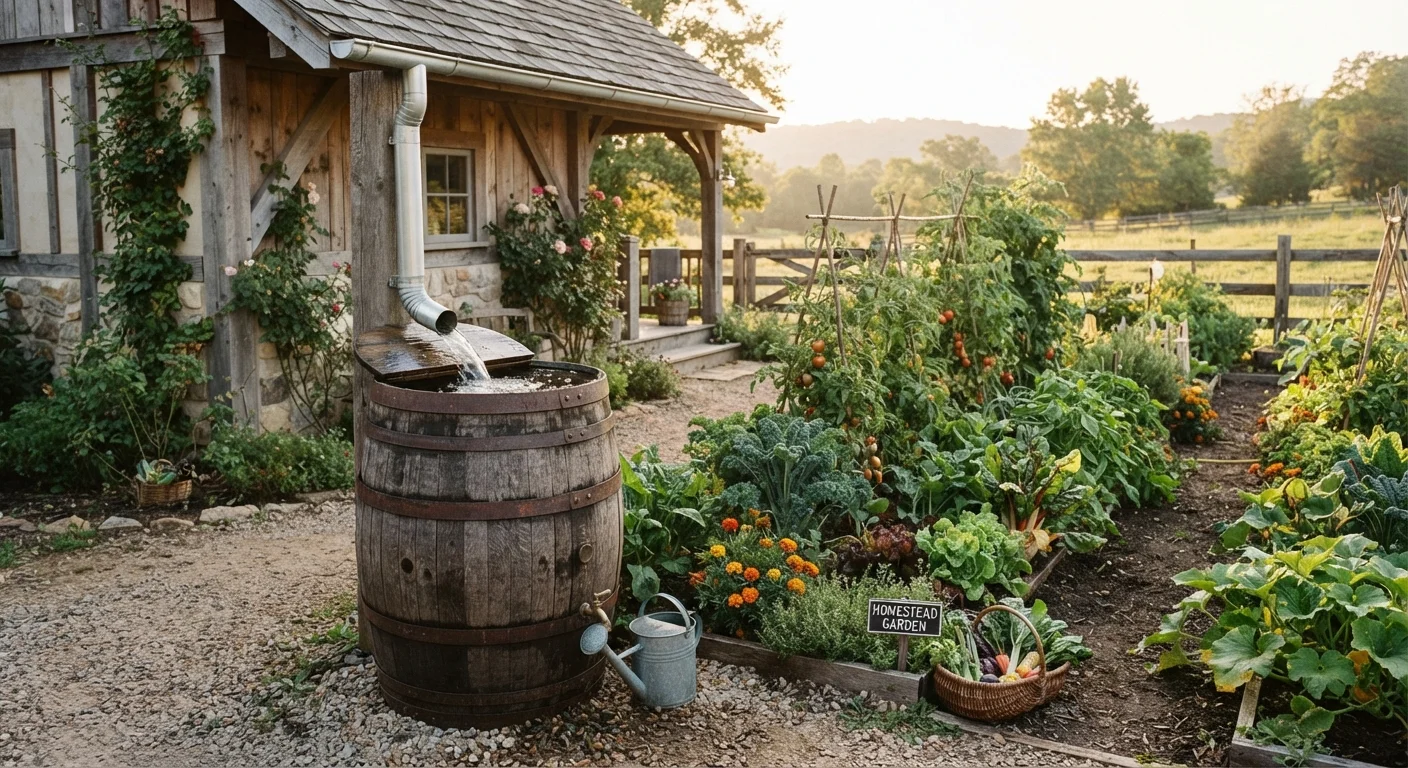
The entry-level setup involves four components: a collection surface (typically your roof), gutters, a downspout diverter, and a storage barrel. Here's how they connect:
- Collection surface: Asphalt shingles are the most common roofing material and are generally acceptable for irrigation-use harvesting. Metal roofs perform well. Avoid collecting from roofs treated with biocides or painted with lead-based paint for garden use.
- Gutters and downspouts: Clean gutters improve water quality. Install gutter guards or clean them at least twice a year to reduce debris entering the barrel.
- Downspout diverter: A diverter is a fitting installed in the downspout that redirects water into your barrel while allowing overflow to bypass when the barrel is full. This is a straightforward DIY installation on most homes.
- Storage barrel: Standard rain barrels hold 50-80 gallons. Look for a barrel with a screened inlet (to block mosquitoes and debris), a spigot near the base for gravity-fed hose connection, and an overflow outlet.
Pairing a rain barrel with smart watering practices extends your collected water further - drip irrigation and early-morning watering both reduce waste significantly.
Position your barrel on a raised platform - even a cinder block stack - so gravity pressure through the spigot is strong enough to connect a soaker hose without a pump.
Water pressure from a gravity-fed system is modest; every foot of elevation adds roughly 0.43 PSI, which meaningfully improves flow for drip and soaker applications.
Label your rain barrel system clearly and keep harvested water separate from any potable supply lines - cross-connection is a plumbing code violation in most jurisdictions.
Backflow contamination from non-potable sources into municipal supply lines is a serious public health risk and is regulated under most state plumbing codes.
Scaling Up: Cisterns and Larger Collection Systems
If your garden is large or your region experiences long dry spells, a single 55-gallon barrel may not carry you far. The next tier involves cisterns - tanks that typically range from 200 to 5,000+ gallons - installed above or below ground.
Above-ground poly tanks are less expensive to install but are affected by UV degradation over time (look for UV-stabilized materials). Underground cisterns protect water from algae growth and temperature swings but require excavation and more planning. Some homeowners repurpose food-grade intermediate bulk containers (IBCs), which hold around 275-330 gallons, as a cost-effective middle ground.
Larger systems often benefit from a first-flush diverter, which discards the initial runoff from a rainfall event - the portion most likely to carry bird droppings, roof debris, and concentrated pollutants - before channeling cleaner water into storage.
Note that systems above certain capacities may require permits in your jurisdiction. Confirm requirements locally before building out.
Realistic Savings and What Shapes Them
How much you actually save depends on three variables: local water rates, annual rainfall in your area, and how much of your irrigation need you can offset. National average residential water rates hover around $5-$7 per 1,000 gallons (rates vary widely by utility), but outdoor irrigation is often billed at higher tiers during peak summer months.
A rough calculation: a 1,000 square foot roof section can collect approximately 600 gallons from a single inch of rain (accounting for losses). In a region receiving 15-20 inches of rain during the growing season, a modest two-barrel setup could theoretically collect 1,200-1,600 gallons over the season - enough to water a mid-sized vegetable garden substantially.
Upfront costs for a basic barrel setup typically run $100-$200 in materials. At average water rates, payback can occur within one to three seasons, though this is a general estimate and individual results will vary based on local pricing and actual usage. The broader saving strategies that apply to household budgeting apply here too: small recurring savings compound meaningfully over time.
Also worth considering: reduced stormwater runoff can lower erosion around your home's foundation and may reduce stormwater fees in jurisdictions that charge them. See related context in our home energy savings hub for how small infrastructure choices add up across the household.
Maintenance, Safety, and Common Pitfalls
A rain barrel that isn't maintained becomes a liability. Key ongoing tasks:
- Mosquito control: Screen all openings. Stagnant water breeds mosquitoes within days. Inspect screens seasonally for damage.
- Winterizing: In climates with hard freezes, drain and disconnect barrels before the first freeze to prevent cracking. Store lids and diverters indoors.
- Algae management: Opaque or dark-colored barrels significantly reduce algae growth compared to clear containers. Keep lids sealed.
- Sediment: Flush sediment from the bottom of the barrel at the start of each season through the spigot before using that water on plants.
- Overflow planning: Direct overflow away from your foundation. An unmanaged overflow during heavy rain can cause exactly the drainage problems you're trying to avoid.
Never Use Harvested Rainwater for Drinking or Cooking
Water collected from standard residential roofs can contain bird droppings, atmospheric pollutants, roofing material residues, and biological contaminants. It is not safe for human or pet consumption without treatment systems specifically designed and certified for potable use. Use harvested rainwater for irrigation only, and wash produce from the garden thoroughly before eating.
Avoiding expensive gardening habits includes not over-irrigating even when water is free. Overwatering with harvested rainwater still causes root rot and plant stress. Combine collection with your end-of-season garden checklist to drain and store equipment properly before winter.
This article provides general educational information about rainwater harvesting. Local, state, and federal regulations vary and change over time. Always verify current rules with official government sources and consult qualified professionals for system design or permitting questions specific to your property.