

Key Takeaways
Why Watering Habits Have a Real Cost
Most homeowners don't think of watering as a line item on their budget, but outdoor water use accounts for a significant share of household consumption - and much of it is wasted through inefficient habits. Overwatering doesn't just spike your utility bill; it actively harms plants by saturating roots, cutting off oxygen, and promoting rot and fungal disease.
The good news is that smarter watering requires no expensive equipment overhaul. It mostly comes down to understanding a few core principles and applying them consistently. For gardeners already watching costs elsewhere, these habits pair naturally with other common budget gardening improvements that are easy to overlook.
Water deeply and infrequently rather than a little every day.
Shallow daily watering trains roots to stay near the soil surface, making plants more vulnerable to heat and drought. Deep, infrequent watering encourages roots to grow downward toward consistent moisture, building resilience and reducing plant stress over time.
Water in the early morning, before 10 a.m. when possible.
Morning watering gives foliage time to dry before nightfall, reducing the risk of fungal disease. It also takes advantage of cooler temperatures, meaning less water is lost to evaporation before it reaches plant roots.
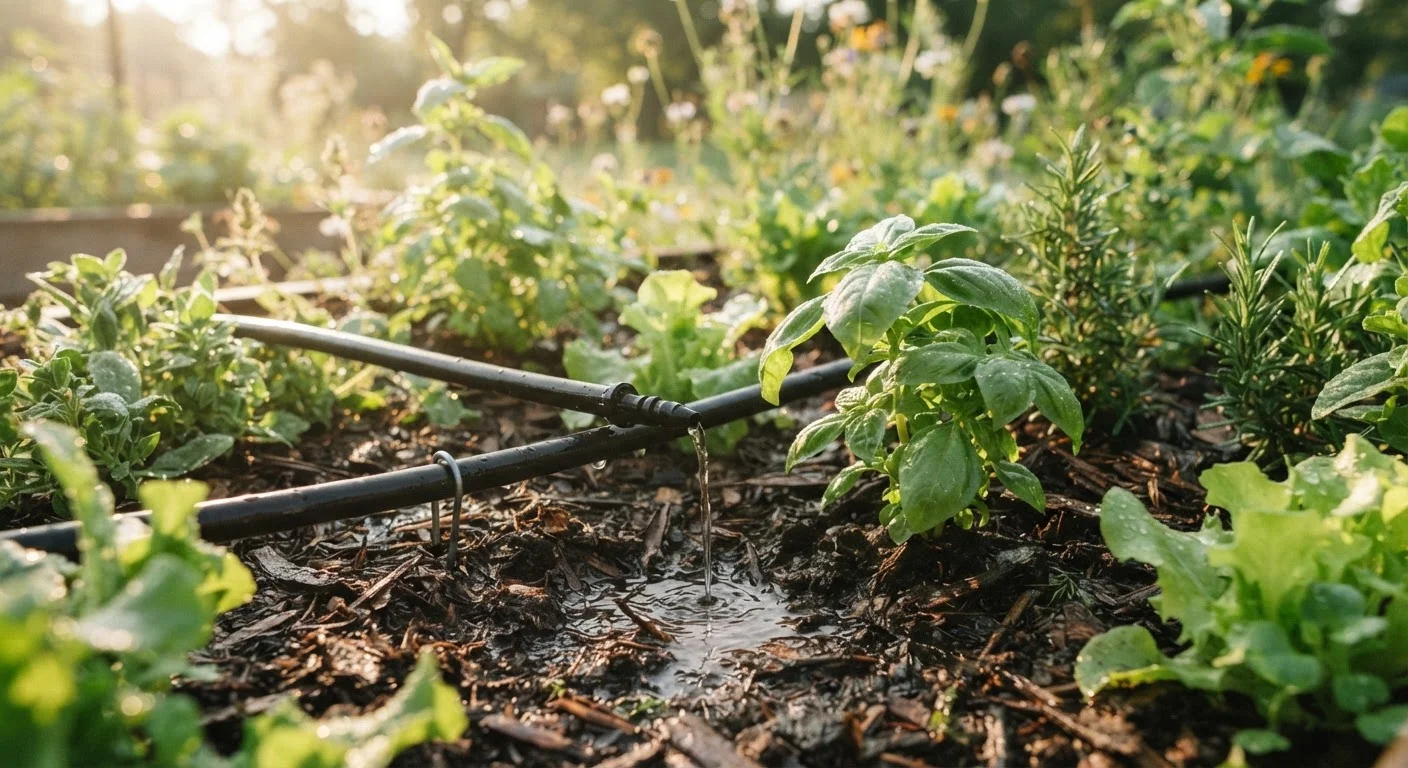
Direct water at the root zone, not the leaves.
Spraying foliage wastes water and creates damp conditions that invite disease. Delivering water at the base of the plant ensures it reaches the roots where it's actually needed, making every drop more effective.
Check soil moisture before watering, every time.
Watering on a fixed schedule without accounting for recent rain, humidity, or temperature leads to overwatering. A quick finger test or an inexpensive soil moisture meter gives you real data instead of assumptions, preventing root rot and unnecessary water use.
Apply mulch to all garden beds to slow moisture evaporation.
Bare soil can lose a significant portion of its surface moisture within hours on a hot day. A layer of organic mulch acts as a barrier that keeps the soil cooler and retains moisture longer, stretching the interval between waterings.
Core Practices That Protect Plants and Your Wallet
Applying the following practices doesn't require a complete garden redesign. Start with one or two, observe how your plants respond, and build from there. The savings - in water, plant losses, and replacement costs - add up quickly over a season.
Soil, Mulch, and Containers: The Supporting Cast
How water behaves once it hits your garden depends heavily on what's around your plants. Bare soil loses moisture fast through evaporation, especially in summer heat. A 2-3 inch layer of organic mulch - wood chips, straw, or shredded leaves - acts as insulation, slowing that loss considerably and reducing how often you need to irrigate.
Soil composition matters too. Sandy soils drain quickly and may need more frequent, lighter watering. Dense clay soils hold water longer but can become waterlogged. Amending with compost improves both: it increases drainage in clay and water retention in sandy ground.
Container plants present a particular challenge because pots dry out faster than garden beds and have no access to deeper soil moisture. If you're managing a container setup, our guide to container gardening on a tight budget covers how pot material and size affect watering frequency - a useful variable to control before spending more on irrigation solutions.
Finally, consider supplementing your tap water with collected rainwater. It's free, plants generally respond well to it, and it can meaningfully reduce outdoor water costs. See our rainwater harvesting overview for how to get started and what to check in your area before installing a collection system.
~50%
Soil moisture retained with mulching
Research from university extension programs consistently shows that organic mulch can reduce soil moisture evaporation by roughly half compared to bare soil.
30%+
Outdoor water use that is typically wasted
The U.S. Environmental Protection Agency (EPA) estimates that more than 30% of outdoor residential water use is inefficient, largely due to overwatering and evaporation from poor timing.
Turning Good Habits into a Routine
The most effective watering strategy is one you'll actually maintain. That means building habits that fit your schedule rather than requiring constant manual monitoring. A simple moisture check before watering - pushing a finger two inches into the soil - takes seconds and prevents unnecessary water use. Pair that with consistent morning timing and appropriate mulching, and most gardens need significantly less attention than homeowners assume.
Watering efficiency also connects to broader water-saving efforts around the home. If you're looking to cut water costs indoors as well, the same discipline applies - small changes in routine, like those covered in reducing hot water costs, compound over time into meaningful savings. And at the end of the season, how you close out your garden affects how much you spend next spring - the end-of-season garden checklist is a practical place to start.