

Key Takeaways
Why Water Heating Deserves Your Attention First
Water heating is typically the second-largest energy expense in a US home, behind space heating. According to the U.S. Department of Energy, it can represent roughly 14-18% of total household energy use. That makes it one of the highest-leverage areas for cost reduction - and one where changes are relatively straightforward.
Unlike space heating, hot water demand is fairly predictable and consistent year-round. That consistency means even small reductions in consumption or standby loss translate into savings on every single bill, not just winter ones. If you're working through a full room-by-room energy audit, your water heater and the fixtures connected to it are worth examining closely.
14-18%
Share of home energy used for water heating
According to the U.S. Department of Energy, water heating is typically the second-largest home energy expense after space conditioning.
4-22%
Potential savings from lowering heater to 120°F
The U.S. Department of Energy estimates this range depending on household usage patterns and original thermostat setting.
25-45%
Standby loss reduction from tank insulation
DOE estimates suggest an insulating jacket can reduce standby heat losses by this margin on older tank-style heaters.
Thermostat Setting: The Easiest No-Cost Adjustment
Many water heaters ship from the factory set to 140°F. The U.S. Department of Energy recommends 120°F for most households - warm enough for comfort and safe use, but lower enough to reduce both standby heat loss and the energy needed to maintain that temperature continuously.
Dropping from 140°F to 120°F can reduce water heating costs by 4-22% depending on usage patterns. The adjustment itself takes a few minutes: locate the thermostat dial on your heater (it may be behind an access panel on electric models), turn it down, and wait several hours before checking tap temperature.
Check the Temperature Simply and Safely
After adjusting your thermostat, run the hot tap at the fixture furthest from the heater for two minutes and measure the temperature with a cooking or instant-read thermometer. Aim for 120°F at the tap. If it reads significantly lower, you may need to nudge the dial up slightly to ensure adequate sanitation and comfort throughout the home.
One important note: households with suppressed immune systems or residents over 60 should consult a healthcare or plumbing professional before lowering below 120°F, as Legionella bacteria can proliferate in tepid water. This is general guidance - individual circumstances vary.
Reducing Standby Heat Loss With Insulation
Tank-style water heaters lose heat continuously through the tank walls and connected pipes - a phenomenon called standby heat loss. Two low-cost fixes address this directly.
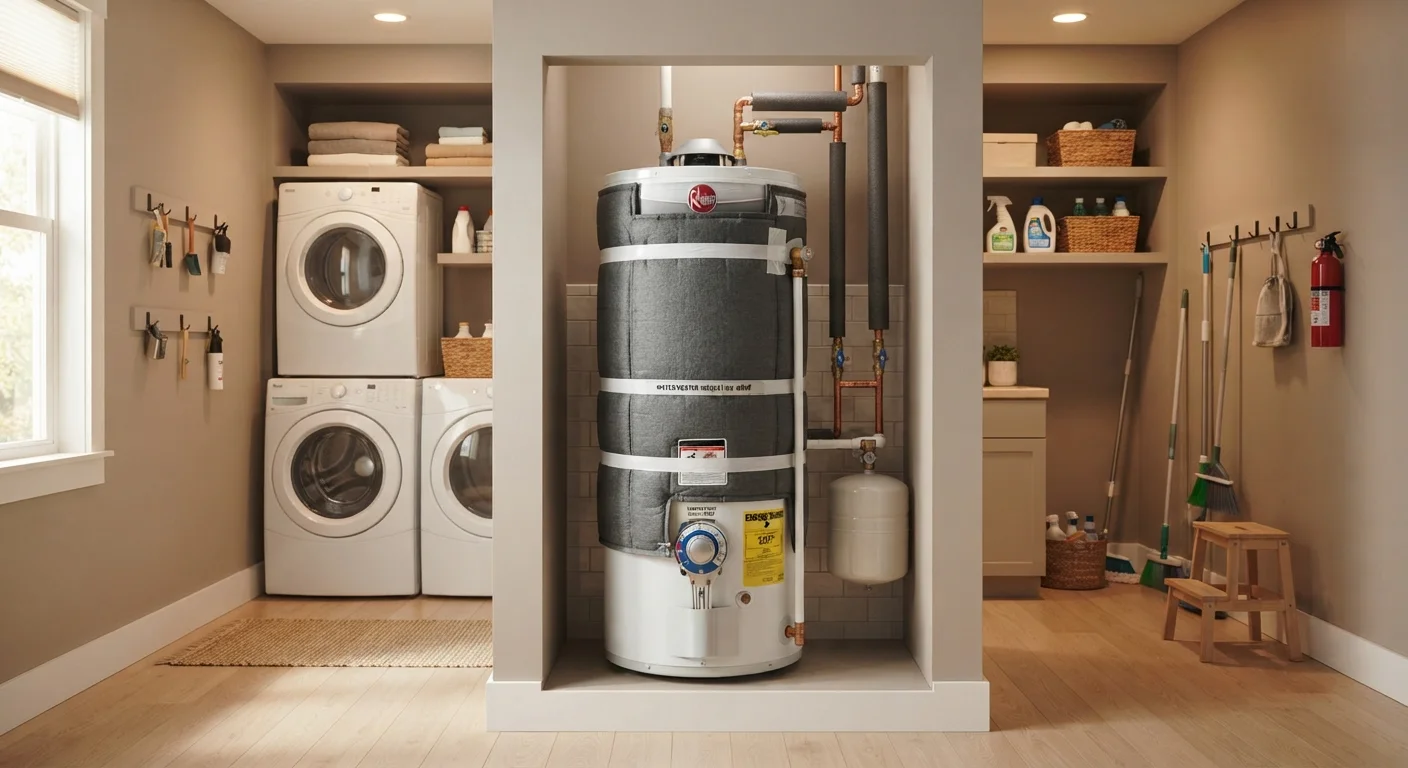
Wrap your water heater tank with an insulating jacket if it feels warm to the touch.
If the outer surface of your tank is noticeably warm, heat is escaping continuously - you're paying to maintain temperature that radiates straight into your utility room. An insulating blanket rated for water heaters can reduce standby losses by 25-45% according to DOE estimates. Check your heater's manual first: some newer high-efficiency models already have sufficient built-in insulation and don't require an additional wrap.
Insulate the first six feet of hot water pipe leaving your heater.
Uninsulated pipes lose heat rapidly, meaning water cools before it reaches the tap - prompting you to run more hot water. Pre-slit foam pipe insulation is inexpensive and installs without tools. Focus on the hot water outlet pipe and any pipes running through unheated spaces like crawl spaces or garages.
Install heat traps or verify your heater already has them.
Heat traps are valves or loops that prevent the natural convection of hot water out of the tank and into supply pipes when hot water isn't being used. Many newer heaters include them; older models may not. Adding them can reduce standby losses noticeably.
Set a water heater timer if you have an electric model.
Electric water heaters can be connected to a timer that cuts power during overnight hours or other long gaps when no hot water is needed. The tank will still retain heat well enough for morning use in most cases. This eliminates unnecessary energy use during predictable idle periods.
These upgrades pair well with the broader range of low-cost efficiency measures available throughout the home.
Low-Flow Fixtures and Behavioral Habits
Reducing how much hot water you draw in the first place is at least as impactful as making your heater more efficient. Low-flow showerheads certified by WaterSense use 2.0 gallons per minute or less, compared to 2.5 GPM for standard models - a 20% reduction that adds up fast in a multi-person household.
Behavioral habits compound these savings further. Running the dishwasher only when full, washing clothes in cold water when appropriate, and fixing dripping hot-water taps promptly all trim consumption. A leaking fixture left unrepaired can waste hundreds of gallons annually - the same principle applies to a dripping hot water tap, which also wastes the energy that heated that water.
For a broader view of how these changes fit into your overall energy strategy, the complete home energy efficiency overview offers a useful framework from no-cost tweaks through to longer-term upgrades.