

Key Takeaways
Why Small Changes Are Worth Making First
Before investing in major upgrades like new insulation or a boiler replacement, it pays to address the low-hanging fruit. Many homes lose significant heat through gaps, uninsulated pipes, and poorly managed thermostats - problems that cost relatively little to fix. The changes listed here are practical starting points: most can be done in an afternoon, and none require a licensed contractor.
It's worth noting upfront that actual savings vary depending on your home's age, construction type, current heating system, and local energy costs. These measures are not guaranteed to produce specific figures - but addressing basic inefficiencies is generally sound practice before moving on to larger projects. For a reality check on which energy-saving ideas actually hold up, see our article on energy-saving myths homeowners still believe.
Seal Draughts Around Doors and Windows
Cold air entering through gaps around window frames, door edges, and letterboxes forces your heating system to work harder to maintain temperature. Self-adhesive foam weatherstripping and brush-style door seals are widely available at hardware stores and are straightforward to apply without tools. For a detailed approach to finding and fixing leaks, see our guide to diagnosing and sealing air leaks.
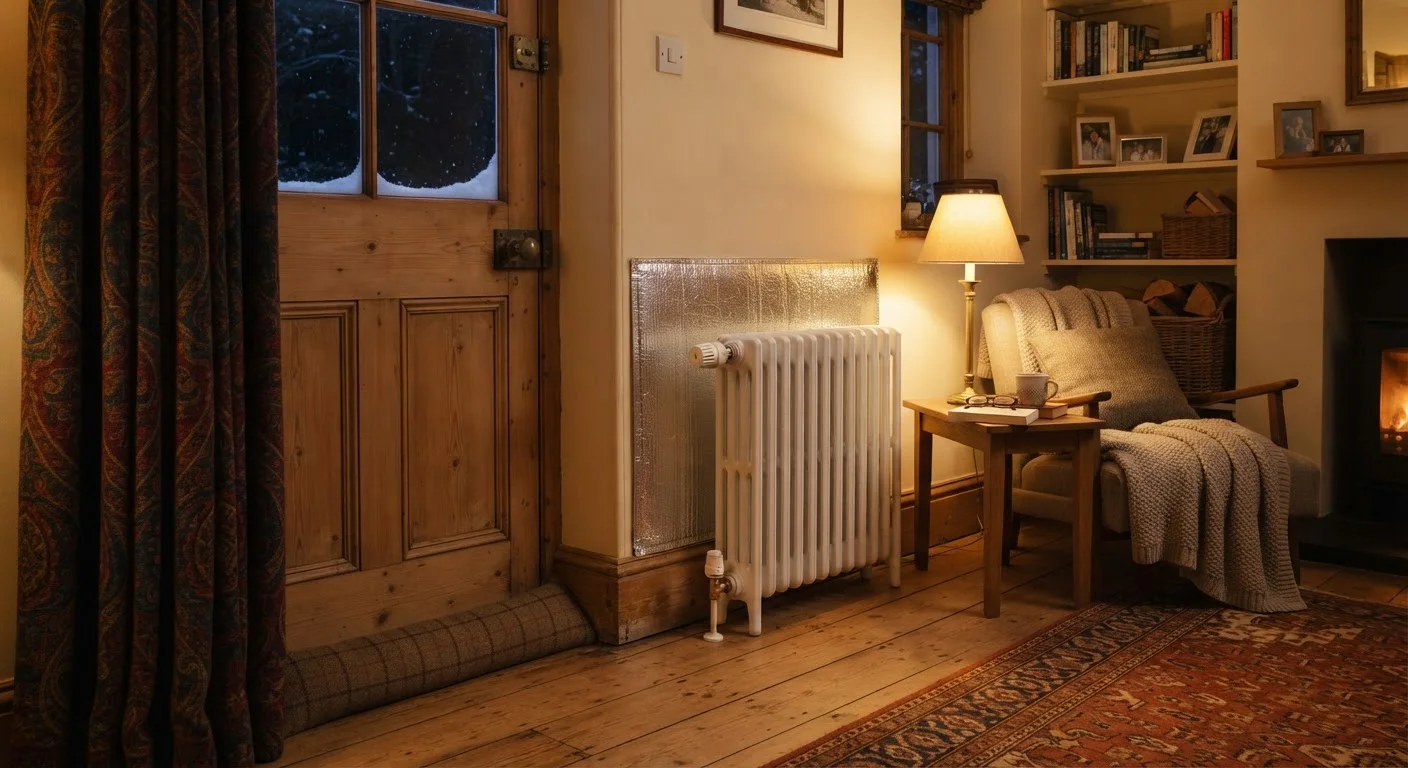
Pay particular attention to the gap at the bottom of external doors - a draught excluder here is one of the simplest, least expensive fixes available. Also check loft hatches, which are frequently overlooked and often uninsulated.
Draught-sealing is among the lowest-cost interventions with the most immediate impact on heat retention.
Fit Radiator Reflector Panels
In homes where radiators sit against external walls - which is most homes - a significant portion of the heat they produce travels through the wall and is lost outside. Radiator reflector panels are thin foil-backed sheets that sit between the radiator and the wall, bouncing heat back into the room instead.
They require no tools to install and cost very little per panel. They're most effective on older, uninsulated solid-wall properties where wall heat loss is greatest. In well-insulated cavity-wall homes, the benefit is smaller but still present.
Radiator reflector panels are particularly effective in older solid-wall homes where wall insulation isn't feasible.
Turn the Thermostat Down by 1°C
It's a well-cited rule of thumb in the energy efficiency field that reducing your thermostat setting by 1°C can cut heating energy use by around 10%, though actual results depend on your home and system. The key is setting it to a comfortable but not excessive temperature - most guidance suggests 18-21°C for living areas, with bedroom temperatures somewhat lower.
Pairing a basic programmable timer with this approach - so the heating only runs when rooms are occupied - compounds the saving. For a deeper look at what technology is worth investing in, see smart vs. programmable thermostats.
Dropping your thermostat by just 1°C is one of the simplest habit changes with a measurable heating impact.
Bleed Your Radiators Regularly
Radiators that are warm at the bottom but cool at the top contain trapped air, which prevents hot water from circulating fully. Bleeding a radiator - releasing this air through the bleed valve with a radiator key - is a straightforward task that takes a few minutes per radiator and costs nothing beyond the key itself.
A full system that circulates correctly heats rooms faster and with less boiler run time. Check all radiators at the start of heating season, and repeat if you notice cold spots returning. Also verify that your boiler's system pressure sits within the manufacturer's recommended range, typically displayed on the gauge.
A radiator with trapped air wastes energy every time the boiler runs - bleeding it costs nothing and fixes the problem immediately.
Use Heavy Curtains and Close Them at Dusk
Windows are a primary route for heat loss, even with double glazing. Thick, lined curtains provide an extra layer of insulation over the glass, reducing the amount of warmth that escapes overnight. The habit of closing curtains as daylight fades - rather than leaving them open into the evening - makes a practical difference, particularly on north-facing windows.
Where curtains aren't an option (skylights, patio doors), thermal blinds serve a similar purpose. This approach pairs well with the room-comfort strategies covered in keeping rooms warm without turning up the boiler.
Closing lined curtains at dusk creates a simple thermal barrier that slows overnight heat loss through glass.
Only Heat the Rooms You're Actually Using
If your heating system allows individual radiator control - via thermostatic radiator valves (TRVs) - turn down or off the radiators in rooms that are unoccupied for most of the day: spare bedrooms, utility rooms, or formal dining rooms used only occasionally. There's no benefit to heating a room to 20°C when nobody is in it.
TRVs can be fitted to most standard radiators and are a relatively inexpensive upgrade if your system doesn't already have them. Keep in mind that some rooms - such as those with pipes running through them - should not be left unheated in freezing conditions, to avoid the risk of frozen pipes.
Heating only occupied rooms using TRVs avoids the direct cost of warming space that nobody is using.
Putting It All Together
None of these measures requires specialist knowledge or significant upfront spending. The practical approach is to work through them systematically - starting with draughts and radiator efficiency, then moving on to smarter thermostat habits and room management. Renters facing landlord restrictions will find that most of these steps are fully within their control; our guide on energy efficiency options for renters covers the landscape in more detail.
If you want to go further, consider whether your hot water setup is also working against you - cutting hot water costs without sacrificing comfort is another area where small adjustments can reduce monthly outgoings. These steps won't transform a poorly insulated home overnight, but they reduce waste without requiring major disruption - and that's a reasonable place to start.
Start With a Simple Home Heat Check
Before buying anything, walk around your home on a cold, windy day and hold your hand near door frames, window edges, skirting boards, and loft hatches. Feeling cold air movement tells you exactly where to focus first. This costs nothing and ensures any money you spend on draught-proofing materials goes where it will actually make a difference.