

Key Takeaways
Start here
Why Renters Have a Real Shot at Lower Bills
Quick wins
Tackling Drafts Without Permanent Changes
Next step
Cutting Phantom Loads and Everyday Electricity Waste
Build on it
Smarter Heating and Cooling Habits
Go further
When to Talk to Your Landlord - and How
Why Renters Have a Real Shot at Lower Bills
The standard energy-efficiency conversation skips renters almost entirely - it talks about insulation upgrades, new boilers, and solar panels that require property ownership and substantial capital. But behavioral changes and portable, removable fixes together address a larger share of a typical household energy bill than most people realize.
Research consistently shows that occupant behavior - how and when you use heating, appliances, and lighting - is one of the largest variables in household energy consumption. That's entirely within a renter's control. So are a range of inexpensive, non-permanent physical improvements. The full spectrum of energy efficiency measures includes many options that don't require owning a single brick.
Phantom load
The electricity a device draws even when switched off or in standby mode. It's invisible on your device but visible on your bill.
Weatherstripping
Strips of foam, rubber, or silicone applied around door and window frames to block gaps where outside air enters and conditioned air escapes.
Thermal curtains
Curtains with an insulating lining designed to reduce heat loss through windows, particularly useful in winter and in rooms with older single-pane glass.
Thermostat setback
The practice of lowering your thermostat setting during periods when heating or cooling is less needed - such as when you're away or asleep - to reduce energy use.
Deregulated energy market
A state energy market where residential customers can choose their electricity or gas supplier, rather than being locked into a single utility provider.
Tackling Drafts Without Permanent Changes
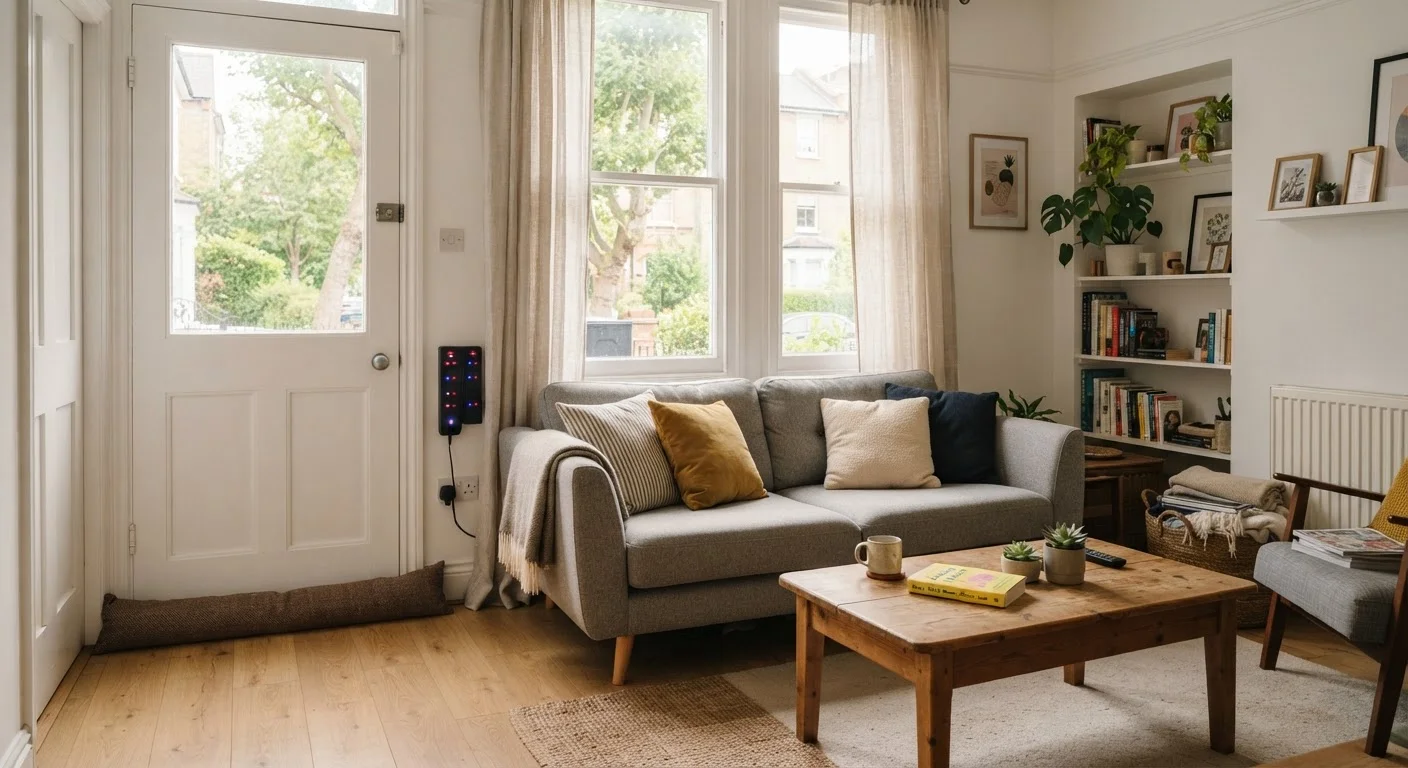
Air leaks are one of the most significant sources of heat loss in any home. The good news for renters is that the most effective fixes are also the most reversible. Self-adhesive foam weatherstripping tape applied around door and window frames costs very little and leaves no lasting mark. Draft excluders placed at the base of exterior doors are entirely portable. Heavy thermal curtains - the kind with an insulating liner - can drop the cold radiating from single-pane windows noticeably and come with you when you move.
Removable window insulation film is another option worth knowing about. It creates a secondary air barrier over the glass using double-sided tape that peels off cleanly. It's not a substitute for double glazing, but it measurably reduces drafts from older single-pane windows. For a systematic approach to finding where air is escaping, this room-by-room guide to sealing air leaks covers the key spots most renters overlook.
Take your draft fixes with you
Self-adhesive foam tape, draft excluders, and thermal curtains are all portable and reusable. Buying quality versions upfront means they'll serve you through multiple rentals. Keep the original hardware and fittings you replace so move-out is straightforward.
Cutting Phantom Loads and Everyday Electricity Waste
Electronics in standby mode draw power continuously. A television, a games console, a microwave with a clock display, a router, a laptop charger with nothing plugged into it - each individually draws only a few watts, but collectively they add up across 8,760 hours in a year. The U.S. Department of Energy has noted that standby power can account for roughly 5-10% of a home's electricity use.
A switchable power strip is the most practical fix: one button cuts power to an entire entertainment cluster or desk setup. LED bulbs are another straightforward swap - they use around 75% less energy than incandescent bulbs and last significantly longer. Since bulbs are considered consumables, most landlords have no objection to tenants replacing them (keep the originals to reinstall at move-out). For a broader look at what's actually running up your bill, understanding your home's hidden energy drains is a useful next read.
Smarter Heating and Cooling Habits
How you use the thermostat matters more than most people account for. Heating an empty apartment to full temperature all day is one of the most common and costly habits renters carry without questioning. Turning the heat down - not off - while away and at night, and using a consistent schedule, typically reduces heating costs without sacrificing comfort. The common myth that leaving heating on low all day saves money is addressed directly in our analysis of what the evidence actually shows.
Other habits with real impact: keeping interior doors closed between heated and unheated rooms, not blocking radiators or vents with furniture, and making use of natural solar gain by opening south-facing curtains during daylight hours and closing all curtains at dusk. These cost nothing. For low-cost physical additions that complement good habits, low-cost changes that genuinely reduce heating bills covers radiator reflector panels and similar measures that renters can use without modification to the property.
When to Talk to Your Landlord - and How
Some improvements genuinely require landlord involvement: broken door seals, failing window glazing, a malfunctioning thermostat, or an aging water heater that runs constantly. These aren't just efficiency issues - in many cases they affect habitability, and landlords have legal maintenance obligations that vary by state.
When raising energy-related concerns, written communication (email is fine) creates a paper trail and gives the landlord something concrete to respond to. Frame requests practically: note the specific problem, what it's likely costing in wasted energy, and what fix you're requesting. Some landlords will also agree to minor upgrades - like a programmable thermostat swap - if you're willing to document the change, restore the original on departure, and make the ask clearly. Avoid framing it as a complaint; frame it as a shared interest in a well-functioning property. If you're unsure what to audit first, a room-by-room household energy audit gives you a concrete checklist to work from before any conversation.
This article is for general informational purposes only. It does not constitute legal, financial, or professional home improvement advice. Verify local tenant rights, lease terms, and any applicable regulations before making changes to your rental property.