

Key Takeaways
Tool Construction Quality
Tool construction quality refers to the materials, manufacturing methods, and design choices that determine how well a garden tool holds up under repeated use. A tool's price reflects cost-cutting decisions as much as it reflects value. Understanding what's inside - and how the parts connect - tells you far more than the sticker price.
Key indicators include whether metal components are forged or stamped, and whether handles are solid hardwood, fiberglass, or hollow plastic bonded with adhesive.
Where Cheap Tools Actually Fail
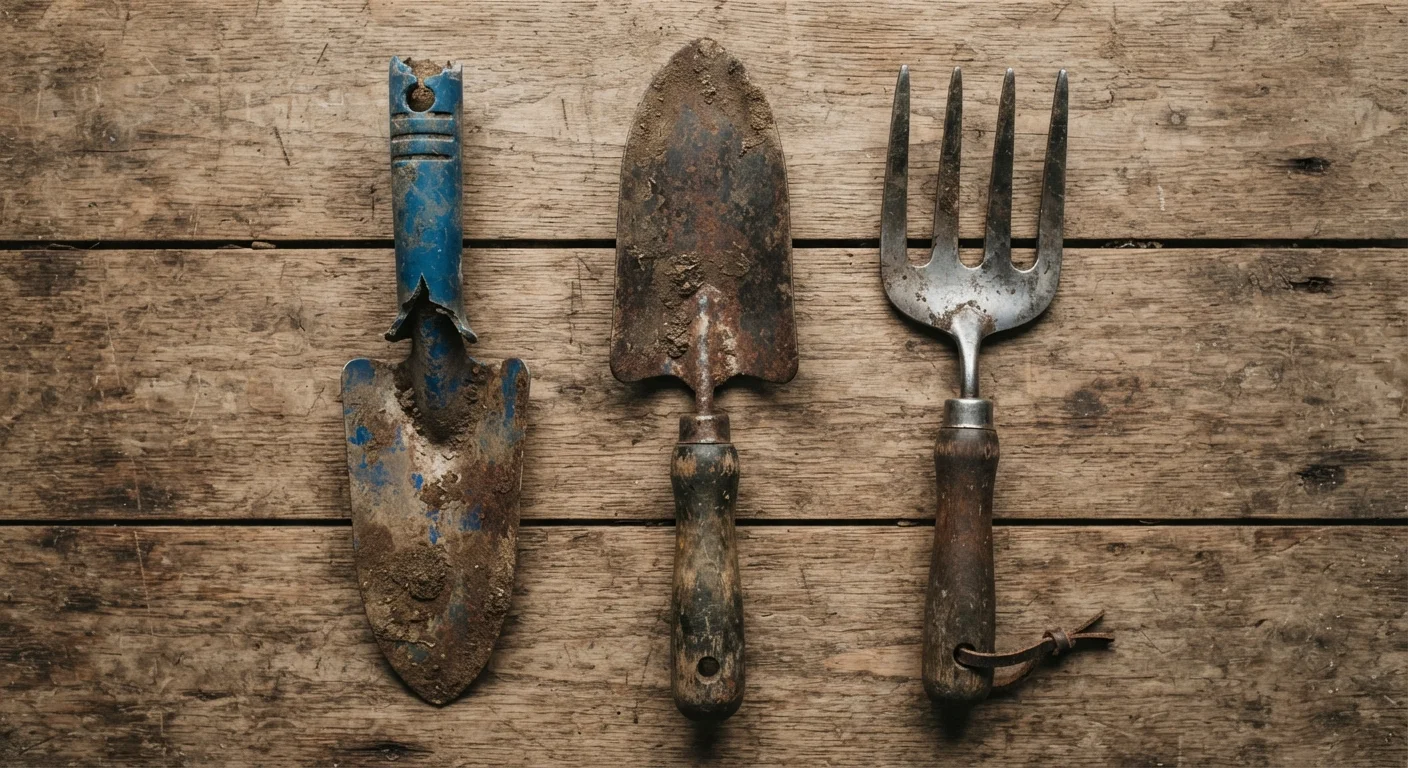
The blade rarely breaks first. In most failed budget garden tools, the failure point is the connection between handle and head - the socket, the collar, or the rivet holding them together. Manufacturers cutting costs put money into visible surfaces (a shiny painted head, a varnished handle) while using the cheapest possible joinery to attach them.
The result is a tool that looks complete in the store and feels adequate for the first few uses, then loosens, wobbles, and eventually snaps at the joint under normal digging or prying pressure. This pattern repeats across trowels, hoes, forks, and rakes regardless of the gardening task.
Understanding this failure mode changes what you inspect before buying. Stop looking at the blade finish and start examining the socket depth, the number and gauge of rivets, and whether the handle material is solid or hollow.
Price Isn't a Reliable Proxy for Quality
A high retail price doesn't guarantee forged construction or solid joinery - it may simply reflect brand positioning or distribution costs. Conversely, some tools sold at modest prices by lesser-known manufacturers meet the same construction standards as premium brands. Always evaluate the spec, not the price tag.
Metal Head: Forged vs. Stamped vs. Cast
There are three main ways garden tool heads are manufactured, and each carries a different durability profile.
- Forged: Heated metal is pressed under high force into a die, aligning the grain structure and producing a dense, strong head. Forged tools resist bending and cracking and are the standard in professional-grade equipment.
- Stamped: Flat sheet metal is cut and bent into shape - fast, cheap, and common in budget tools. Stamped heads are thinner and prone to flexing under load, which eventually causes them to deform or crack at stress points.
- Cast: Molten metal poured into a mold. Cast iron tools are brittle and will snap rather than bend. Cast aluminum is light but weak. Avoid both for any digging or prying use.
Forged tools typically cost more upfront but represent genuine value over time. As covered in our breakdown of parts quality decisions, the real calculation isn't purchase price - it's total cost across replacements.
3-5×
Lifespan difference: forged vs. stamped tool heads
Industry comparisons from tool manufacturers and horticultural trade publications consistently show forged tools lasting several times longer under equivalent use conditions.
~70%
Garden tool failures occurring at the handle joint
Repair and replacement data from garden tool refurbishers indicates the socket or collar connection - not the working head - is the most common failure point in budget tools.
2-3×
Total spend on repeated budget tool replacement vs. one durable tool
Cost-per-use analyses comparing budget tool replacement cycles with mid-range purchases consistently show higher long-term spending on the cheap-replace approach.
Handle Material and Attachment: The Details That Matter
Handles fail in two ways: the material itself breaks, or it detaches from the head. Both are preventable with the right construction.
Material choices ranked by durability:
- Solid hardwood (ash or hickory): Absorbs shock well, repairable, and replaceable. Needs annual sealing to prevent drying and cracking.
- Fiberglass: Doesn't rot or warp, lightweight, and consistent strength. Can splinter if struck at the wrong angle but generally outlasts wood in wet climates.
- Hollow plastic: Cheap to manufacture, poor shock absorption, prone to cracking in cold weather. Avoid for any high-load task.
Attachment method matters as much as material. A full-socket design - where the handle inserts several inches into a deep metal collar - distributes stress across a longer joint and resists lateral torque. A shallow socket glued or held with a single pin will loosen after moderate use. Look for two or more solid rivets and minimal visible gap between handle and collar.
These habits connect directly to the broader pattern discussed in expensive gardening habits that quietly drain your budget - repeated cheap replacements add up faster than one considered purchase.
How to Evaluate Quality Before You Buy
Most quality signals are visible or testable at the point of purchase. Use this checklist:
- Grip the handle and apply lateral pressure to the head. Any wobble is a red flag.
- Look at the socket from the side - deep collar versus shallow sleeve is immediately visible.
- Check rivet count and gauge. Thin single rivets indicate cost-cutting at the most critical joint.
- Examine the head edge. Forged edges have rounded, solid profiles; stamped edges are thin and may show fold lines.
- For wooden handles, check the grain direction - straight grain running parallel to the handle length resists splitting better than irregular grain.
When buying online without handling the tool first, look for manufacturer specs that specify forging method, handle material, and socket depth. If that information isn't listed, treat it as a signal that the construction is not a selling point.
For gardeners building out a fuller kit on a limited budget, container gardening on a tight budget offers a similar framework for evaluating where spending more or less actually changes outcomes.
Extend Any Tool's Life With Simple Maintenance
After each use, knock soil off metal heads and wipe them down. A light coat of linseed oil on wooden handles each spring prevents drying and cracking. Store tools in a dry location - leaving them in wet soil or exposed to rain accelerates rust and degrades handle wood far faster than normal use does.
The Real Cost of Replacing Cheap Tools
A stamped-steel trowel at a low price point that breaks after one season and needs replacing twice costs more than a mid-range forged alternative that lasts a decade - often significantly more when you account for the time spent shopping and the frustration of tools failing mid-task.
This is the core principle behind thinking about budgeting basics in the context of home purchases: cost-per-use is the relevant metric, not purchase price. One durable digging fork used three times a week for eight years has a dramatically lower cost-per-use than three successive budget replacements.
That doesn't mean spending the maximum. It means identifying the construction features that predict longevity - forged head, deep full-socket attachment, solid handle material - and finding tools that meet those criteria at the lowest available price. That approach consistently outperforms both reflexive cheapness and reflexive premium spending.
For a broader perspective on where DIY effort pays off versus where it creates additional costs, see repairs that genuinely save money done DIY.