

Key Takeaways
Our Verdict
Neither DIY nor hiring a professional is universally better - the right call depends on the specific repair's complexity, the risks of getting it wrong, and an honest assessment of your own skills. For straightforward interior work like patching drywall or caulking, DIY consistently saves money with manageable risk. For anything touching electrical systems, load-bearing elements, or permit-required work, a licensed tradesperson is the responsible and often legally required choice.
| Best for | Recommended |
|---|---|
| Homeowners with basic tools and some hands-on experience | DIY for cosmetic and low-risk interior repairs |
| Repairs involving electrical, plumbing, or structural components | Licensed tradesperson |
| Jobs requiring permits or code compliance | Licensed tradesperson |
| Those seeking to minimize cost on simpler prep or finishing tasks | Hybrid approach - DIY prep, professional finish |
The Decision Framework: Three Questions to Ask First
Before picking up a hammer or calling a contractor, run every repair through three filters: What's the risk if it goes wrong? Do I have the skill and tools to do this correctly? Does this work require a permit or a licensed trade?
These aren't formalities. A botched drywall patch costs you a weekend and some spackle. A botched electrical fix can void your homeowner's insurance or create a fire hazard. The stakes define the decision, not the apparent simplicity of the task.
If all three answers point toward low risk, sufficient skill, and no permit requirement, DIY is almost always the more cost-effective path. If any one answer raises a red flag, the calculus shifts. See our guide to reading a repair job before assuming it's DIY-friendly for a deeper look at what hidden factors can change a job's risk profile.
Write Down Your Honest Skill Assessment
Before starting any repair, write a one-sentence honest assessment of whether you've done this type of work before and what the result was. Overconfidence is the most common reason DIY repairs become more expensive than hiring out. If you're uncertain, start with a smaller, lower-stakes version of the task to build the skill before applying it to a visible or consequential area of your home.
What DIY Handles Well - and Where It Falls Short
Interior repairs that are strong DIY candidates share a few traits: they're reversible or low-consequence if imperfect, they don't require specialized licensing, and the skills involved are learnable from reliable instructional resources. Common examples include patching small holes in drywall, replacing door hardware, re-caulking around trim or fixtures, fixing squeaky floorboards, and touching up paint.
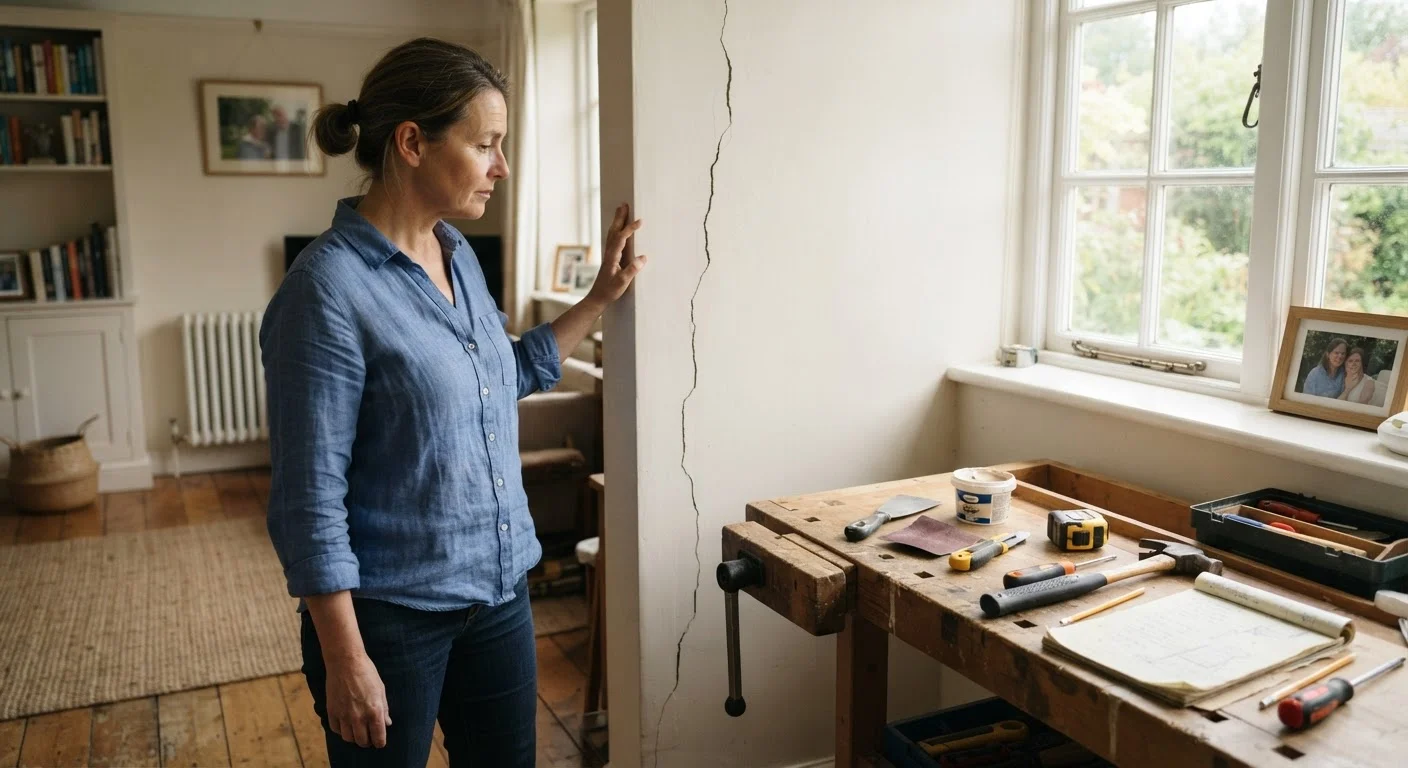
Where DIY consistently falls short is in scope creep and hidden complexity. A water stain on the ceiling looks like a cosmetic fix until you open the drywall and find active moisture damage or compromised insulation. A sticking door seems mechanical until you notice the frame has shifted - potentially a foundation or structural issue. Some repairs genuinely save money when self-managed; others create liability or safety risks - it's worth understanding both sides before committing.
Also factor in true cost of your time. If a repair realistically takes you six hours but a handyperson could complete it in two, the labor savings may narrow considerably or disappear entirely once you account for your own hourly value.
| DIY | Hire a Tradesperson | Hybrid Approach | |
|---|---|---|---|
| Typical cost | Materials only | Labor + materials | Reduced labor + materials |
| Skill requirement | Moderate; learnable | None from homeowner | Basic prep skills needed |
| Time investment | High; varies by skill | Minimal for homeowner | Low to moderate |
| Risk if done wrong | Low to medium (task-dependent) | Low; professional accountability | Low if split correctly |
| Permit compliance | Homeowner responsible | Tradesperson handles | Shared responsibility |
| Best for | Cosmetic, low-risk repairs | Electrical, structural, gas work | Jobs with separable labor stages |
When Hiring a Tradesperson Is the Responsible Call
Certain interior repairs should go to a licensed professional regardless of your skill level. Work involving electrical panels, branch circuit wiring, or any gas lines requires a licensed electrician or plumber in virtually every US jurisdiction - doing this work without permits creates legal exposure and can complicate home sales or insurance claims later.
Structural work - removing walls, reinforcing joists, addressing foundation-related movement - also belongs in professional hands. The consequences of error here are severe, and permits are typically required. Similarly, repairs to HVAC ducting connected to combustion equipment warrant a qualified technician rather than a DIY approach.
Beyond safety, there's a practical threshold: if you'd need to purchase or rent specialized tools that cost nearly as much as hiring out the job, the math usually favors the professional. Use a pre-project checklist to confirm scope before you commit either way.
Unpermitted Work Creates Real Liability
Completing work that requires a permit without pulling one isn't just a code violation - it can complicate or void your homeowner's insurance claim if damage occurs, and it can become a mandatory disclosure item when you sell the home. Before any repair that involves structural, electrical, or plumbing systems, check with your local building department to confirm whether a permit is required. Requirements vary by municipality.
The Hybrid Approach: DIY Prep, Professional Execution
A frequently overlooked middle path is splitting the work. Many tradespeople charge by the hour for labor that doesn't require their license - moving furniture, clearing access, demoing non-structural materials, priming surfaces, or cleaning up afterward. Doing this work yourself before and after a professional's visit can meaningfully reduce the total invoice.
For example, if you need a bathroom exhaust fan replaced and the wiring requires an electrician, you can remove the old fan housing yourself (after confirming the circuit is off and verified dead with a non-contact tester), have the electrician handle the wiring connection, then finish the cosmetic trim yourself. The electrician spends less time; you spend less money.
This approach requires clear communication with your tradesperson upfront - confirm exactly what they expect to find when they arrive and what you're permitted to do beforehand. If you're newer to home repair generally, a practical introduction to DIY home repair is a useful starting point before taking on even the prep work.
The goal isn't to do as much as possible yourself - it's to make every dollar spent, whether on your time or a contractor's labor, count toward a repair that's done correctly and safely.