

Key Takeaways
Significantly lower nightly cost than private rooms
Dorm beds routinely cost 60–80% less than comparable private hotel rooms in the same area, a gap that compounds meaningfully on longer trips.
Built-in social environment for solo travelers
Common areas, communal kitchens, and hostel-organized events create natural opportunities to meet other travelers without extra effort.
Included extras can offset higher-seeming prices
Free breakfast, kitchen access, walking tours, and luggage storage are frequently bundled into hostel rates, reducing overall daily spend.
Central locations often available at budget prices
Many well-located hostels occupy prime city-center spots where equivalent private rooms would cost far more, reducing transport expenses.
Flexible booking options in many markets
Hostels frequently offer shorter minimum stays and more lenient cancellation terms than hotels, which suits travelers with flexible itineraries.
Sleep disruption from dorm roommates is common
Late arrivals, early departures, and snoring in shared rooms can meaningfully reduce sleep quality — a real cost on back-to-back travel days.
Limited privacy throughout the stay
Shared sleeping spaces, bathrooms, and common areas mean minimal time alone, which wears on travelers who need solitude to recharge.
Security requires active management
Lockers are common but not universal, and most require your own padlock. Valuables left unsecured are at genuine risk in high-turnover dorm environments.
Quality and cleanliness vary widely between properties
The hostel category spans everything from boutique-quality social hubs to poorly maintained budget stops — due diligence through recent reviews is essential.
Bathroom access can bottleneck in larger dorms
Shared bathroom facilities become a real constraint during peak morning hours, particularly in larger dorms with a low bathroom-to-bed ratio.
Our Verdict
Hostels deliver genuine value for solo travelers who prioritize low nightly costs and organic social connection over guaranteed comfort and privacy. The trade-offs — noise, shared bathrooms, limited personal space — are real and shouldn't be dismissed. For travelers comfortable with unpredictability and willing to do a little research upfront, hostels can stretch a budget meaningfully without making a trip miserable.
Solo travelers on a tight budget who are flexible sleepers, open to meeting strangers, and willing to vet properties carefully before booking.
The Financial Reality of Hostel Stays
The core appeal of hostels is straightforward: a dorm bed in a shared room typically costs a fraction of a private hotel room in the same neighborhood. In popular destinations across Europe, Southeast Asia, and Latin America, dorm beds commonly run between $15 and $40 per night — figures that add up to substantial savings on a multi-week trip.
That math matters most for solo travelers, who can't split a private room cost with a partner. A solo traveler booking a standard hotel is paying the full rate alone. A hostel dorm bed eliminates that single-occupancy penalty entirely.
Some hostels also bundle extras — free breakfast, communal kitchen access, walking tours, or luggage storage — that would otherwise cost money separately. Before dismissing a slightly higher dorm price, factor in what's included. See how experienced travelers evaluate total nightly cost for a fuller picture of what to compare.
$15–$40
Typical dorm bed cost per night
Dorm bed pricing in popular travel destinations across Europe, Southeast Asia, and Latin America commonly falls within this range, though prices vary by city and season.
60–80%
Potential savings vs. private hotel room
Hostel dorm beds typically cost a fraction of private hotel rooms in the same neighborhood, making the gap especially significant for solo travelers paying full room rates alone.
The Social Side: Real Opportunity, Real Variability
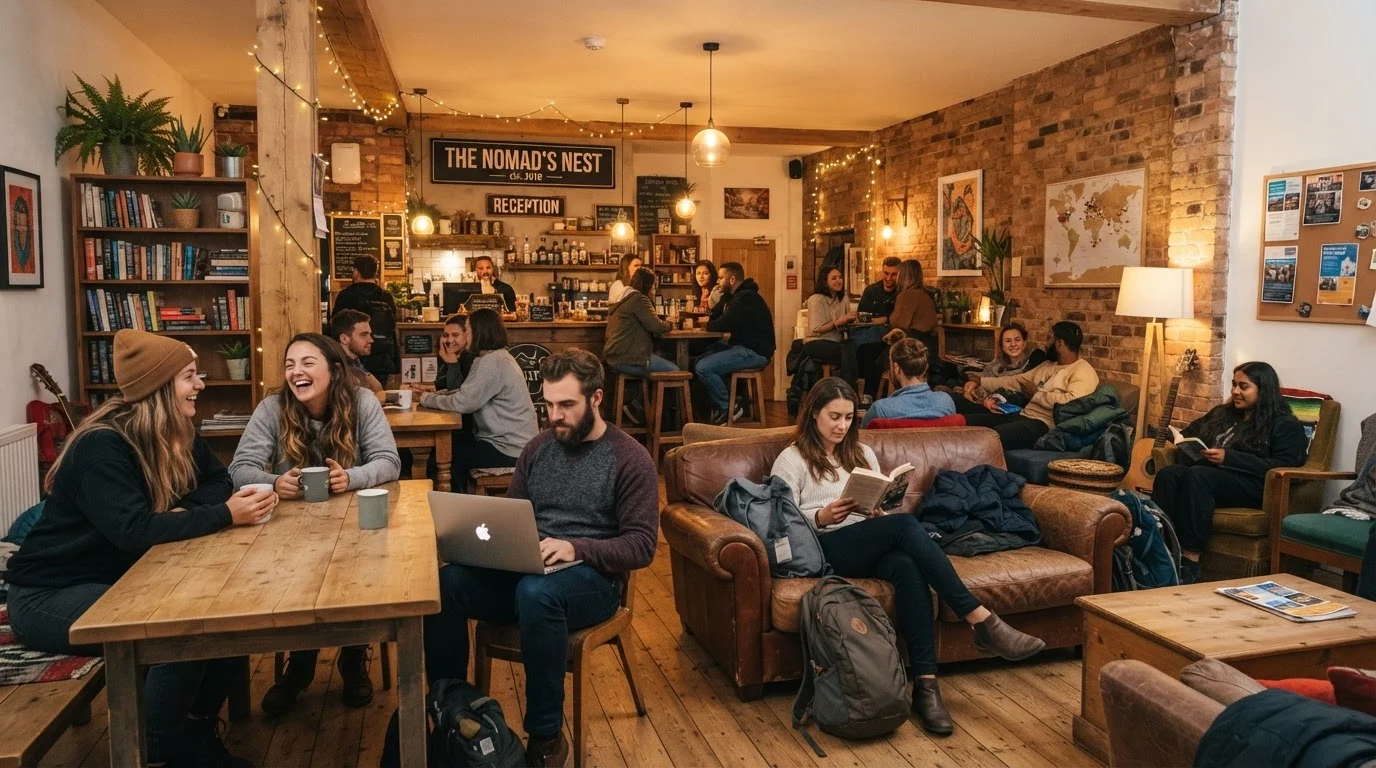
Hostels draw a disproportionate share of solo travelers, which creates a natural environment for meeting people. Common rooms, communal kitchens, and organized social events lower the activation energy for conversation in ways that hotel lobbies simply don't.
That said, the social atmosphere varies significantly by hostel. A party hostel in a beach town operates nothing like a quiet design hostel in a capital city. Reading recent reviews with phrases like "social," "quiet," or "good for solo travelers" gives a more reliable signal than the property's own marketing copy.
If building connections on the road matters to you, the dorm vs. private room trade-off is also relevant — private hostel rooms cost more but often still sit within the hostel's social infrastructure.
Significantly lower nightly cost than private rooms
Dorm beds routinely cost 60–80% less than comparable private hotel rooms in the same area, a gap that compounds meaningfully on longer trips.
Built-in social environment for solo travelers
Common areas, communal kitchens, and hostel-organized events create natural opportunities to meet other travelers without extra effort.
Included extras can offset higher-seeming prices
Free breakfast, kitchen access, walking tours, and luggage storage are frequently bundled into hostel rates, reducing overall daily spend.
Central locations often available at budget prices
Many well-located hostels occupy prime city-center spots where equivalent private rooms would cost far more, reducing transport expenses.
Flexible booking options in many markets
Hostels frequently offer shorter minimum stays and more lenient cancellation terms than hotels, which suits travelers with flexible itineraries.
The Honest Downsides You Should Plan Around
Sleep disruption is the most commonly cited frustration. Dorm rooms with six to twelve beds mean one late arrival, one snorer, or one early-morning departure can affect the whole room. Earplugs and a sleep mask are practical non-negotiables, not optional accessories.
Bathroom queues during peak morning hours are another friction point, especially in larger dorms. Hostels with a higher ratio of bathrooms to beds are worth seeking out, particularly if you're on a tight schedule each day.
Security for valuables requires active attention. Most reputable hostels provide lockers, but you typically need your own padlock. Leaving passports, cash, or electronics unsecured is an avoidable risk. Female-only dorms, available at many properties, offer an additional layer of comfort for travelers who want them.
If you're newer to budget lodging and want a grounded starting point, this overview of budget accommodation types covers the full landscape before you narrow your options.
Sleep disruption from dorm roommates is common
Late arrivals, early departures, and snoring in shared rooms can meaningfully reduce sleep quality — a real cost on back-to-back travel days.
Limited privacy throughout the stay
Shared sleeping spaces, bathrooms, and common areas mean minimal time alone, which wears on travelers who need solitude to recharge.
Security requires active management
Lockers are common but not universal, and most require your own padlock. Valuables left unsecured are at genuine risk in high-turnover dorm environments.
Quality and cleanliness vary widely between properties
The hostel category spans everything from boutique-quality social hubs to poorly maintained budget stops — due diligence through recent reviews is essential.
Bathroom access can bottleneck in larger dorms
Shared bathroom facilities become a real constraint during peak morning hours, particularly in larger dorms with a low bathroom-to-bed ratio.
Choosing a Hostel That Works for Your Trip
Not all hostels are the same, and the gap between a well-run property and a poorly maintained one is wide. A few concrete filters help narrow the field.
- Dorm size: Smaller dorms (4–6 beds) tend to be quieter and feel less chaotic than 10- or 12-bed rooms.
- Location: Central hostels let you walk more and spend less on transport, which compounds savings over a long trip.
- Review recency: Focus on reviews from the past six months; management and cleanliness can shift quickly.
- Amenities that matter to you: Kitchen access, luggage storage, and reliable Wi-Fi are worth confirming before booking rather than assuming.
For travelers moving between multiple cities, the hostel decision gets more layered. Planning accommodation across multiple destinations requires a different strategy than a single-stop trip. And if you're weighing whether a hostel is even the right category for your needs, the differences between hostels, guesthouses, and budget hotels clarify where the real distinctions lie.
Female-Only Dorms: Worth Confirming in Advance
Many hostels offer female-only dorm options at no additional cost beyond the standard dorm rate. These rooms aren't universally available, so it's worth filtering or contacting the property before booking if this matters to your planning. Availability varies significantly by destination and property size.