

Key Takeaways
Hostel, Guesthouse, Budget Hotel
These three terms describe distinct lodging models that all aim at travelers watching their spending. A hostel sells beds in shared dormitory rooms and emphasizes communal spaces. A guesthouse is typically a small, owner-operated property offering private rooms with a more personal atmosphere. A budget hotel is a stripped-down version of a full-service hotel — private rooms, consistent standards, minimal extras.
In some regions, local licensing and tourism boards define these categories formally; elsewhere the labels are self-applied by operators, which is why the same building can appear under different names on different booking platforms.
The Core Difference: What You're Actually Paying For
Strip away the marketing language and the distinction comes down to one variable: how the sleeping space is structured. In a hostel, you're purchasing a bed — typically a bunk — within a room shared with strangers. In a guesthouse or budget hotel, you're renting an entire room. That single difference cascades into everything else: price, privacy, noise level, and the social texture of your stay.
Hostels keep costs low by packing more guests into the same square footage. A 10-bed dorm room generates far more revenue per square foot than a private double. That math is why a hostel dorm bed can cost a fraction of a private room in the same city. The trade-off is obvious: shared space, shared bathrooms (usually), and shared noise.
Budget hotels and guesthouses both give you a private room, but they differ in scale, ownership model, and what's included. Understanding those differences — rather than guessing from a category label — is what lets you make a genuinely informed booking decision. For a broader look at how pricing and room types work across all lodging categories, see this starting-point guide to budget accommodation.
Hostels: Shared Space, Social Energy, Lowest Price Floor
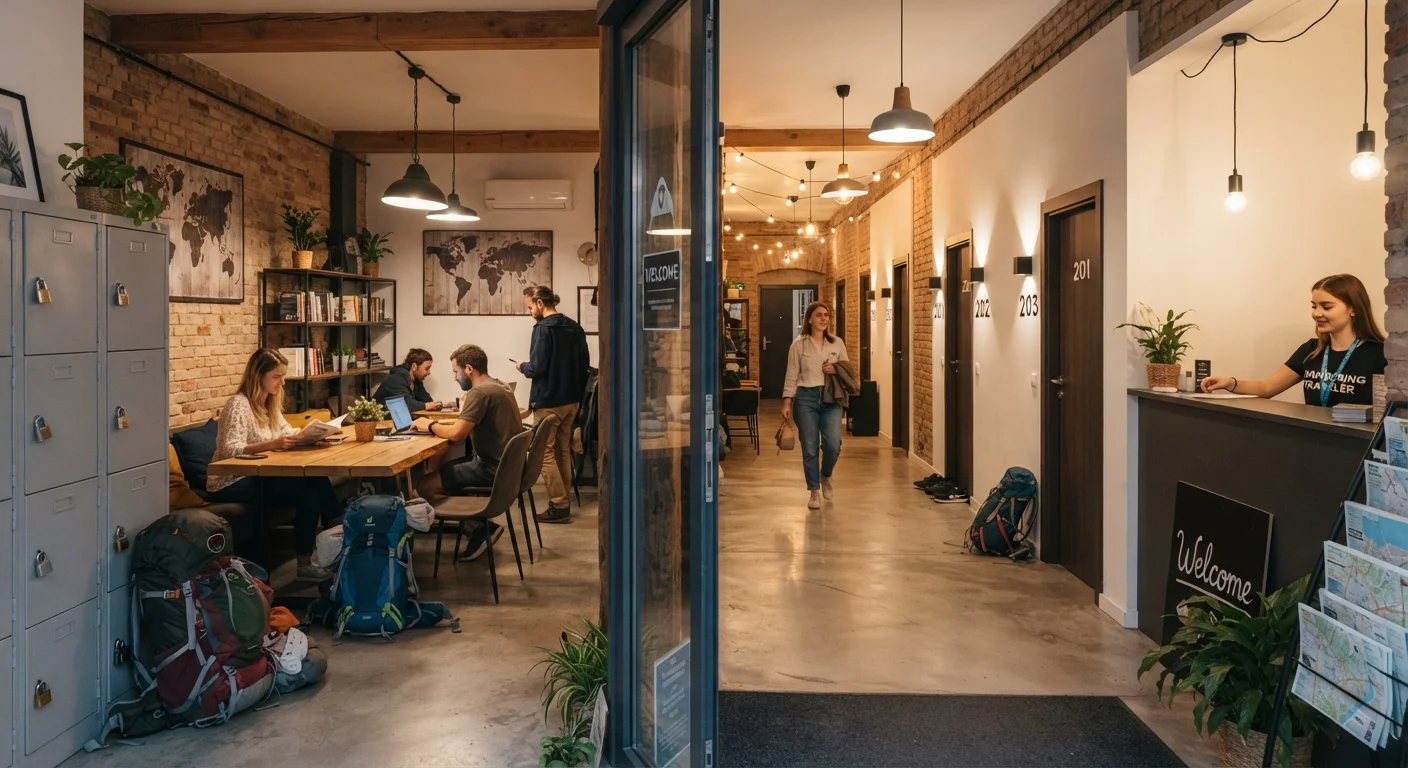
A hostel's defining feature is the dormitory room. Most offer a range of dorm sizes — anywhere from 4 to 20 beds — plus a smaller number of private rooms for travelers who want solitude at a modest premium. Common areas (shared kitchens, lounges, sometimes bars) are central to the hostel model; they're where the social environment actually happens.
4–20
Typical beds per hostel dormitory room
Room configurations vary widely; larger dorms reduce per-night cost but increase noise and privacy trade-offs.
~50%
Potential savings vs. private room in same city
Hostel dorm rates are commonly a fraction of private room rates in the same destination, though the gap varies significantly by market.
<20 rooms
Typical guesthouse property size
Most guesthouses operate as small, owner-managed properties, which drives both the personal character and the variability in standards.
What hostels typically include in the base rate: a bed, a locker (bring your own padlock or rent one), access to shared bathrooms, and use of communal spaces. Linen is sometimes extra. Breakfast is usually not included, though some properties offer it for a fee. Wi-Fi is nearly universal.
The category suits solo travelers, backpackers on extended trips, and anyone who actively wants to meet other travelers. It's a poor fit for light sleepers, anyone needing consistent quiet, or travelers who value guaranteed personal space. For a candid assessment of what hostel stays actually look like day-to-day, this honest overview of hostel expectations covers the real trade-offs.
Guesthouses: Owner-Run, More Personal, Genuinely Variable
A guesthouse is typically a small, privately owned property — often a converted home or a building with fewer than 20 rooms. The owner or a family member usually manages the property directly, which creates a more personal dynamic than you'd find in a managed chain property. Rooms are private. Bathrooms may be en suite or shared among a small number of rooms.
The character of a guesthouse varies enormously because there's no franchise standard enforcing consistency. One guesthouse might include a home-cooked breakfast, local tips from a talkative host, and a quiet garden. Another might be a bare room with thin walls and a shared bathroom down the hall. This variability is both the appeal and the risk.
Guesthouses often appear under regional names that mean the same thing: pensión (Spain), pension (France, Germany), B&B (UK and Ireland), casa particular (Cuba), homestay (Southeast Asia). If you're navigating unfamiliar lodging terminology, this plain-language reference for lodging terms is worth bookmarking. For a wider global survey of budget accommodation types, this overview of international budget accommodation maps out how these categories shift by region.
Budget Hotels: Predictable, Standardized, Fewer Surprises
A budget hotel operates on the same model as any full-service hotel — private rooms, front desk check-in, consistent branding — with the amenities stripped back to reduce the nightly rate. No room service, no concierge, minimal lobby space, and sometimes no on-site restaurant. What you get is a reliable private room, a private bathroom (in most cases), and a degree of anonymity.
The main advantage over a guesthouse is predictability. Budget hotel chains in particular enforce standards across properties, so a traveler who's stayed at one location of a given brand has a reasonable idea of what the next will look like. Independent budget hotels vary more, but even those tend to operate with more formal structure than guesthouses.
Budget hotels suit travelers who prioritize personal space, consistent cleanliness standards, and a straightforward transactional relationship with their accommodation. They're also a logical step up from a hostel when shared sleeping space is no longer practical — on a business trip, when traveling with a partner, or simply when a full night's sleep becomes non-negotiable. For comparison across adjacent categories, see how budget hotels compare to motels.
How to Decide: Three Questions That Actually Help
Category labels alone won't make the decision for you — the overlap between a well-appointed guesthouse and a lean budget hotel can be significant. Instead, work through these three questions before booking:
- How much does privacy matter on this trip? If sharing a room with strangers is genuinely fine, a hostel dorm is your lowest-cost floor. If it's not, filter for private rooms only — and then compare guesthouses and budget hotels on rate and inclusions.
- What does the all-in cost actually look like? A hostel dorm might appear significantly cheaper until you factor in locker fees, linen rental, and having no kitchen access forcing restaurant meals. A guesthouse that includes breakfast can close the gap quickly.
- How much does review quality tell you? For guesthouses especially — where individual management drives so much of the experience — recent guest reviews carry more weight than the category label. Learn how to read budget accommodation reviews critically so you're not misled by aggregated scores.
The right lodging type is the one that fits your specific trip needs at the lowest genuine total cost — not the one with the most appealing label.