

Key Takeaways
No monthly loan or lease payment
Once purchased outright, the vehicle carries no recurring finance obligation, freeing up monthly cash flow that would otherwise service debt.
No mileage limits or excess-wear penalties
Owners drive as much as their needs require without incurring per-mile surcharges or end-of-term condition fees common in lease contracts.
Full asset equity available at any time
The owner can sell, trade, or use the vehicle as collateral at will - the resale value is entirely theirs to capture on their own schedule.
No lender restrictions on use or modification
Without a lienholder, there are no contractual limits on how the vehicle is used, stored, or modified, giving the owner complete operational flexibility.
Zero interest cost over the ownership period
Financing a vehicle at prevailing auto loan rates can add thousands of dollars to the total cost over a standard loan term; cash buyers avoid that entirely.
Owner absorbs the full depreciation curve
A new vehicle's steepest value loss occurs in years one through three. The owner bears that entire decline with no residual guarantee or shared risk.
Large upfront capital requirement
Paying cash or paying off a loan quickly requires significant liquid funds, which could otherwise be deployed elsewhere - an opportunity cost worth factoring in.
All repair costs fall to the owner after warranty
Once a factory or extended warranty expires, unplanned mechanical failures - which become more likely as mileage and age increase - are fully the owner's expense.
Slower path to a newer, safer vehicle
Owners committed to a long hold period may drive older vehicles with fewer advanced safety or efficiency features relative to current-model alternatives.
Our Verdict
Owning a car outright makes the most financial sense when you plan to keep the vehicle well beyond the point where depreciation has levelled off - typically seven years or more. The savings on interest and monthly obligations are real, but so is the exposure to repair bills and the initial depreciation hit. As general financial information, this analysis cannot account for your specific cash flow, tax situation, or driving needs - consult a qualified financial adviser before committing to either path.
Best suited to drivers with stable cash reserves, predictable annual mileage, and a long-term intention to keep the same vehicle rather than upgrade frequently.
What Owning Outright Actually Means
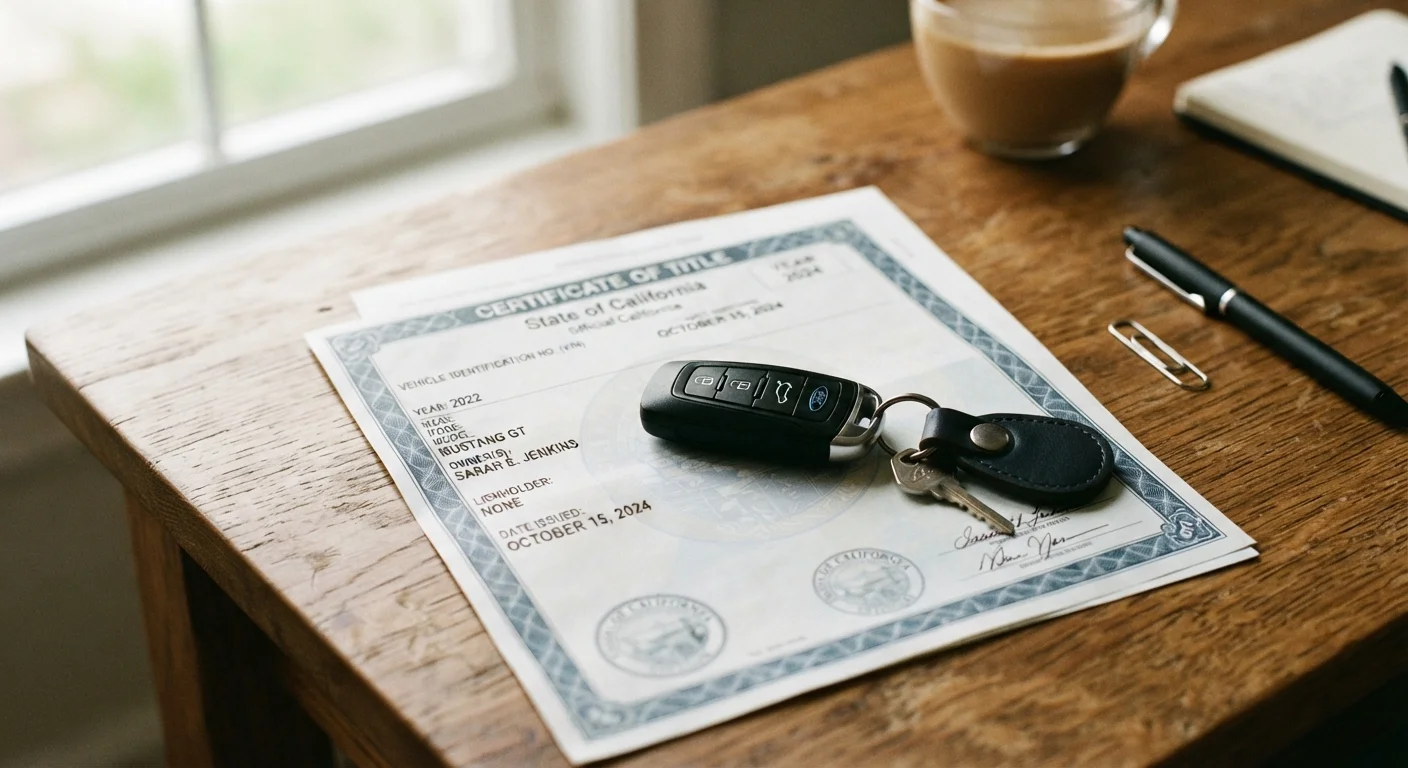
Owning a car outright - sometimes called cash purchase or full ownership - means holding the vehicle title free and clear, with no outstanding loan or finance agreement attached. You may have paid in full at the point of sale, or paid off a previous auto loan in its entirety. Either way, the legal and financial result is the same: no lender has a claim on the asset.
This matters because it defines every financial dynamic that follows. Without a lender, there are no monthly repayments, no interest charges, no gap insurance requirements, and no restrictions on how you use or sell the vehicle. The trade-off is that all upfront capital and all ongoing risk sit with you alone.
For a complete picture of what you'll spend beyond the sticker price, see the full breakdown of car ownership costs, which covers fuel, insurance, servicing, and depreciation in detail.
The Genuine Advantages
No monthly loan or lease payment
Once purchased outright, the vehicle carries no recurring finance obligation, freeing up monthly cash flow that would otherwise service debt.
No mileage limits or excess-wear penalties
Owners drive as much as their needs require without incurring per-mile surcharges or end-of-term condition fees common in lease contracts.
Full asset equity available at any time
The owner can sell, trade, or use the vehicle as collateral at will - the resale value is entirely theirs to capture on their own schedule.
No lender restrictions on use or modification
Without a lienholder, there are no contractual limits on how the vehicle is used, stored, or modified, giving the owner complete operational flexibility.
Zero interest cost over the ownership period
Financing a vehicle at prevailing auto loan rates can add thousands of dollars to the total cost over a standard loan term; cash buyers avoid that entirely.
The most immediate benefit is the elimination of a recurring monthly obligation. According to Experian's State of the Automotive Finance Market reports, the average new-vehicle loan payment in the US has consistently exceeded $700 per month in recent years. Removing that figure from your budget has a tangible effect on monthly cash flow.
Ownership also removes the mileage ceilings and condition penalties common in lease agreements. If your driving patterns are irregular - high-mileage seasons, road trips, work-related driving - outright ownership gives you full freedom without surcharge risk.
Finally, you build an asset. A paid-off vehicle has a resale or trade-in value you can capture on your own schedule. Compare how this dynamic plays out across both acquisition paths in our equity and depreciation explainer.
The Real Drawbacks
Owner absorbs the full depreciation curve
A new vehicle's steepest value loss occurs in years one through three. The owner bears that entire decline with no residual guarantee or shared risk.
Large upfront capital requirement
Paying cash or paying off a loan quickly requires significant liquid funds, which could otherwise be deployed elsewhere - an opportunity cost worth factoring in.
All repair costs fall to the owner after warranty
Once a factory or extended warranty expires, unplanned mechanical failures - which become more likely as mileage and age increase - are fully the owner's expense.
Slower path to a newer, safer vehicle
Owners committed to a long hold period may drive older vehicles with fewer advanced safety or efficiency features relative to current-model alternatives.
Depreciation is the cost that catches most owners off guard. A new vehicle typically loses 15-25% of its value in the first year and around 50% within three years, according to data published by sources such as Edmunds and the AAA. That loss is absorbed entirely by the owner - there is no manufacturer or lessor sharing it. Our article on depreciation as a hidden ownership cost explains the mechanics in full.
Repair exposure is the other significant risk. Once a factory warranty expires, every unplanned repair bill lands on the owner. Vehicles older than five years can generate meaningful maintenance costs, and a single major failure - transmission, engine, or electrical - can run into the thousands. This is distinct from lease arrangements, where the driver typically turns the car in before such costs materialise.
Older Vehicle vs. Newer Model: A Related Trade-off
Drivers who buy outright often face a secondary decision: purchase a newer vehicle at a higher price, or a high-mileage older model at lower cost. Each path carries different depreciation and repair profiles. Our older vs. newer vehicle cost comparison breaks down the ownership economics of both scenarios.
When the Numbers Favour Long-Term Ownership
The financial case for outright ownership strengthens considerably the longer you keep the vehicle. Once the loan is gone (or never existed), your per-mile cost of ownership drops - particularly if you're diligent about maintenance. Drivers who hold a vehicle for eight to ten years often find their total cost per year is materially lower than those who cycle through vehicles every two to three years via loans or leases.
The key variable is reliability. Choosing a vehicle with a strong long-term dependability record and following manufacturer service intervals shifts the probability of that outcome in your favour. See strategies for keeping ownership costs in check for practical approaches across a vehicle's full life.
For a direct comparison with the leasing alternative, our leasing pros and cons article applies the same balanced framework to that side of the decision.
~50%
Value lost in first three years of ownership
Industry data from sources including Edmunds consistently shows new vehicles lose roughly half their value within three years of purchase.
$700+
Average US new-car monthly loan payment
Experian's State of the Automotive Finance Market reports have tracked average new-vehicle monthly payments above $700 in recent reporting periods.