

Key Takeaways
Summary
22 items · 30-60 minutes per season
Why Seasonal Checks Pay for Themselves
Driving conditions shift substantially across the four seasons - temperature swings affect tire pressure, battery performance, and fluid viscosity, while precipitation and road debris increase wear on brakes and wipers. AAA research has consistently found that vehicle breakdowns spike during temperature extremes, and a significant share are preventable with routine inspections.
The financial logic is straightforward: catching a cracked belt or low brake fluid during a 45-minute self-check costs nothing beyond your time, while the repairs that follow neglect - a seized caliper, a dead battery in January, a blown tire on the highway - can run into hundreds or thousands of dollars. If you're building a broader picture of what you're spending on your vehicle, the full-life ownership cost framework is a useful complement to seasonal habits.
This checklist is organized by system, not by month, so you can run it as a complete seasonal audit or focus on a single area before a long trip. Items marked must are non-negotiable safety checks; should items are strongly recommended; nice_to_have items add meaningful value without being urgent.
Brake and Steering Issues: Stop, Don't Delay
Any symptom involving brakes - grinding, pulling, a soft pedal, or a brake warning light - should be evaluated by a qualified mechanic before the vehicle is driven further for anything other than a short trip to a shop. Brake system failures are among the leading causes of serious crashes. Do not attempt to inspect or adjust brake hardware at home unless you have specific training and the correct tools.
What You'll Need Before You Start
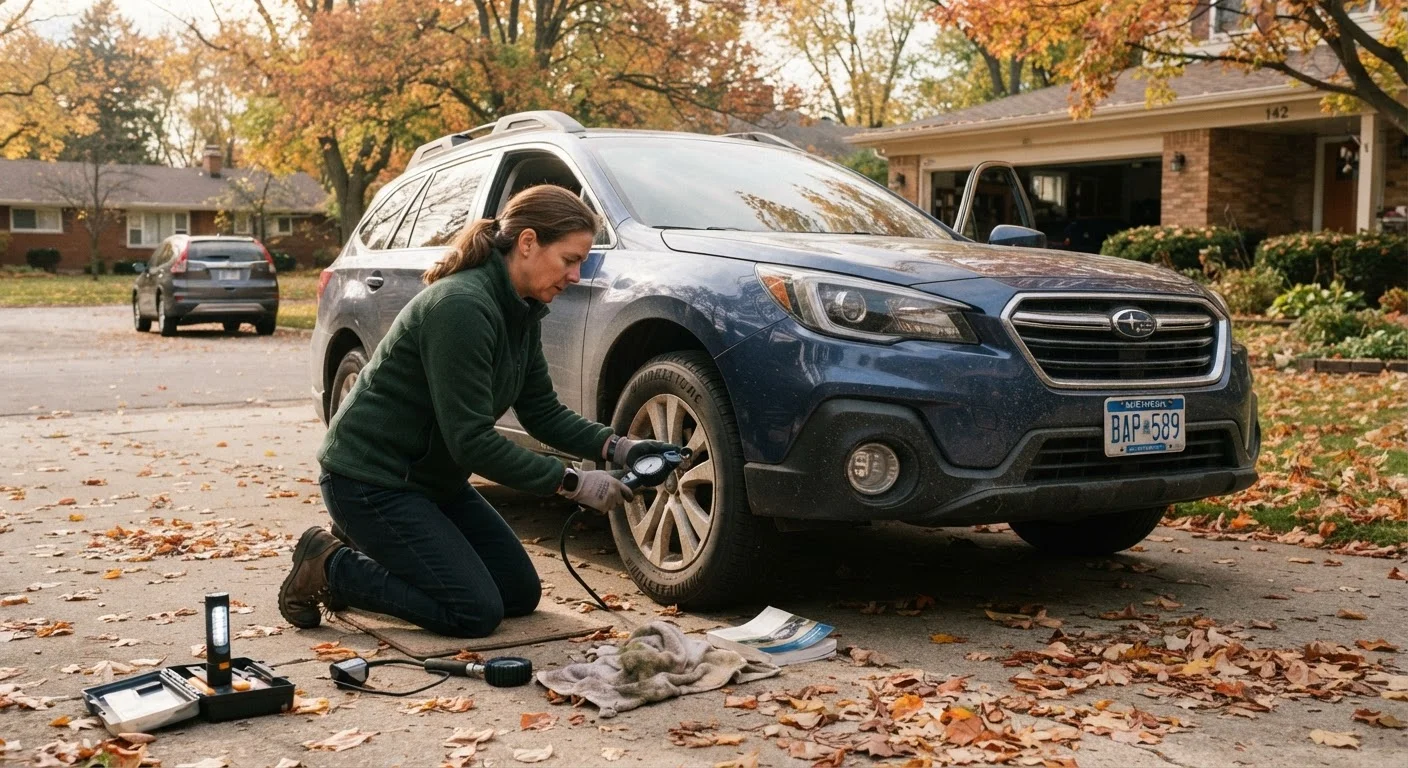
Most checks here require only basic items you likely already own. Gather them before you begin so the inspection runs without interruption.
Tire pressure gauge
Measures PSI in each tire accurately; digital models are easier to read than stick-type gauges.
Tread depth gauge or penny
Checks remaining tread depth to determine if tires are still safe for the road.
Multimeter
Tests battery resting voltage to flag a battery nearing the end of its service life.
Flashlight or work light
Illuminates dark areas under the hood and around tires for accurate visual inspection.
Microfiber cloths and gloves
Keeps hands clean when checking fluids and protects paint and plastic surfaces.
Owner's manual
Provides manufacturer-specific fluid specs, capacities, and service intervals for your exact vehicle.
For a deeper walkthrough of the fluid checks specifically, including how to read dipsticks and identify contamination, see the fluid checks guide. If you're relatively new to car ownership, the driver's first-year roadmap provides context for how these seasonal checks fit into a longer maintenance rhythm.
The Seasonal Checklist
Work through the groups below in order. Each group covers a discrete vehicle system. Allow yourself to pause and look up your owner's manual whenever a spec - tire pressure, fluid capacity, belt tension - isn't immediately clear.
Tires
Battery and Electrical
Fluids
Brakes and Steering
Belts, Hoses, and Filters
Wipers and Visibility
Never Check Coolant on a Hot Engine
Opening the coolant reservoir or radiator cap on a hot engine can cause pressurized boiling fluid to eject and cause serious burns. Always let the engine cool for at least 30 minutes before removing any coolant cap. If the coolant warning light is on while driving, pull over safely and wait - do not open the hood immediately.
If you identify anything that requires repair and you're not confident in a shop, the guide to finding a trustworthy mechanic covers what to evaluate before handing over your keys.