

Key Takeaways
Deferred Home Maintenance
Deferred maintenance means knowingly postponing repairs that a home needs - dripping faucets, cracked caulk, loose gutters - typically to save money or time in the short term. The problem is that most small home defects don't stay static: they worsen with each season, each rain event, and each temperature swing. What starts as a $15 caulk fix can quietly become a $3,000 rot repair.
In property valuation, accumulated deferred maintenance is calculated as a form of physical depreciation. Appraisers and home inspectors document it as evidence of reduced market value, often dollar-for-dollar at the repair estimate or more.
Why Small Problems Don't Stay Small
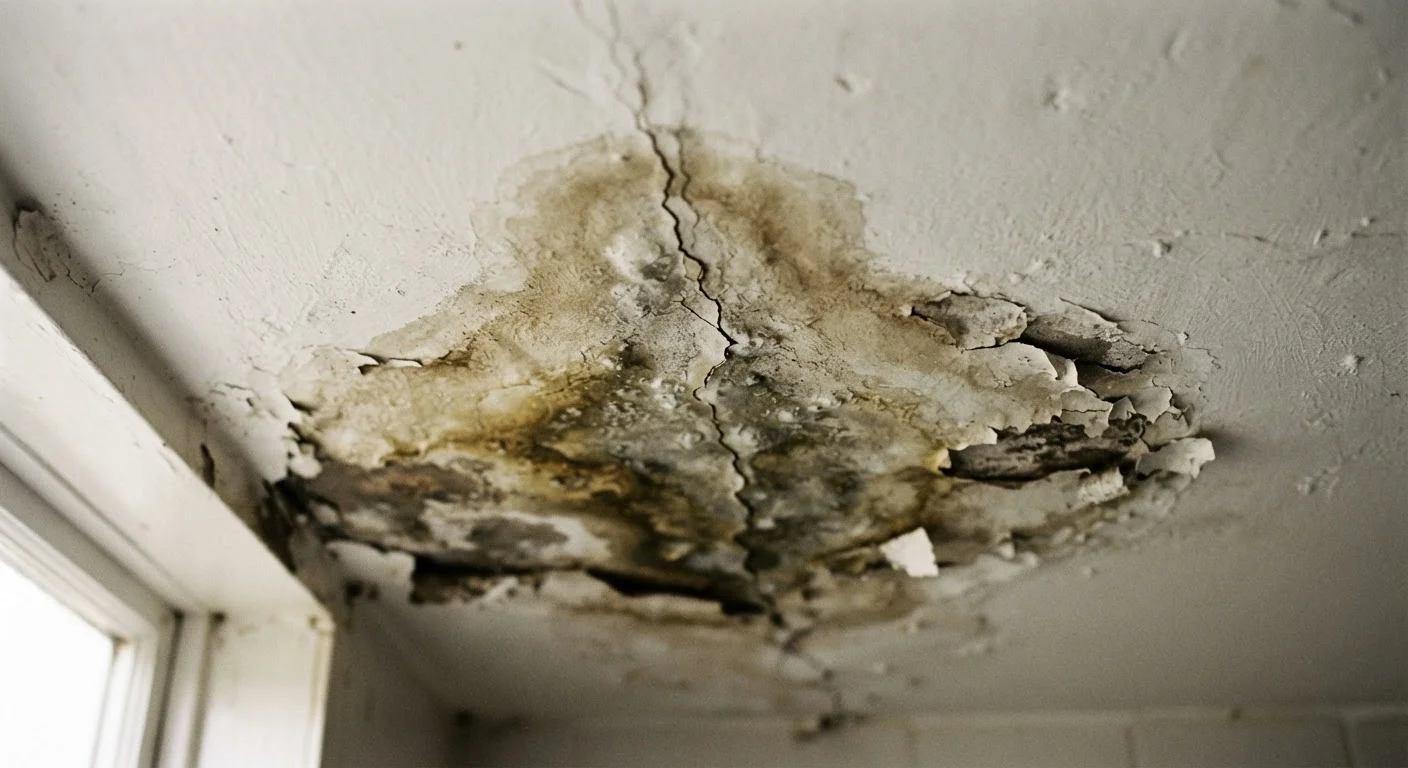
Every ignored home repair has a cost trajectory. That trajectory almost always points upward. A hairline crack in exterior caulk lets in a trickle of water. That trickle soaks into framing lumber. Wet lumber rots. Rot spreads to adjacent studs. What began as a $10 tube of caulk and 20 minutes of work can evolve - without any dramatic event - into a $2,000-$5,000 framing repair, plus drywall, plus paint.
The same pattern holds across nearly every category of deferred maintenance. A dripping faucet wastes water and strains the valve seat; left long enough, it ruins the fixture entirely. A loose gutter pulls away from fascia board, which then absorbs water, which rots - and suddenly you're replacing fascia, not just re-securing a bracket. Deferred maintenance doesn't pause while you find time to deal with it. It compounds.
When Permits and Professionals Are Required
Some repairs that look small - replacing a section of subfloor, repairing exterior sheathing, addressing roof decking - may require permits or licensed contractor work depending on your local building codes. Always verify requirements with your local building department before beginning work that touches structural, electrical, or plumbing systems. Code compliance protects your safety and your home's insurability.
Understanding how these costs accumulate is especially relevant for newer homeowners. Our related article on hidden expenses in the first years of ownership explores similar compounding-cost patterns worth knowing early.
Water: The Primary Cost Multiplier
Of all the forces acting on a home, water does the most unchecked damage when repairs are deferred. It's patient, thorough, and finds every gap. Exterior caulk around windows and doors, roof flashing at chimneys and valleys, grout lines in showers, and the wax ring beneath a toilet - all of these are water barriers. When any one fails, water moves inward and downward, following framing and insulation until it pools somewhere it shouldn't.
Mold is the secondary cost center. Once moisture establishes itself in wall cavities or subfloor, remediation - not just repair - becomes necessary. Professional mold remediation can run into the thousands of dollars depending on extent and location, and homeowners insurance often limits or excludes coverage for damage attributed to gradual neglect.
~$1,000
Typical cost of a basic water damage repair
According to home restoration industry estimates, minor water damage repairs - before structural involvement - typically start around $1,000, with complex cases running $5,000-$10,000 or more depending on materials affected.
24-48 hrs
Time for mold to begin growing in damp conditions
The EPA notes that mold can begin to develop on wet building materials within 24-48 hours, making rapid response to leaks and moisture intrusion essential.
$0-$50
Typical cost of most preventive small repairs
Common preventive repairs such as re-caulking, replacing weatherstripping, patching small drywall holes, and tightening hardware generally cost under $50 in materials when addressed promptly.
A running toilet is a good illustration of how plumbing neglect turns into a utility cost before it becomes a repair cost. Fixing a running toilet yourself is one of the clearest examples of a repair where the parts cost a few dollars and the savings are immediate and measurable.
The Repair Cost Escalation Pattern
Home repair costs tend to escalate in predictable stages. The first stage is the original defect - a minor fix addressable with basic tools and inexpensive materials. The second stage is secondary damage: the rot, staining, swelling, or structural compromise that develops when the first stage is ignored. The third stage is systemic repair - replacing entire assemblies rather than components, often requiring professional labor and permits.
Consider a common sequence: a small area of missing roof shingles costs perhaps $150-$300 to patch. Left through a wet season, the underlying decking gets saturated and begins to soften. Now decking replacement is added to shingle replacement. If the leak reaches attic insulation, that insulation must also be replaced - and if mold develops, remediation joins the invoice. The original $300 patch has become a $3,000-$8,000 project.
This is why the cost of a seasonal inspection is effectively zero by comparison. Walking your roof line, checking attic ventilation, looking under sinks, and testing weatherstripping takes a few hours and no special skills. Our guide on reading a home repair job before starting explains what to look for and when it's appropriate to handle something yourself.
Which Repairs Are Worth Tackling Yourself
Not every repair belongs on a DIY list. But a large category of common small repairs - caulking, weatherstripping, minor drywall patches, replacing faucet washers, tightening loose hardware, cleaning gutters, sealing concrete cracks - are well within reach for most homeowners with basic tools. The material costs are low, the learning curve is short, and the payoff in avoided future damage is real.
The honest boundary is this: when a repair touches electrical systems, gas lines, structural elements, or anything that requires a permit in your jurisdiction, the risk profile changes entirely. Code violations and safety hazards are expensive in ways that go beyond repair bills. Some repairs genuinely save money done DIY - and some don't. Knowing the difference is the most important skill a cost-conscious homeowner can develop.
Double Your Maintenance Value With Energy Savings
Many of the repairs that prevent water intrusion - sealing gaps around windows, replacing cracked caulk, fixing weatherstripping - also cut heating and cooling losses. Tackling them in one pass means you're solving two problems with one trip up the ladder. The home energy savings hub has complementary strategies that pair well with a standard seasonal maintenance walkthrough.
Keeping energy efficiency in mind adds another dimension to maintenance value. Many of the same repairs that prevent water damage - sealing gaps, replacing weatherstripping, caulking windows - also reduce heating and cooling loss. See the home energy savings hub for practical strategies that overlap with standard maintenance tasks.