

Key Takeaways
How Your Heating System Actually Works
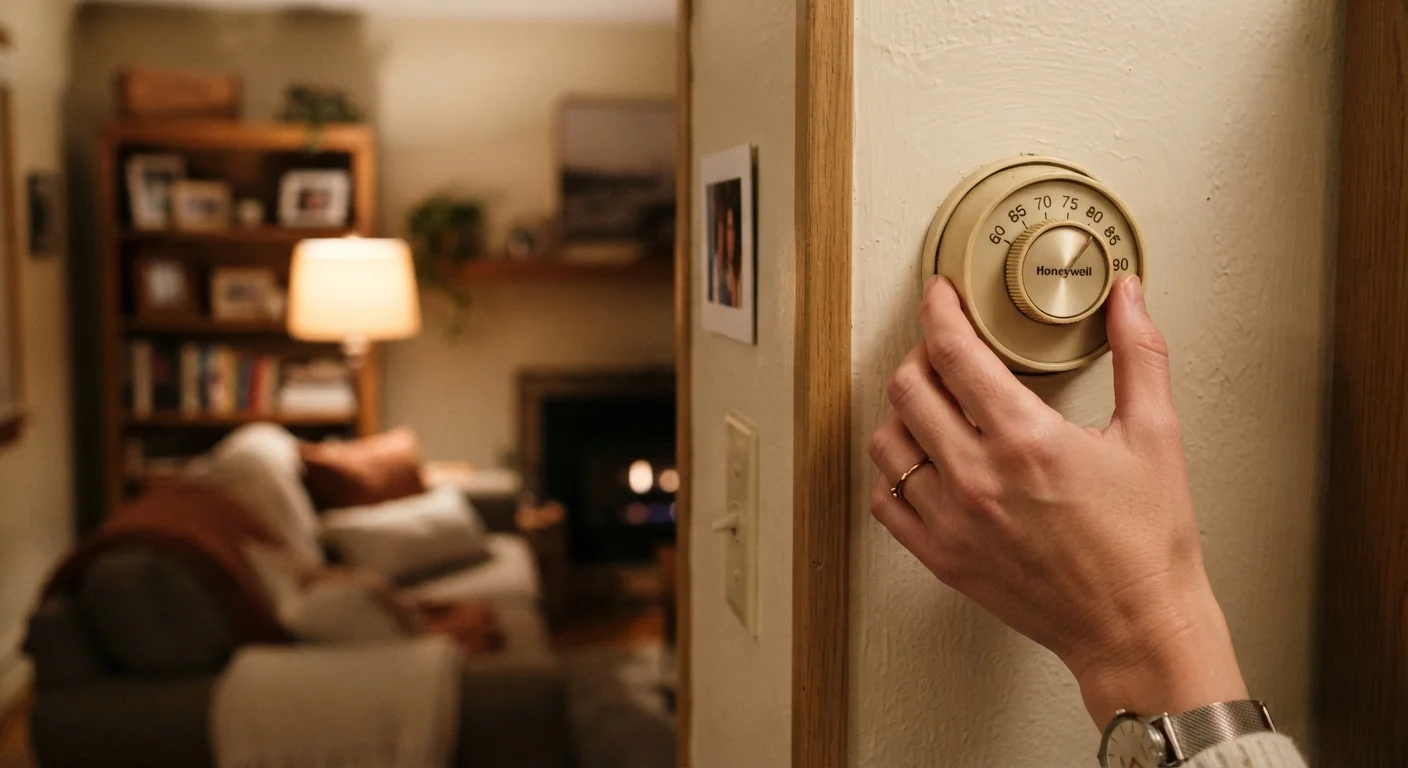
When a room feels cold, the instinct is to push the thermostat as high as it will go. It feels logical - more heat requested, faster warmth delivered. But that's not how the vast majority of home heating systems work.
Most forced-air furnaces and hydronic (hot water) boiler systems operate in a binary way: they are either on at full output or off. The thermostat is a trigger, not a throttle. Setting it to 80°F instead of 70°F doesn't make the furnace burn hotter or the radiators run warmer - it simply keeps the system running longer until it hits that higher target. The room warms at the same rate either way, but you've now committed to burning more fuel to reach a temperature you probably didn't need.
Think of it like an elevator: pressing the button 10 times doesn't make it arrive faster. The mechanism works on its own schedule regardless of how urgently you push.
Your Thermostat Is a Switch, Not a Dial
Raising the thermostat above your desired temperature does not speed up heating - it simply keeps the system running longer and uses more fuel. If your home is consistently slow to warm, the issue is almost always insulation or heat loss, not thermostat setting. Addressing those underlying problems will deliver lasting improvements that no amount of dial-cranking can replicate.
If your home genuinely takes a long time to reach a comfortable temperature, the problem almost certainly isn't the thermostat - it's heat loss. See our guide to hidden energy drains for a detailed walkthrough of where heat typically escapes.
Common Thermostat Mistakes and How to Avoid Them
Understanding the mechanics is only half the battle. These are the specific errors that drive up bills without delivering comfort.
Turning the thermostat to the maximum setting to heat the room faster.
Why it happens: It mirrors how many other appliances work - a higher setting on a stove produces more heat immediately, so people assume thermostats behave the same way.
Repeatedly adjusting the thermostat up and down throughout the day.
Why it happens: Rooms feel cold quickly after the heat cycles off, prompting another manual bump. The cycle repeats, and the system never runs efficiently.
Ignoring blocked or obstructed radiators and vents.
Why it happens: Furniture placement rarely gets reconsidered once a room is set up, even when a sofa ends up flush against a radiator or a rug covers a floor vent.
Placing the thermostat near a heat source, cold draft, or in direct sunlight.
Why it happens: Thermostats are often installed by whoever fits the system, not necessarily in the spot that gives the most accurate reading of the home's actual temperature.
Expecting a cold home to warm up fast regardless of insulation quality.
Why it happens: People focus on the heating system as the sole variable, overlooking that heat escapes as fast as it is generated in a poorly insulated space.
~10%
Energy saved per degree of setback
The U.S. Department of Energy estimates you can save roughly 10% per year on heating by turning your thermostat back 7-10°F for 8 hours a day.
Up to 30%
Heat lost through air leaks in a typical home
According to the U.S. Department of Energy, drafts and air infiltration can account for 25-30% of heating energy use in an average American home.
If you're weighing whether a programmable or smart thermostat might help you avoid these habits automatically, our comparison of smart vs. programmable thermostats lays out the practical trade-offs clearly.
Separately, many of the improvements that actually speed up how quickly rooms feel warm have nothing to do with the thermostat at all. Rugs, heavy curtains, and furniture arrangement all affect perceived warmth - the guide to keeping rooms warm without raising the boiler covers these in detail. And if you want a prioritised list of small, inexpensive fixes with real impact, see low-cost changes that genuinely reduce heating bills.
Finally, this particular myth is one of many that homeowners tend to carry for years without questioning. Our roundup of energy-saving myths homeowners still believe addresses several others that have a similar effect on utility bills.