

Key Takeaways
Pet Supply Label Claims
Pet supply label claims are words and phrases printed on packaging - such as "grain-free," "hypoallergenic," or "veterinary-grade" - that describe a product's ingredients, formulation, or quality. Some of these terms are regulated by government agencies or industry bodies, while others are entirely unregulated marketing language. Knowing the difference helps you evaluate whether a higher price is justified.
In the U.S., the FDA and AAFCO (Association of American Feed Control Officials) oversee pet food labeling standards, but AAFCO guidelines are model regulations that individual states may or may not adopt in full. Non-food pet supplies like shampoos and toys have even less standardized labeling oversight.
Why Label Literacy Saves You Money
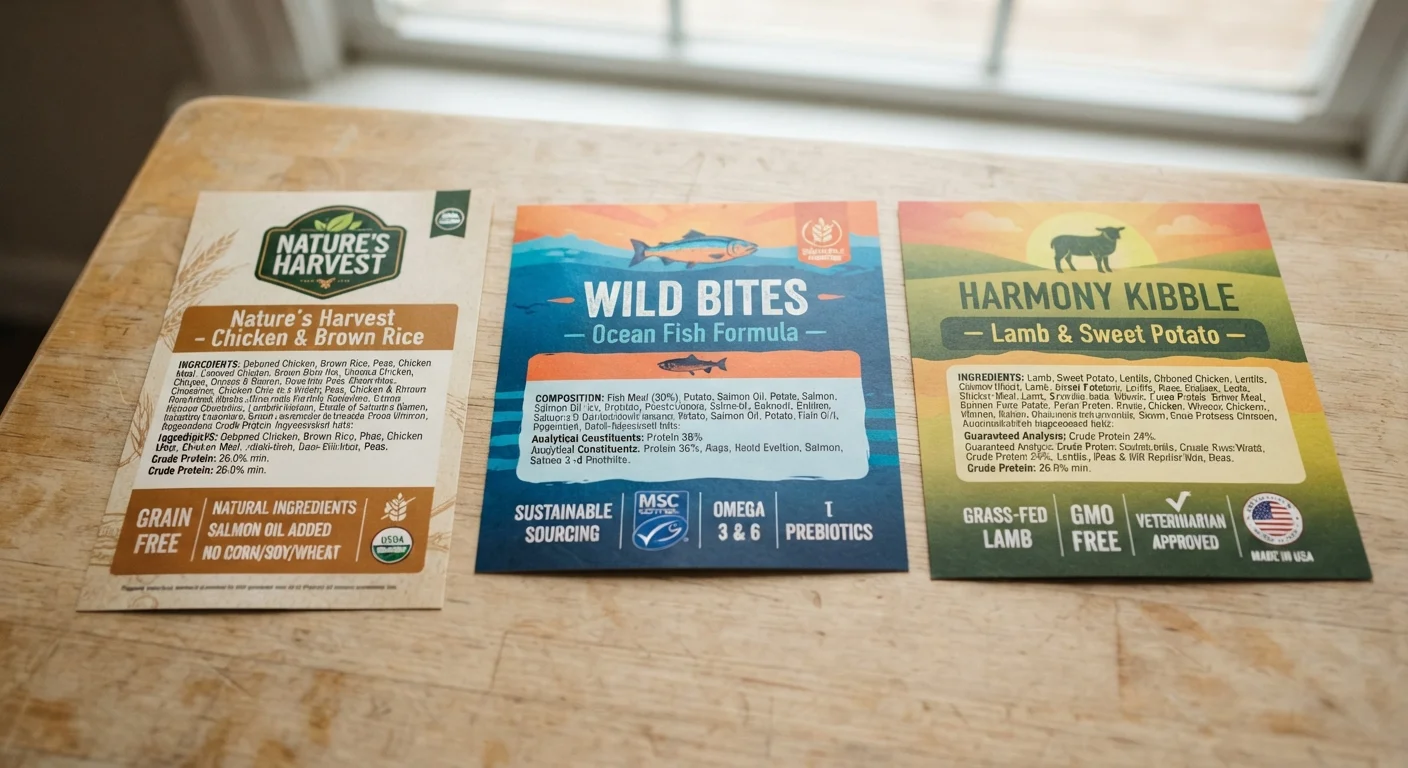
Pet supply packaging is designed to sell products, and marketing teams know which words resonate with pet owners who care deeply about their animals. Terms like "premium," "holistic," "human-grade," and "vet-recommended" appear on labels across price points - from budget store shelves to specialty pet retailers. The problem is that some of these terms are strictly regulated, some are loosely defined, and some carry no enforceable standard whatsoever.
Understanding which category a term falls into prevents you from paying a price premium for language that a manufacturer applied without any external accountability. For a deeper look at what's actually on the nutrition panel itself, see what pet food labels actually tell you.
~40%
Pet owners who misidentify label terms as regulated
Consumer research consistently finds that a significant share of pet owners believe terms like 'holistic' and 'premium' are subject to official standards, according to surveys cited in veterinary nutrition literature.
50 states
States that set their own pet food label enforcement
AAFCO model regulations are not federal law; each U.S. state individually decides whether and how to adopt them, creating variation in what labels must prove before reaching store shelves.
2
AAFCO substantiation methods for nutritional claims
Pet food can meet AAFCO standards either through nutrient-profile formulation analysis or through feeding trials - the latter involving actual animals and generally considered the more rigorous standard.
Regulated Terms: These Have Actual Standards
AAFCO Nutritional Adequacy Statement: This is the single most important regulated element on a pet food label. It tells you whether the food meets minimum nutritional requirements for a stated life stage and whether that was determined by formulation or by feeding trials. Feeding trial-tested foods have cleared a higher real-world bar.
"Natural": AAFCO defines this term for pet food. It means ingredients are derived from plant, animal, or mined sources without chemical synthesis - though synthetic vitamins can still appear if disclosed. This definition is more precise than its everyday meaning, so don't assume it implies organic or minimally processed.
"Organic": For pet food, organic claims must comply with USDA National Organic Program standards - the same framework used for human food. A certified organic claim should be backed by a USDA-accredited certifier. However, not all products displaying the word "organic" carry full certification; partial claims like "made with organic ingredients" have a lower threshold.
For a practical guide to interpreting the numbers behind these labels, reading the guaranteed analysis panel provides a clear breakdown.
Unregulated Terms: Buyer Beware
"Hypoallergenic": No U.S. regulatory body defines or enforces this term for pet products. Any manufacturer can use it. If your pet has a suspected food sensitivity, look at the ingredient list directly - a short, clearly identified protein source is more useful information than a marketing claim.
"Veterinary-grade" or "Vet-approved": Neither term is legally defined. "Vet-approved" sometimes means a single veterinarian consulted on the formulation, or simply that the marketing team chose the phrase. These terms should not substitute for an actual veterinary recommendation for your individual pet. The same caution applies to supplement labels - what 'pharmaceutical grade' actually means explores parallel issues in the human supplement market.
"Holistic" and "Premium": Neither word has any regulatory definition in the U.S. pet product market. They are purely promotional and provide no information about ingredient quality, sourcing, or nutritional value.
"Human-grade": AAFCO has issued a policy position stating that this term should only be used when every ingredient and every step of manufacturing meets human food standards - but enforcement varies. When in doubt, look for documentation rather than relying on the claim alone.
Third-Party Certifications vs. Manufacturer Seals
Some products carry seals or logos that look official but are created and awarded by the manufacturer itself. Others reflect genuine independent verification. The distinction matters when you're deciding whether a product commands its price.
Third-party certifications - where an independent organization tests products against published standards - provide a higher level of accountability. For pet supplements specifically, look for whether the certifying body maintains a searchable public database of verified products. For a broader discussion of what these certifications mean across supplement categories, see what USP, NSF, and Informed Sport certifications actually verify.
Manufacturer-created seals - such as an in-house "quality guarantee" badge - reflect only the company's own claims and carry no external verification. They can still indicate a company with genuine quality commitments, but they require more research to evaluate.
Putting It Into Practice
When comparing pet products, a practical approach is to separate regulated elements from marketing language before assessing price differences. Start with the AAFCO statement on food, the ingredient list, and any third-party certifications. Treat unregulated terms as starting points for further questions, not endpoints for your decision.
Price premiums tied to vague claims like "holistic" or "premium" are worth scrutinizing. The question worth asking is whether the actual ingredient panel and any verifiable certifications support the price difference. how store-brand and name-brand pet foods compare in real nutritional terms explores this directly for food purchases.
For a broader look at which specific ingredients are supported by nutritional evidence and which are largely window dressing, see ingredients worth paying more for - and ones that are mostly marketing.
This article is for general informational purposes only and does not constitute veterinary or medical advice. Consult a licensed veterinarian for guidance specific to your pet's health needs.