

Key Takeaways
Dynamic Pricing
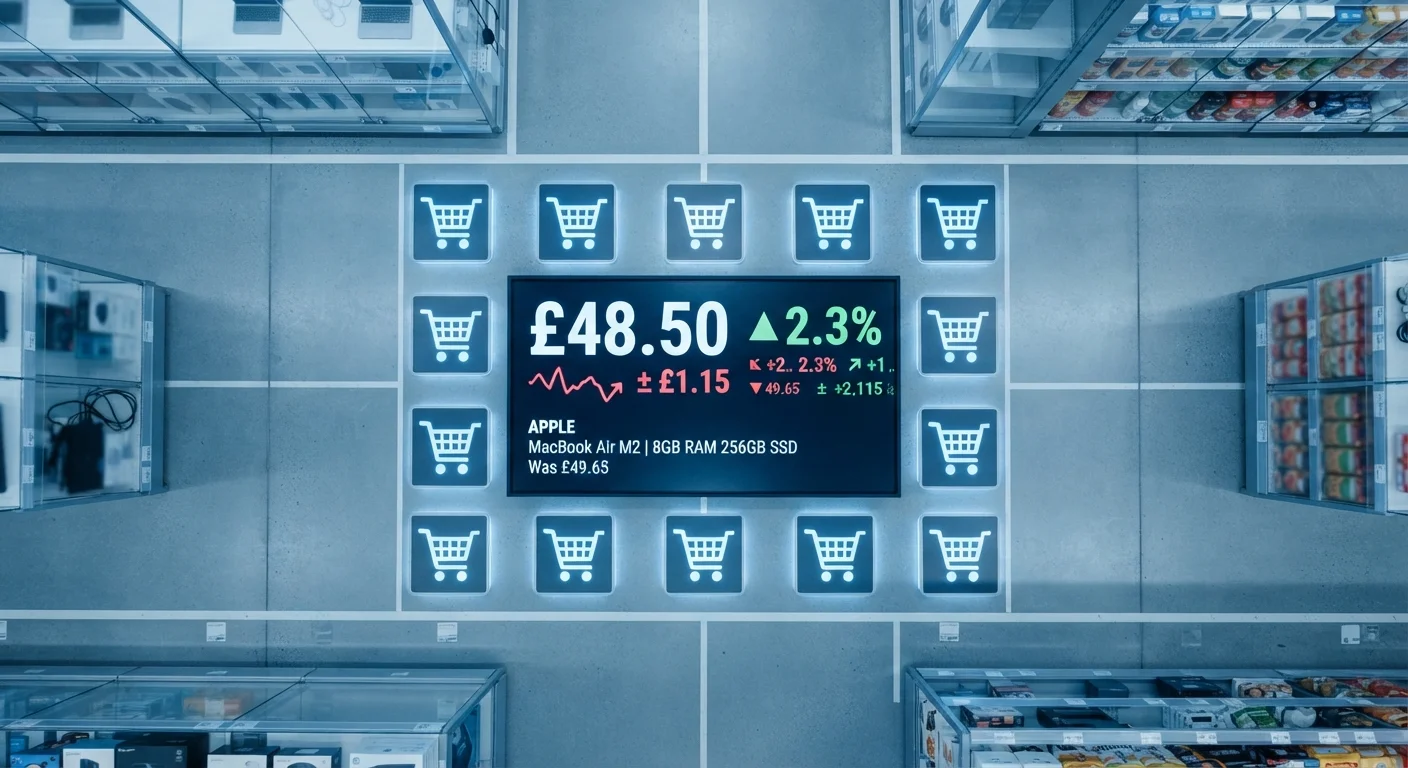
Dynamic pricing is a strategy where retailers adjust product prices in real time based on factors like demand, competitor pricing, inventory levels, and shopper behavior. Rather than setting a fixed price that holds indefinitely, automated systems continuously recalculate what to charge. This means the price you see today may differ from what you saw yesterday — or even an hour ago.
Most large-scale e-commerce platforms use algorithmic repricing engines that pull data from multiple signals simultaneously, including competitor crawls, session data, and historical conversion rates, to set prices at the margin most likely to maximize revenue.
The Mechanics Behind Online Price Changes
When you refresh a product page and see a different price than before, that is not a glitch — it is the system working as designed. Large online retailers use algorithmic repricing engines that continuously monitor several inputs: what competitors are charging for the same item, current inventory levels, how many shoppers are viewing the page, and historical demand patterns for that time of day, week, or season.
These algorithms set prices at whatever point is most likely to convert a sale at the highest possible margin. When demand spikes — during a news event, a viral social post, or simply a busy weekend — prices often rise automatically. When demand softens or a competitor drops their price, the algorithm responds in kind. The result is a price environment that is in constant motion.
This is meaningfully different from traditional retail, where a price tag stays fixed until a human decides to change it. Understanding this distinction matters because it reframes how you should interpret any price you see. It is a snapshot, not a statement of true value. For a deeper look at how this connects to airline ticket pricing — another heavily algorithmic market — see how airline pricing actually works.
2.5M+
Daily price changes on major retail platforms
Research from pricing intelligence firms has documented millions of individual price changes occurring each day across large e-commerce marketplaces, reflecting the scale of algorithmic repricing.
~23%
Of 'sale' prices exceed prior month's price
Consumer advocacy analyses of major retail events have found that a notable share of promoted discounts are applied against inflated reference prices, not the item's typical selling price.
Hourly
Repricing frequency for high-demand electronics
Industry reporting on e-commerce pricing systems indicates that competitive, high-velocity categories like consumer electronics can see price updates multiple times per hour during peak demand periods.
Reference Prices, Anchoring, and the Illusion of a Deal
Most discounted product listings show two prices: a crossed-out 'original' price and a lower 'sale' price. That original figure is called a reference price (or anchor price), and its purpose is to make the current price feel like a bargain. The problem is that reference prices are not always what they appear to be.
Retailers can legally set a reference price based on a brief period when the item was listed at that higher price — sometimes only a few days. If the item spent most of its life at a lower price, the implied discount overstates the actual saving. Regulatory scrutiny of these practices varies by state, but shoppers generally cannot verify the claim without external data.
Recognizing anchor pricing as a persuasion technique — rather than objective information — is a foundational skill for smarter shopping. It pairs closely with other documented tactics covered in subtle retail tactics that nudge you toward spending more.
Check Price History Before Trusting a Reference Price
Before accepting a 'was $X, now $Y' claim at face value, look up the item's price history using a tracker that logs past prices over 30, 90, or 180 days. If the reference price only appeared briefly, the actual discount is smaller than advertised. This single habit catches the most common form of misleading pricing in online retail.
Markdown Cadences and Clearance Logic
Beyond real-time algorithmic adjustments, retailers also follow planned markdown schedules — structured price reduction timelines designed to move inventory before it loses relevance or occupies expensive warehouse space. Seasonal goods, fashion items, and consumer electronics all tend to follow predictable clearance arcs.
A typical pattern: an item launches at full price, receives a modest percentage reduction after several weeks of slow sales, gets marked down again at a category review date, and eventually hits a clearance threshold where the retailer would rather recover partial cost than hold the stock. Knowing this cadence exists means patient shoppers can sometimes wait out a category and catch genuinely deep discounts — though the tradeoff is that popular sizes or colors may be gone by then.
The practical implication is that timing matters, but it requires category-level pattern recognition rather than guesswork. Price Tracking 101 explains how to build that kind of historical awareness systematically.
How to Use This Knowledge as a Shopper
Once you understand that online prices are algorithmic, time-sensitive, and shaped by reference-price framing, the logical response is to introduce your own data into the equation. The primary tool for this is a price history tracker — a service that logs what an item has actually sold for over time, giving you a factual baseline against which to evaluate any current listing.
When you can see that an item's listed 'sale' price is still above its 90-day average, the urgency evaporates. Conversely, when the price genuinely sits at a historical low, you have concrete grounds for confidence. This approach also helps counter the common misconceptions about discounts explored in deal-hunting myths that cost shoppers money.
For a practical walkthrough of the tools available and how they record pricing data, price tracking tools and how they actually work is a useful next step. Building these habits is part of a broader shift toward intentional buying behavior that protects you from the reactive spending that retailer pricing systems are engineered to encourage.